
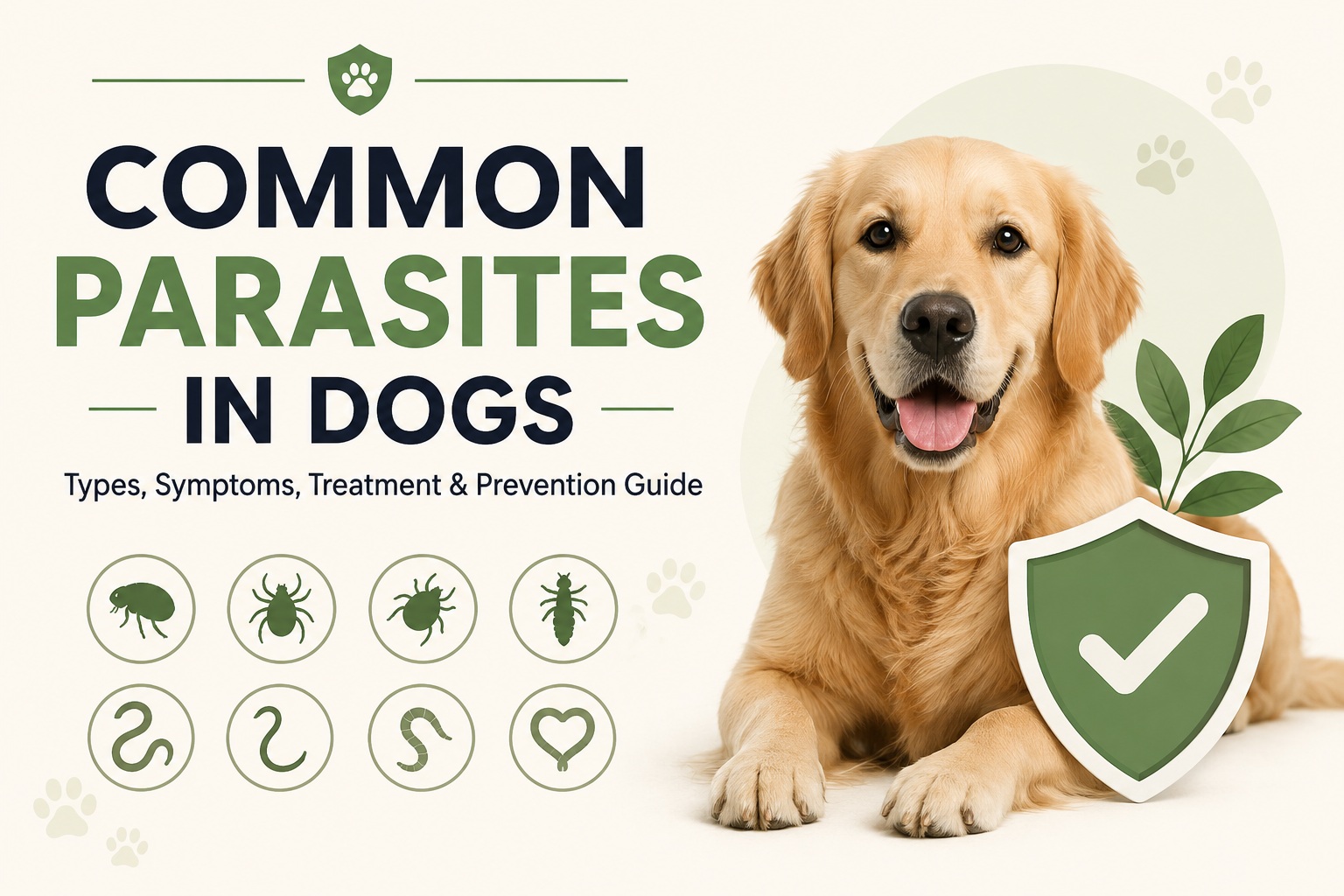
Dogs bring joy, companionship, and unconditional love into our lives. Keeping them healthy involves far more than feeding a balanced diet and scheduling annual veterinary visits. One of the most common—and often overlooked—health threats dogs face is parasites.
Parasites can affect nearly every part of your dog’s body, from the skin and coat to the intestines, lungs, heart, and bloodstream. Some cause obvious signs such as itching, diarrhea, or hair loss, while others remain hidden for months before symptoms appear. Left untreated, certain parasitic infections can lead to severe illness, permanent organ damage, anemia, heart failure, or even death.
Parasites aren’t just a concern for dogs, either. Several canine parasites can also infect humans, making proper parasite prevention an important part of protecting your entire household.
The good news is that most parasitic infections are preventable with modern veterinary medicine, regular health checks, and a few simple habits at home.
In this comprehensive guide, you’ll learn about the most common parasites found in dogs, how they spread, the warning signs to watch for, available treatment options, and the best ways to keep your dog protected throughout the year.
Table of Contents
Quick Answer
Dogs can be affected by two main types of parasites: external parasites, which live on the skin or coat, and internal parasites, which live inside the body. Common external parasites include fleas, ticks, mites, and lice, while internal parasites include roundworms, hookworms, whipworms, tapeworms, heartworms, lungworms, Giardia, and coccidia. Although many parasitic infections are treatable, early detection and year-round parasite prevention remain the best way to protect your dog’s health.
Parasites in Dogs at a Glance
| Quick Facts | |
|---|---|
| External parasites | Fleas, ticks, mites, lice |
| Internal parasites | Roundworms, hookworms, whipworms, tapeworms, heartworms, lungworms, Giardia, coccidia |
| Most common symptoms | Itching, vomiting, diarrhea, coughing, weight loss, hair loss |
| Puppies most at risk | ✅ Yes |
| Some parasites infect humans | ✅ Yes |
| Preventable | ✅ Most are preventable |
| Annual testing recommended | ✅ Yes |
Why Parasites Are a Serious Concern
Parasites are among the most frequently diagnosed health problems in dogs worldwide. They affect puppies, adult dogs, and senior dogs alike, regardless of breed or size.
Some parasites, such as fleas, cause immediate irritation that prompts owners to seek treatment quickly. Others, including heartworms and certain intestinal parasites, may quietly damage internal organs before your dog shows any obvious signs of illness.
Young puppies are especially vulnerable because their immune systems are still developing. Heavy parasite burdens can interfere with growth, reduce nutrient absorption, and cause life-threatening anemia or dehydration.
Dogs that spend time outdoors, visit dog parks, attend daycare, hunt wildlife, or regularly interact with other animals often face an even greater risk of exposure.
Even indoor dogs are not completely protected. Mosquitoes carrying heartworms can enter your home, fleas may hitch a ride on clothing or other pets, and parasite eggs can be brought indoors on shoes.
Because many parasites are invisible during the early stages of infection, routine veterinary examinations and preventive care remain essential—even when your dog appears perfectly healthy.
What Are Parasites in Dogs?
A parasite is an organism that survives by living on or inside another living creature, known as the host. Rather than producing its own food, the parasite depends on the host for nutrients, blood, or body tissues.
In dogs, parasites generally fall into two broad categories:
External Parasites (Ectoparasites)
External parasites live on your dog’s skin or coat.
The most common examples include:
- Fleas
- Ticks
- Mites
- Lice
These parasites usually cause itching, irritation, skin infections, and allergic reactions, although some can also transmit serious diseases.
Internal Parasites (Endoparasites)
Internal parasites live inside the dog’s body.
Most inhabit the digestive tract, but others live in the heart, lungs, blood vessels, or other organs.
Common internal parasites include:
- Roundworms
- Hookworms
- Whipworms
- Tapeworms
- Heartworms
- Lungworms
- Giardia
- Coccidia
Some absorb nutrients from food, while others feed directly on blood or damage surrounding tissues.
Because each parasite behaves differently, proper diagnosis is important before treatment begins.
Common Dog Parasites Comparison
| Parasite | Type | Body Area | Main Symptoms | Severity |
|---|---|---|---|---|
| Fleas | External | Skin | Scratching, flea dirt | 🟡 Moderate |
| Ticks | External | Skin | Fever, swelling | 🔴 High |
| Mites | External | Skin | Hair loss, itching | 🟡 Moderate |
| Lice | External | Skin | Dry coat, scratching | 🟢 Low |
| Roundworms | Internal | Intestines | Vomiting, pot belly | 🟡 Moderate |
| Hookworms | Internal | Intestines | Bloody diarrhea, anemia | 🔴 High |
| Whipworms | Internal | Large intestine | Chronic diarrhea | 🟡 Moderate |
| Tapeworms | Internal | Intestines | Rice-like segments | 🟢 Low |
| Heartworms | Internal | Heart & lungs | Cough, exercise intolerance | 🔴 Very High |
| Lungworms | Internal | Lungs | Persistent cough | 🔴 High |
| Giardia | Internal | Small intestine | Diarrhea | 🟡 Moderate |
| Coccidia | Internal | Intestines | Watery diarrhea | 🟡 Moderate |
Can Dog Parasites Spread to Humans?
Some canine parasites are zoonotic, meaning they can spread from animals to people. Fortunately, most infections can be prevented through good hygiene and regular parasite control.
People at the highest risk include:
- Young children
- Older adults
- Pregnant women
- Individuals with weakened immune systems
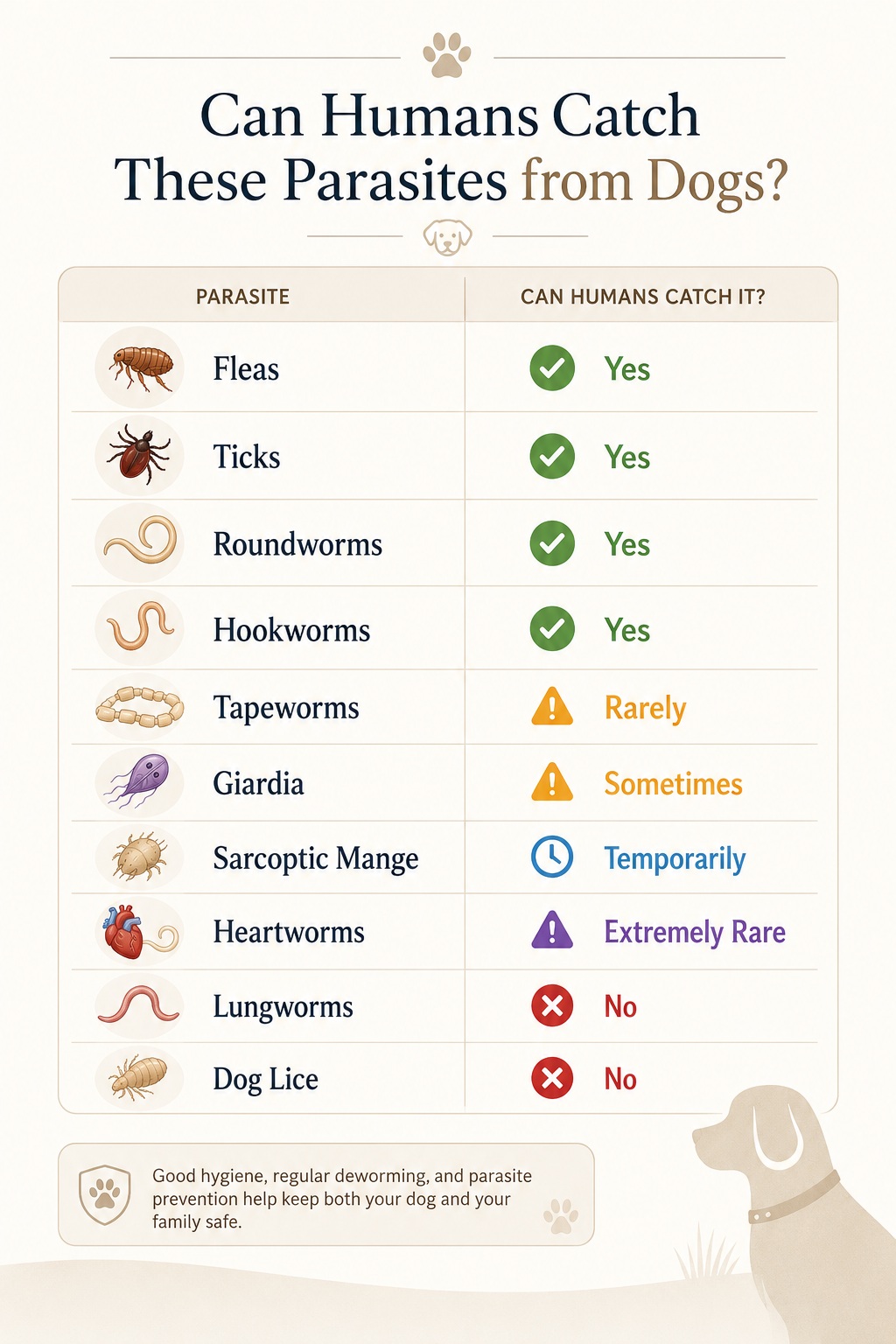
Simple habits such as washing your hands after handling pets, disposing of dog waste promptly, and keeping your dog on a veterinarian-approved parasite prevention program greatly reduce the risk of transmission.
Signs Your Dog May Have Parasites
Not every infected dog shows symptoms immediately. Some parasites remain hidden for weeks or even months before causing noticeable health problems.
However, the following warning signs should never be ignored:
- Persistent scratching or biting at the skin
- Hair loss or bald patches
- Red, inflamed, or flaky skin
- Scooting along the ground
- Vomiting
- Diarrhea
- Blood in the stool
- Pot-bellied appearance
- Weight loss despite a normal appetite
- Coughing
- Difficulty breathing
- Fatigue or reduced exercise tolerance
- Pale gums
- Visible worms or rice-like segments in the stool
- Swollen abdomen
- Poor coat condition
Many of these symptoms can also occur with other illnesses, so a proper veterinary examination is essential for an accurate diagnosis.
Recommended Products for Parasite Prevention
While no over-the-counter product can replace veterinary advice, a few well-chosen tools can help reduce your dog’s risk of parasite-related problems and make routine checks easier.
Monthly flea and tick preventatives remain the cornerstone of parasite prevention. Prescription products recommended by your veterinarian generally provide broader and more reliable protection than shampoos or sprays alone.
You may also find these products helpful:
- Medicated Flea & Tick Shampoo – Can help manage active infestations when used alongside veterinarian-approved treatments. Check price on Amazon.
- Pet-Safe Enzymatic Cleaner – Helps clean accidents caused by intestinal parasites and reduces lingering odors. Check price on Amazon.
Fleas
Fleas are among the most common external parasites affecting dogs worldwide. These tiny, wingless insects survive by feeding on blood and can multiply at an astonishing rate. A single adult female flea can lay up to 50 eggs per day, allowing a small infestation to become a major problem within just a few weeks.
Besides causing intense itching and skin irritation, fleas can transmit tapeworms and contribute to anemia in puppies or small dogs with heavy infestations.
At a Glance
| Parasite Type | External |
|---|---|
| Risk Level | 🟡 Moderate |
| Where It Lives | Skin and coat |
| Can It Infect Humans? | ✅ Yes (bites) |
| Most Common In | Dogs of all ages |
| Preventable? | ✅ Yes |
How Dogs Get Fleas
Dogs commonly pick up fleas from:
- Parks
- Dog daycare facilities
- Boarding kennels
- Grooming salons
- Other pets
- Wildlife
- Gardens
- Carpets and upholstered furniture
- Outdoor resting areas
Even indoor dogs can become infested because fleas may hitch a ride inside on clothing, shoes, or another pet.
Symptoms of Fleas in Dogs
Common signs include:
- Constant scratching
- Biting or chewing the skin
- Hair loss
- Red or inflamed skin
- Flea dirt (small black specks)
- Scabs
- Restlessness
- Skin infections
- Hot spots
Some dogs develop Flea Allergy Dermatitis (FAD), an allergic reaction to flea saliva. In these dogs, even a single flea bite can trigger severe itching and inflammation.
Why Fleas Can Be Dangerous
Although fleas are often viewed as a nuisance, heavy infestations can lead to more serious health problems.
Possible complications include:
- Flea allergy dermatitis
- Secondary bacterial skin infections
- Tapeworm infection
- Blood loss
- Anemia, especially in puppies
- Poor coat condition
- How Veterinarians Diagnose Fleas
Diagnosis is usually straightforward and may include:
- Physical examination
- Finding live fleas
- Identifying flea dirt using a flea comb
- Assessing skin irritation
- Evaluating signs of flea allergy dermatitis
Treatment
Successful flea treatment usually involves treating both your dog and the environment.
Your veterinarian may recommend:
- Prescription oral flea medication
- Topical flea treatments
- Flea shampoos
- Environmental flea sprays
- Frequent vacuuming
- Washing bedding in hot water
- Treating every pet in the household
Failing to eliminate flea eggs and larvae from the home often leads to reinfestation.
Prevention
The best way to prevent fleas is through year-round parasite control.
Helpful prevention measures include:
- Monthly flea preventatives
- Regular grooming
- Vacuuming carpets and furniture
- Washing pet bedding weekly
- Keeping lawns trimmed
- Treating the home if fleas are detected
Amazon Pick
Recommended Product: Fine-Tooth Flea Comb
A quality flea comb helps detect fleas, flea dirt, and eggs early—especially in puppies or dogs with thick coats. It’s an inexpensive tool that every dog owner should keep in their grooming kit. Check price on Amazon.
Ticks
Ticks are blood-feeding external parasites that attach firmly to a dog’s skin using specialized mouthparts. Unlike fleas, which move around the body, ticks remain attached for several days while feeding.
Ticks are particularly concerning because they can transmit several serious diseases that affect both dogs and humans.
At a Glance
| Parasite Type | External |
|---|---|
| Risk Level | 🔴 High |
| Where It Lives | Attached to skin |
| Can It Infect Humans? | ✅ Yes |
| Most Common In | Dogs that spend time outdoors |
| Preventable? | ✅ Yes |
Where Dogs Pick Up Ticks
Ticks commonly inhabit:
- Tall grass
- Forests
- Hiking trails
- Bushes
- Gardens
- Farms
- Wooded parks
Dogs are especially vulnerable after walks through dense vegetation.
Symptoms
Some dogs show no symptoms initially.
Possible signs include:
- Visible attached tick
- Local swelling
- Redness
- Fever
- Fatigue
- Reduced appetite
- Limping
- Enlarged lymph nodes
Diseases Spread by Ticks
Ticks may transmit several dangerous illnesses, including:
- Lyme disease
- Ehrlichiosis
- Anaplasmosis
- Rocky Mountain spotted fever
- Babesiosis
These diseases can affect joints, kidneys, blood cells, and the nervous system.
Diagnosis
Veterinarians may perform:
- Physical examination
- Tick identification
- Blood tests
- PCR testing
- Screening for tick-borne diseases
Treatment
Treatment depends on whether the tick has transmitted disease.
Management may include:
- Safe tick removal
- Prescription tick preventatives
- Antibiotics
- Pain management
- Supportive care
Prevention
You can reduce your dog’s risk by:
- Using year-round tick prevention
- Checking your dog after walks
- Keeping grass short
- Avoiding heavily infested areas
- Removing ticks promptly
Amazon Pick
Recommended Product: Tick Removal Tool
A dedicated tick removal tool makes it easier to remove attached ticks without crushing them or leaving mouthparts embedded in the skin. Check price on Amazon.
Roundworms
Roundworms are among the most common intestinal parasites in dogs, particularly puppies. Adult worms live in the intestines, where they compete with the dog for nutrients needed for healthy growth and development.
Puppies are especially susceptible because roundworms can be transmitted before birth or through their mother’s milk.
At a Glance
| Parasite Type | Internal |
|---|---|
| Risk Level | 🟡 Moderate |
| Where It Lives | Small intestine |
| Can It Infect Humans? | ✅ Yes |
| Most Common In | Puppies |
| Preventable? | ✅ Yes |
How Dogs Become Infected
Dogs may acquire roundworms through:
- Prenatal transmission
- Nursing from infected mothers
- Swallowing eggs in contaminated soil
- Eating infected rodents
- Contact with contaminated feces
Symptoms
Common signs include:
- Pot-bellied appearance
- Vomiting
- Diarrhea
- Poor growth
- Weight loss
- Worms visible in stool
- Dull coat
- Reduced appetite
Heavy infestations may block the intestines, particularly in young puppies.
Human Health Risk
Roundworm eggs can infect humans if accidentally swallowed.
Children are most vulnerable because they are more likely to play in contaminated soil.
In rare cases, migrating larvae can damage organs or the eyes.
Diagnosis
Diagnosis generally involves:
- Fecal flotation testing
- Microscopic examination
- Physical examination
- Reviewing clinical signs
Treatment
Treatment typically includes:
- Prescription dewormers
- Multiple treatments to eliminate developing larvae
- Follow-up fecal testing
Prevention
Reduce the risk by:
- Routine deworming
- Prompt removal of dog waste
- Preventing scavenging
- Regular veterinary fecal examinations
- Monthly parasite preventatives that cover intestinal worms
Amazon Pick
Recommended Product: Pet Waste Bags with Dispenser
Cleaning up dog waste promptly helps reduce environmental contamination and lowers the risk of parasite transmission to other pets and people. Check price on Amazon.
Hookworms
Hookworms are small intestinal parasites that attach themselves to the lining of the small intestine using hook-like mouthparts. Instead of feeding on food within the intestines, they feed directly on your dog’s blood.
Although only about half an inch long, hookworms can cause significant blood loss, making them particularly dangerous for puppies and small dogs.
At a Glance
| Parasite Type | Internal |
|---|---|
| Risk Level | 🔴 High |
| Where It Lives | Small intestine |
| Can It Infect Humans? | ✅ Yes |
| Most Common In | Puppies and dogs in warm, humid climates |
| Preventable? | ✅ Yes |
How Dogs Become Infected
Dogs may become infected by:
- Contact with contaminated soil
- Larvae penetrating the skin
- Drinking contaminated water
- Nursing from infected mothers
- Eating infected prey animals
Symptoms
Signs often include:
- Bloody diarrhea
- Pale gums
- Weakness
- Weight loss
- Poor growth
- Black, tarry stools
- Anemia
Severe infections can become life-threatening if left untreated.
Human Health Risk
Hookworm larvae can penetrate human skin, causing a condition known as cutaneous larva migrans, which appears as itchy, winding tracks beneath the skin.
Diagnosis
Veterinarians usually diagnose hookworms through:
- Fecal flotation tests
- Physical examination
- Blood tests if anemia is suspected
Treatment
Treatment generally involves:
- Prescription deworming medication
- Iron supplementation when needed
- Nutritional support
- Blood transfusions in severe cases
Prevention
Effective prevention includes:
- Monthly parasite preventatives
- Prompt waste removal
- Keeping puppies on a veterinarian-approved deworming schedule
- Avoiding contaminated environments
Amazon Pick
Recommended Product: Dog First Aid Kit
While a first aid kit won’t treat hookworms, every dog owner should have one available for emergencies while arranging prompt veterinary care, especially if a dog becomes weak, collapses, or develops severe bloody diarrhea. Check price on Amazon.
Whipworms
Whipworms are intestinal parasites that live primarily in a dog’s large intestine (colon and cecum). Their thin, whip-like shape gives them their name. Although they are less common than roundworms or hookworms, whipworms can cause long-term digestive problems and are often difficult to diagnose because they shed eggs intermittently.
One of the biggest challenges with whipworms is that their eggs are extremely hardy. They can survive in soil for several years, making reinfection possible even after successful treatment.
At a Glance
| Risk Level | 🟡 Moderate |
| Where It Lives | Large intestine |
| Can It Infect Humans? | ❌ No significant risk |
| Most Common In | Adult dogs |
| Preventable? | ✅ Yes |
How Dogs Become Infected
Dogs usually become infected by swallowing whipworm eggs found in:
- Contaminated soil
- Dog parks
- Kennels
- Backyards contaminated with infected feces
- Food or water contaminated with parasite eggs
Because the eggs remain infectious for years, contaminated environments can continue exposing dogs long after an infected dog is gone.
Symptoms
Whipworm infections may develop gradually.
Common signs include:
- Chronic diarrhea
- Bloody stool
- Weight loss
- Dehydration
- Poor body condition
- Occasional vomiting
- Reduced energy levels
Some dogs carry whipworms with few obvious symptoms until parasite numbers become high.
Diagnosis
Diagnosis usually involves:
- Fecal flotation tests
- Multiple fecal examinations (because eggs are shed intermittently)
- Reviewing clinical signs
Treatment
Treatment generally includes:
- Prescription deworming medication
- Repeat treatments several weeks later
- Follow-up fecal testing
- Cleaning contaminated areas where possible
Prevention
You can lower the risk by:
- Cleaning up dog waste promptly
- Using monthly parasite preventatives that cover whipworms
- Routine fecal examinations
- Avoiding heavily contaminated environments
Amazon Pick
Recommended Product: Heavy-Duty Pooper Scooper
Promptly removing dog waste is one of the simplest ways to reduce environmental contamination and help interrupt the whipworm life cycle. Check price on Amazon.
Tapeworms
Tapeworms are long, flat, segmented intestinal parasites that attach themselves to the wall of the small intestine. Unlike hookworms, they generally do not feed directly on blood and often cause only mild symptoms.
The most common canine tapeworm, Dipylidium caninum, is transmitted through infected fleas rather than direct contact with infected dogs.
At a Glance
| Parasite Type | Internal |
|---|---|
| Risk Level | 🟢 Low |
| Where It Lives | Small intestine |
| Can It Infect Humans? | ⚠️ Rarely |
| Most Common In | Dogs with fleas |
| Preventable? | ✅ Yes |
How Dogs Become Infected
Dogs become infected by:
- Swallowing infected fleas while grooming
- Eating infected rodents
- Eating infected rabbits
Unlike many intestinal worms, tapeworms are not usually transmitted directly from dog to dog.
Symptoms
Many dogs show no obvious signs.
When symptoms do occur, they may include:
- Rice-like segments around the anus
- Segments in the stool
- Scooting
- Excessive licking around the rear
- Mild digestive upset
- Occasional weight loss
Owners often notice the moving, rice-like segments before the dog appears ill.
Diagnosis
Veterinarians diagnose tapeworms by:
- Identifying tapeworm segments
- Microscopic examination of stool
- Physical examination
Treatment
Treatment requires medications specifically designed to kill tapeworms, as standard dewormers may not be effective.
Since fleas play a key role in transmission, treating flea infestations is equally important to prevent reinfection.
Prevention
Preventive measures include:
- Consistent flea control
- Preventing hunting of rodents
- Routine parasite checks
- Regular veterinary examinations
Amazon Pick
Recommended Product: Flea & Tick Preventative
Keeping fleas under control is one of the most effective ways to prevent the most common type of tapeworm infection in dogs. Check price on Amazon.
Heartworms
Heartworm disease is one of the most serious parasitic diseases affecting dogs. Unlike intestinal worms, heartworms live inside the heart, pulmonary arteries, and nearby blood vessels, where they interfere with normal blood circulation and place enormous strain on the cardiovascular system.
Because symptoms often develop slowly, infected dogs may appear healthy for months while permanent damage is occurring inside the body.
The encouraging news is that heartworm disease is almost entirely preventable with year-round preventive medication.
At a Glance
| Parasite Type | Internal |
| Risk Level | 🔴 Very High |
| Where It Lives | Heart and pulmonary arteries |
| Can It Infect Humans? | Extremely Rare |
| Spread By | Mosquitoes |
| Preventable? | ✅ Yes |
How Dogs Get Heartworms
Heartworms are transmitted only through the bite of an infected mosquito.
When an infected mosquito bites a dog, microscopic larvae enter the bloodstream. Over several months, the larvae mature into adult worms that eventually settle in the heart and lungs.
Unlike intestinal worms, heartworms cannot spread directly from one dog to another.
Which Dogs Are Most at Risk?
Any dog exposed to mosquitoes can become infected.
Higher-risk dogs include those that:
- Spend significant time outdoors
- Live in warm or humid climates
- Travel frequently
- Miss monthly heartworm prevention
- Live near lakes, rivers, marshes, or standing water
However, even indoor dogs are not completely protected because mosquitoes can easily enter homes.
Symptoms
Heartworm disease often develops in stages.
Early Stage
Many dogs show no symptoms.
Moderate Disease
As the worms mature, dogs may develop:
- Persistent cough
- Exercise intolerance
- Fatigue
- Mild weight loss
- Reduced stamina
Advanced Disease
Severely affected dogs may experience:
- Difficulty breathing
- Swollen abdomen
- Collapse
- Heart failure
- Fainting
- Severe weakness
Without treatment, advanced heartworm disease can become fatal.
Why Heartworms Are So Dangerous
Adult heartworms may grow up to 12 inches (30 cm) long.
A heavily infected dog may carry dozens of adult worms inside its heart and surrounding blood vessels.
Over time, this can lead to:
- Permanent lung damage
- Pulmonary hypertension
- Heart failure
- Liver disease
- Kidney complications
- Reduced life expectancy
Even after successful treatment, some damage may remain permanent.
Diagnosis
Veterinarians diagnose heartworm disease using one or more of the following:
- Heartworm antigen blood test
- Microscopic blood examination
- Chest X-rays
- Echocardiography (heart ultrasound) in selected cases
Annual heartworm testing remains important—even for dogs receiving preventive medication—because no preventive is 100% foolproof if doses are missed or given incorrectly.
Treatment
Heartworm treatment is considerably more complex than treating intestinal worms.
Treatment often involves:
- Adulticide injections
- Anti-inflammatory medication
- Pain management
- Strict exercise restriction
- Follow-up blood testing
- Monthly heartworm prevention after recovery
Because dying worms can block blood vessels, dogs undergoing treatment must remain calm and avoid strenuous activity for several weeks or months.
Prevention
Fortunately, prevention is far easier, safer, and less expensive than treatment.
Veterinarians typically recommend:
- Monthly heartworm preventatives
- Year-round parasite protection
- Annual heartworm testing
- Mosquito control around the home
Skipping even one or two monthly doses may leave your dog vulnerable to infection, depending on the product and your veterinarian’s recommendations.
Amazon Pick
Recommended Product: Mosquito-Proof Outdoor Pet Shelter or Pet-Safe Mosquito Repellent
While these products cannot replace prescription heartworm prevention, they may help reduce mosquito exposure when your dog spends time outdoors. The most effective protection, however, is a veterinarian-prescribed monthly heartworm preventive. Check price on Amazon.
Lungworms
Lungworms are parasites that live in the respiratory system, particularly the lungs and airways. Although less common than intestinal worms, they can cause serious breathing problems if left untreated.
The prevalence of lungworms varies by region, but infections are increasingly recognized in many countries.
At a Glance
| Parasite Type | Internal |
| Risk Level | 🔴 High |
| Where It Lives | Lungs and airways |
| Can It Infect Humans? | ❌ No |
| Most Common In | Dogs that eat slugs or snails |
| Preventable? | ✅ Yes |
How Dogs Become Infected
Dogs may become infected after:
- Eating slugs
- Eating snails
- Eating frogs
- Drinking contaminated water
- Consuming infected prey animals
Young, curious dogs are particularly susceptible because they are more likely to investigate or eat unusual objects outdoors.
Symptoms
Common signs include:
- Persistent cough
- Rapid breathing
- Exercise intolerance
- Weight loss
- Bleeding disorders
- Nosebleeds
- Lethargy
Severe infections may cause life-threatening respiratory complications.
Diagnosis
Diagnosis may include:
- Fecal examination
- Blood tests
- Chest X-rays
- Specialized parasite testing
Treatment
Treatment generally involves:
- Prescription antiparasitic medication
- Supportive care
- Anti-inflammatory medication when appropriate
- Monitoring until breathing returns to normal
Prevention
Helpful preventive measures include:
- Preventing dogs from eating slugs or snails
- Supervising outdoor play
- Removing snail attractants from the yard
- Using parasite preventatives that cover lungworms where recommended by your veterinarian
Giardia
Giardia is a microscopic protozoan parasite that infects a dog’s small intestine. Unlike worms, Giardia consists of single-celled organisms that interfere with normal digestion and nutrient absorption.
Many infected dogs develop diarrhea, while others may carry Giardia without showing any obvious symptoms. Puppies, senior dogs, and dogs with weakened immune systems are generally more likely to develop clinical illness.
At a Glance
| Parasite Type | Internal (Protozoan) |
| Risk Level | 🟡 Moderate |
| Where It Lives | Small intestine |
| Can It Infect Humans? | ⚠️ Sometimes |
| Most Common In | Puppies, kennel dogs, dogs drinking untreated water |
| Preventable? | Mostly |
How Dogs Become Infected
Dogs usually contract Giardia by swallowing microscopic cysts found in:
- Puddles
- Lakes
- Streams
- Contaminated water bowls
- Kennels
- Infected feces
Dogs that frequently hike, camp, or visit dog parks may have greater exposure.
Symptoms
Common signs include:
- Soft stool
- Chronic diarrhea
- Greasy or foul-smelling feces
- Weight loss
- Dehydration
- Gas
- Poor body condition
Some infected dogs remain symptom-free while still shedding cysts.
Diagnosis
Your veterinarian may perform:
- Fecal flotation
- Giardia antigen testing
- PCR testing
- Multiple stool examinations
Treatment
Treatment generally includes:
- Prescription antiparasitic medication
- Bathing to remove Giardia cysts from the coat
- Thorough cleaning of food bowls and bedding
- Good environmental sanitation
Prevention
Helpful preventive measures include:
- Avoiding stagnant water
- Providing fresh drinking water
- Cleaning water bowls daily
- Picking up dog waste promptly
- Bathing infected dogs after treatment
Amazon Pick
Recommended Product: Portable Dog Water Bottle
A portable water bottle encourages your dog to drink clean water during walks and hikes instead of potentially contaminated puddles or streams. Check price on Amazon.
Coccidia
Coccidia are microscopic intestinal parasites that most commonly affect puppies and young dogs. Stress, overcrowding, poor sanitation, and weakened immune systems increase the likelihood of infection.
Although healthy adult dogs often carry coccidia without becoming ill, puppies can develop severe diarrhea and dehydration if left untreated.
At a Glance
| Parasite Type | Internal (Protozoan) |
| Risk Level | 🟡 Moderate |
| Where It Lives | Intestinal lining |
| Can It Infect Humans? | Rare |
| Most Common In | Puppies |
| Preventable? | Mostly |
Symptoms
Signs often include:
- Watery diarrhea
- Bloody stool
- Loss of appetite
- Weight loss
- Dehydration
- Weakness
Diagnosis
Diagnosis typically involves:
- Microscopic fecal examination
- Fecal flotation
- Clinical history
Treatment
Treatment usually includes:
- Prescription anticoccidial medication
- Fluid therapy if dehydration develops
- Nutritional support
- Follow-up fecal testing
Prevention
Owners can reduce the risk by:
- Keeping puppy areas clean
- Removing feces promptly
- Avoiding overcrowded environments
- Scheduling regular veterinary examinations
Amazon Pick
Recommended Product: Pet-Safe Disinfectant Cleaner
Routine cleaning of kennels, crates, and puppy play areas helps maintain better hygiene and supports your overall parasite prevention program. Check price on Amazon.
Mites
Mites are tiny external parasites that live on or beneath a dog’s skin. Several species exist, but the two most important are Demodex mites and Sarcoptes mites (scabies).
Demodectic Mange (Demodex)
Demodex mites naturally live in small numbers on healthy dogs without causing problems. However, if a dog’s immune system becomes weakened or immature, these mites can multiply rapidly.
Symptoms
- Hair loss
- Red skin
- Thickened skin
- Skin infections
- Patchy bald areas
Demodectic mange is generally not considered contagious between healthy adult dogs.
Sarcoptic Mange (Scabies)
Sarcoptic mange is caused by highly contagious mites that burrow beneath the skin.
Symptoms
- Severe itching
- Thick crusts
- Hair loss
- Red skin
- Open wounds
- Restlessness
Unlike Demodex, sarcoptic mange spreads easily between dogs and may temporarily affect people.
Diagnosis
Veterinarians may use:
- Skin scrapings
- Microscopic examination
- Response to treatment
- PCR testing in selected cases
Treatment
Treatment depends on the mite species but may include:
- Prescription oral medications
- Topical treatments
- Medicated shampoos
- Antibiotics for secondary skin infections
Prevention
Preventive measures include:
- Avoiding infected animals
- Prompt veterinary care for itchy skin
- Routine parasite control
- Washing bedding during treatment
Dog Lice
Dog lice are species-specific parasites that feed on skin debris or blood. Fortunately, they are much less common than fleas.
Unlike human lice, dog lice cannot survive on people.
- Risk Level: Low
- Can Humans Catch it: No
- Preventable: Yes
Symptoms
Signs include:
- Constant scratching
- Dry or rough coat
- Hair loss
- Skin irritation
- Visible lice or eggs attached to hair
Treatment
Veterinarians typically recommend:
- Prescription parasite control products
- Washing bedding
- Cleaning grooming equipment
- Treating other dogs in the household when necessary
How Veterinarians Diagnose Parasites
Because different parasites affect different parts of the body, no single test can identify every infection. Your veterinarian will recommend diagnostic tests based on your dog’s symptoms, medical history, and lifestyle.
Common diagnostic methods include:
- Physical examination
- Fecal flotation test
- Direct fecal smear
- Skin scraping
- Heartworm antigen testing
- Blood tests
- PCR testing
- Chest X-rays
- Ultrasound (in selected heartworm cases)
Routine parasite screening is recommended even for healthy dogs because some infections produce few or no symptoms during the early stages.
Parasite Prevention Checklist
Preventing parasites is almost always easier, safer, and less expensive than treating an established infection.
Use this checklist throughout the year:
✔ Give monthly parasite preventatives as recommended by your veterinarian.
✔ Pick up dog waste promptly.
✔ Check your dog for ticks after outdoor adventures.
✔ Wash bedding regularly using hot water.
✔ Vacuum carpets and upholstered furniture frequently.
✔ Prevent your dog from drinking stagnant water.
✔ Discourage hunting rodents or wildlife.
✔ Keep grass trimmed and outdoor areas clean.
✔ Schedule routine veterinary examinations.
✔ Perform annual fecal examinations.
✔ Keep puppies on an appropriate deworming schedule.
Puppies Need Special Protection
Puppies are especially vulnerable to parasites because their immune systems are still developing. Many puppies are born with roundworms or become infected through their mother’s milk shortly after birth.
Heavy parasite burdens may lead to:
- Poor growth
- Weight loss
- Pot-bellied appearance
- Anemia
- Diarrhea
- Dehydration
Veterinarians typically recommend:
- Early deworming beginning at a young age
- Multiple follow-up treatments
- Routine fecal examinations
- Age-appropriate parasite preventatives
Following your veterinarian’s schedule gives puppies the best chance to grow into healthy adult dogs.
When Should You Contact Your Veterinarian?
Seek veterinary care promptly if your dog develops:
- Persistent diarrhea
- Vomiting
- Blood in the stool
- Severe itching
- Pale gums
- Persistent coughing
- Difficulty breathing
- Collapse
- Visible worms
- Rapid weight loss
- Sudden weakness
- Loss of appetite lasting more than 24 hours
Early diagnosis often results in faster treatment, fewer complications, and a better outcome.
Frequently Asked Questions
Can indoor dogs get parasites?
Yes. Indoor dogs can still become infected through mosquitoes, fleas carried indoors, contaminated shoes, new pets, or occasional outdoor exposure.
Can people catch parasites from dogs?
Some parasites—including roundworms, hookworms, fleas, ticks, and sarcoptic mites—can affect people. Good hygiene and routine parasite prevention greatly reduce this risk.
How often should dogs be dewormed?
Puppies require frequent deworming during their first few months of life. Adult dogs should follow a schedule recommended by their veterinarian based on age, lifestyle, and parasite risk.
Can dogs have parasites without showing symptoms?
Yes. Many dogs carry parasites without obvious signs, especially during the early stages of infection. Routine veterinary screening helps detect these hidden infections.
Are natural parasite remedies effective?
Although some natural products are marketed for parasite control, few have strong scientific evidence supporting their safety or effectiveness. Veterinary-approved medications remain the most reliable option.
Can parasites come back after treatment?
Yes. Successfully treating a parasite infection does not provide lifelong immunity. Dogs can become reinfected if they are exposed again.
Are year-round parasite preventatives really necessary?
In many regions, yes. Fleas, ticks, mosquitoes, and intestinal parasites may remain active for much of the year, making continuous prevention the safest approach.
Can dogs get parasites from raw meat?
Yes. Feeding raw or undercooked meat may expose dogs to certain parasites and other infectious organisms. If you feed a raw diet, follow strict food safety practices and discuss parasite risks with your veterinarian.
How often should my dog’s stool be tested?
Many veterinarians recommend at least one fecal examination each year for healthy adult dogs, while puppies and higher-risk dogs may benefit from more frequent testing.
What’s the difference between worms and protozoa?
Worms are multicellular parasites, such as roundworms, hookworms, and tapeworms. Protozoa, including Giardia and coccidia, are microscopic single-celled organisms that also live in the intestines but require different medications for treatment.
Final Thoughts
Parasites are among the most common health threats dogs face, yet they are also some of the most preventable. Whether it’s fleas causing relentless itching, intestinal worms affecting digestion, or heartworms damaging the heart and lungs, early detection and consistent prevention can make a tremendous difference to your dog’s health and quality of life.
A proactive approach—including routine veterinary checkups, annual parasite screening, year-round preventive medications, good hygiene, and prompt attention to unusual symptoms—offers the best protection against both common and potentially life-threatening parasites.
By understanding how these parasites spread and recognizing the warning signs early, you’ll be better equipped to keep your dog healthier, more comfortable, and parasite-free for years to come.