

Dogs can develop dry, flaky, or itchy skin for many reasons, from cold weather and frequent bathing to allergies and underlying skin conditions. When this happens, many pet owners look around the house for a quick solution and often come across Aveeno lotion. Because Aveeno is well known for its soothing oatmeal-based skincare products, it’s natural to wonder whether the same lotion that’s gentle on human skin is also safe for dogs.
The answer isn’t a simple yes or no.
While some plain, fragrance-free Aveeno products may be used occasionally under veterinary guidance, human lotions are not formulated for canine skin. Dogs have a different skin pH than humans, and many also lick treated areas, which increases the risk of ingesting ingredients that were never intended for pets. In some cases, using the wrong lotion can worsen irritation or delay proper treatment of the underlying problem.
In this guide, we’ll explain when Aveeno lotion may be safe, which ingredients to avoid, what happens if your dog licks it, and when it’s better to choose a moisturizer specifically designed for dogs.
Table of Contents
Quick Answer
Yes, but only with caution.
A plain, fragrance-free Aveeno lotion containing colloidal oatmeal may provide temporary moisture for a small patch of dry skin if your veterinarian approves. However, Aveeno lotions are made for human skin, not canine skin, and many formulas contain fragrances or other ingredients that may irritate dogs or cause stomach upset if licked.
If your dog has severe itching, redness, open sores, hair loss, or recurring skin problems, skip the lotion and schedule a veterinary examination to identify the underlying cause.
What Is Aveeno Lotion?
Aveeno is a popular skincare brand known for using colloidal oatmeal, a finely ground form of oatmeal that has long been used to soothe dry and irritated skin. Many of its products are marketed for sensitive skin and are formulated to help restore the skin’s moisture barrier.
The brand offers a wide range of skincare products, including:
- Daily moisturizing lotions
- Body creams
- Hand creams
- Baby lotions
- Oatmeal bath treatments
- Eczema therapy products
- Sunscreens
Although colloidal oatmeal is generally considered a skin-soothing ingredient, not every Aveeno product contains the same ingredients. Some formulas include fragrances, essential oils, preservatives, acids, or other additives that may not be suitable for dogs.
For that reason, it’s important to evaluate the specific product rather than assuming every Aveeno lotion is pet-safe.
Why Do Dog Owners Consider Using Aveeno Lotion?
Dry skin is one of the most common skin complaints in dogs. When owners already have Aveeno lotion at home, it can seem like a convenient solution before purchasing a pet-specific product.
Some common situations where owners consider using Aveeno include:
- Dry, flaky skin during winter
- Mild itching caused by seasonal dryness
- Dry or cracked paw pads
- Skin irritation after grooming
- Minor dry patches on the elbows
- Sensitive skin following frequent bathing
Colloidal oatmeal has a reputation for calming irritated skin, which is why many veterinary shampoos also include oatmeal as one of their ingredients.
However, it’s important to remember that dry skin is a symptom rather than a diagnosis. Moisturizing the skin may temporarily improve its appearance, but it doesn’t address the underlying reason your dog developed dry skin in the first place.
Is Aveeno Lotion Safe for Dogs?
The safest answer is sometimes—but only under the right circumstances.
A small amount of plain, fragrance-free Aveeno lotion applied to a limited area of healthy skin is unlikely to cause problems for many dogs, especially if they cannot immediately lick it off. However, that doesn’t mean it’s the best or safest long-term choice.
Human lotions are designed for human skin, which differs significantly from canine skin in both thickness and pH. Dogs also groom themselves by licking, increasing the chance of swallowing ingredients that are perfectly safe on human skin but may upset a dog’s digestive system.
Aveeno may be acceptable when:
- Your veterinarian recommends it.
- The product is fragrance-free.
- It contains simple, non-medicated ingredients.
- Only a small amount is used.
- The skin is dry but otherwise healthy.
- Your dog is prevented from licking the area until it absorbs.
Avoid using Aveeno if your dog has:
- Open wounds
- Hot spots
- Bleeding skin
- Skin infections
- Yeast infections
- Severe allergic reactions
- Extensive hair loss
- Deep cracks in the skin
In these situations, applying lotion can trap moisture, worsen infection, or delay proper veterinary treatment.
Human Skin vs. Dog Skin: Why It Matters
One of the biggest misconceptions among pet owners is that products gentle enough for babies must also be gentle enough for dogs. In reality, dogs have unique skin characteristics that require specially formulated products.
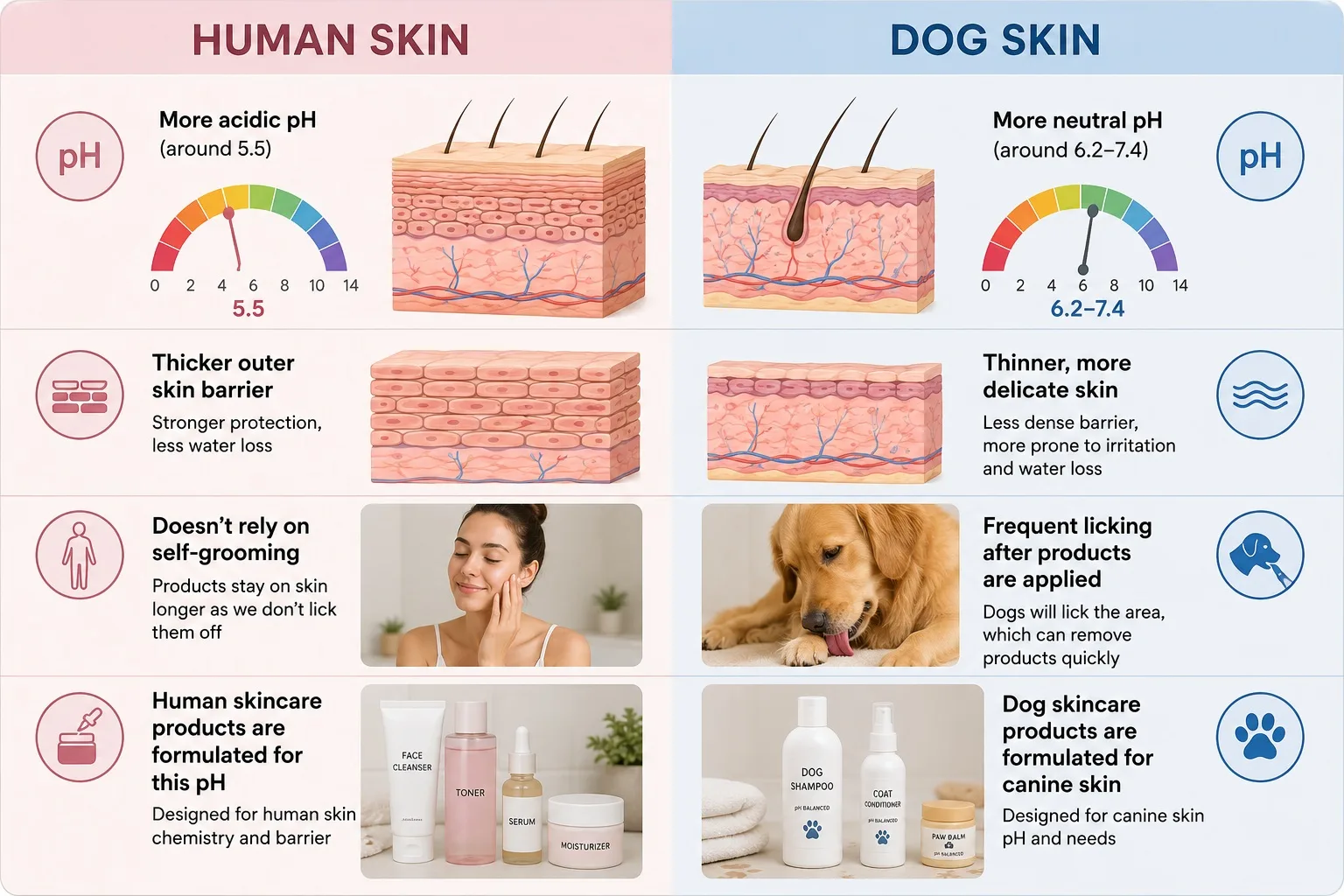
Because of these differences, repeated use of human lotions may disrupt the natural skin barrier in some dogs, making irritation more likely over time.
This is one reason veterinarians generally recommend moisturizers, conditioners, and sprays made specifically for dogs whenever possible.
Can Aveeno Actually Help Dry Skin?
Aveeno lotion can temporarily improve the appearance and feel of dry skin by adding moisture and reducing surface dryness. Colloidal oatmeal may also help calm mild irritation for a short period.
However, it’s important to understand what it cannot do.
Aveeno lotion does not treat the underlying causes of dry skin, such as:
- Environmental allergies
- Food allergies
- Flea allergy dermatitis
- Mange
- Bacterial skin infections
- Yeast infections
- Hormonal disorders
- Nutritional deficiencies
- Autoimmune skin diseases
If your dog’s dry skin keeps returning despite moisturizing, the underlying condition should be diagnosed rather than repeatedly treating the symptom.
Which Aveeno Ingredients Are Generally Considered Safe for Dogs?
Not every Aveeno lotion contains the same ingredients. Some formulas are relatively simple, while others include fragrances, exfoliating acids, or active ingredients that aren’t appropriate for dogs.
If your veterinarian approves occasional use of an Aveeno product, look for formulas with minimal ingredients and avoid products with added perfumes or medicated ingredients.
The table below provides a general overview of common ingredients found in Aveeno products.
| Ingredient | Generally Safe? | Why It Matters |
|---|---|---|
| Colloidal oatmeal | ✅ Usually | Helps soothe dry, irritated skin and supports the skin barrier. |
| Water | ✅ Yes | Safe carrier ingredient. |
| Glycerin | ✅ Usually | Draws moisture into the skin and helps reduce dryness. |
| Dimethicone | ✅ Usually | Forms a protective barrier that helps reduce moisture loss. |
| Shea butter | ✅ Usually | Moisturizes dry skin, though some dogs may lick it because of its scent. |
| Petrolatum | ✅ Usually | Locks in moisture but can feel greasy and encourage licking. |
| Mineral oil | ✅ Usually | Helps prevent moisture loss when used sparingly. |
Even ingredients that are generally considered safe should only be used in small amounts, as dogs are much more likely than humans to ingest topical products while grooming.
Ingredients That May Cause Problems
Some Aveeno products contain ingredients that are better avoided unless your veterinarian specifically recommends them.
These ingredients may irritate your dog’s skin or cause digestive upset if swallowed.
| Ingredient | Why It Can Be a Problem |
|---|---|
| Added fragrance or perfume | Can irritate sensitive skin and increase allergic reactions. |
| Essential oils | Many are unsuitable or potentially toxic to dogs, depending on the type and amount. |
| Menthol | May irritate the skin and mouth if licked. |
| Camphor | Can be toxic if ingested in sufficient amounts. |
| Salicylic acid | Found in some medicated products and should only be used under veterinary guidance. |
| Retinol (Vitamin A) | Intended for human skincare and not recommended for routine canine use. |
| Alpha-hydroxy acids (AHAs) | Can increase skin irritation. |
| Strong preservatives or alcohol-based ingredients | May dry or irritate sensitive canine skin. |
As a general rule, the simpler the ingredient list, the lower the risk of irritation.
What Happens If a Dog Licks Aveeno Lotion?
This is one of the biggest concerns for pet owners.
Dogs naturally lick their skin after something is applied, and unlike topical medications made for pets, human lotions aren’t designed to be ingested.
If your dog licks a small amount of plain Aveeno lotion, they will often experience no symptoms at all. In some cases, however, mild digestive upset can occur.
Possible signs include:
- Excessive drooling
- Lip licking
- Vomiting
- Diarrhoea
- Mild stomach discomfort
- Temporary loss of appetite
These symptoms usually resolve on their own if only a tiny amount was ingested.
However, larger quantities or products containing fragrances, essential oils, medicated ingredients, or other additives can increase the risk of more serious problems.
Contact your veterinarian promptly if your dog:
- Eats a significant amount of lotion
- Develops repeated vomiting
- Becomes unusually lethargic
- Shows tremors or seizures
- Has difficulty breathing
- Develops swelling of the face or hives
If you’re unsure how much your dog ingested, it’s always safest to seek veterinary advice.
Can Aveeno Help Itchy Skin?
Sometimes—but only temporarily.
If your dog’s itching is caused by simple dry skin, the moisturizing effect of colloidal oatmeal may provide short-term relief.
However, itching is often a symptom of a much larger issue.
Common causes of itchy skin include:
- Environmental allergies
- Flea allergy dermatitis
- Food allergies
- Yeast infections
- Bacterial skin infections
- Mange mites
- Contact allergies
- Hormonal disorders
In these situations, lotion may reduce dryness for a few hours, but it won’t treat the underlying disease.
If your dog has been scratching for several days, keeps waking at night to scratch, or develops sores from itching, a veterinary examination is far more important than repeatedly applying moisturizer.
Is Aveeno Baby Lotion Safer for Dogs?
Many owners assume that because a product is made for babies, it must also be safe for dogs.
Unfortunately, that’s not necessarily true.
Aveeno Baby lotions are formulated for delicate human skin—not canine skin. While many baby products contain gentle moisturizers and colloidal oatmeal, they may also include fragrances or other ingredients that aren’t ideal for dogs.
If comparing standard scented lotion with a plain, fragrance-free baby formula, the baby product may be the gentler option. However, it should still be considered a temporary solution rather than a routine skincare product for your dog.
Whenever possible, choose products specifically developed for canine skin instead.
Aveeno Lotion vs. Aveeno Oatmeal Bath
People often confuse Aveeno’s moisturizing lotions with its colloidal oatmeal bath products.
Although both contain oatmeal, they serve different purposes.
| Feature | Aveeno Lotion | Aveeno Oatmeal Bath |
|---|---|---|
| Primary purpose | Moisturises dry skin | Soothes irritated skin during bathing |
| Leaves residue on skin | Yes | Usually rinsed or lightly left after soaking, depending on use |
| Risk if licked | Higher | Lower after proper rinsing |
| Suitable for large body areas | Generally no | Better suited for widespread skin irritation |
| Veterinary preference | Occasional spot use only | Oatmeal baths are often preferred for widespread dryness when recommended by a veterinarian |
An oatmeal bath may be a better option when large areas of the body are affected because it allows the skin to benefit from oatmeal without leaving a thick layer of lotion that encourages licking.
That said, even oatmeal baths shouldn’t replace veterinary care if your dog has persistent skin disease.
Does Aveeno Cure Skin Problems?
No.
Aveeno lotion is a moisturiser, not a medication.
It cannot cure:
- Allergies
- Hot spots
- Ringworm
- Mange
- Bacterial infections
- Yeast infections
- Flea infestations
- Hormonal skin disorders
If your dog’s skin problem lasts more than a few days or keeps coming back, the goal should be identifying the underlying cause rather than relying on lotion for repeated relief.
Better Alternatives to Aveeno Lotion for Dogs
While Aveeno may provide temporary relief in certain situations, products formulated specifically for dogs are usually the better choice. Canine skincare products are designed with a dog’s skin pH in mind and are generally safer if a small amount is licked during grooming.
| Product | Best For | Key Features | Amazon |
|---|---|---|---|
| Warren London Hydrating Butter | Dry skin & coat | Leave-in moisturizer with aloe vera and shea butter | Check Price on Amazon |
| Natural Dog Company Skin Soother | Hot spots, dry patches, cracked skin | Natural balm with herbal ingredients | Check Price on Amazon |
| Earthbath Oatmeal & Aloe Shampoo | Dry, itchy skin | Soap-free oatmeal shampoo for sensitive skin | Check Price on Amazon |
| Burt's Bees Oatmeal Dog Shampoo | Mild dryness | Colloidal oatmeal and honey | Check Price on Amazon |
| Palmer's for Pets Cocoa Butter Paw Pad & Nose Balm | Dry paws and noses | Moisturizing balm designed for dogs | Check Price on Amazon |
Depending on the cause of your dog’s dry or itchy skin, your veterinarian may recommend one or more of the following.
1. Oatmeal Dog Shampoos
Oatmeal shampoos are one of the most common first-line options for dogs with mild dry skin. Many contain colloidal oatmeal along with ingredients that gently cleanse the coat without stripping away natural oils.
These shampoos can help:
- Soothe mild irritation
- Reduce dryness
- Improve coat softness
- Support the skin’s natural moisture barrier
Avoid bathing too frequently, as excessive washing can actually make dry skin worse.
2. Dog Moisturizing Sprays and Conditioners
Leave-in sprays and rinse-out conditioners made for dogs can provide moisture without leaving behind the heavy residue often associated with human lotions.
They’re particularly useful for:
- Long-haired breeds
- Dogs with seasonal dry skin
- Senior dogs with dull coats
- Dogs that require frequent grooming
Because they’re formulated for pets, they’re generally less likely to upset your dog’s stomach if a small amount is ingested.
3. Paw Balms
If the problem is limited to cracked paw pads or dry noses, a dog-safe paw balm is often a better option than lotion.
Quality paw balms create a protective barrier that helps:
- Lock in moisture
- Prevent cracking
- Protect against hot pavement
- Reduce irritation from snow, ice, and road salt
Choose products specifically labeled for dogs and avoid balms containing ingredients that could be harmful if licked.
4. Omega-3 Fatty Acid Supplements
Dry skin doesn’t always need a topical treatment.
In many dogs, improving nutrition from the inside can make a noticeable difference over time.
Omega-3 fatty acids may help support:
- Healthy skin
- A shinier coat
- Reduced inflammation
- Improved skin barrier function
Speak with your veterinarian before starting supplements to ensure your dog receives an appropriate product and dosage.
5. Veterinary Prescription Treatments
If your dog’s skin problems are caused by allergies, infections, parasites, or hormonal conditions, moisturizers alone won’t solve the issue.
Your veterinarian may prescribe treatments such as:
- Medicated shampoos
- Anti-itch medications
- Antibiotics
- Antifungal medications
- Allergy treatments
- Parasite control
These treatments address the underlying cause instead of simply masking the symptoms.
When Should You NOT Use Aveeno Lotion?
Even a gentle moisturizer isn’t appropriate in every situation.
Avoid using Aveeno lotion if your dog has any of the following:
- Open cuts or wounds
- Bleeding skin
- Hot spots (acute moist dermatitis)
- Oozing sores
- Suspected bacterial infection
- Yeast infection
- Ringworm or other fungal infections
- Severe allergic reactions
- Large areas of inflamed skin
- Extensive hair loss
- Deeply cracked paw pads
- Burns
- Skin around the eyes, nose, or mouth
Applying lotion in these situations may trap moisture, interfere with treatment, or encourage excessive licking.
Instead of experimenting with home remedies, consult your veterinarian for an accurate diagnosis.
Natural Ways to Help Dry Skin in Dogs
If your dog’s dry skin isn’t caused by an underlying medical condition, a few simple lifestyle changes may help improve skin health naturally.
Feed a Balanced Diet
Skin health starts with proper nutrition.
A complete and balanced diet provides the proteins, essential fatty acids, vitamins, and minerals needed to maintain healthy skin and a glossy coat.
Poor-quality diets or nutritional deficiencies can contribute to dry, flaky skin.
Brush Your Dog Regularly
Regular brushing helps distribute natural skin oils across the coat.
Benefits include:
- Removing dead hair
- Reducing mats
- Stimulating circulation
- Spreading protective oils
- Helping identify skin problems early
The ideal brushing frequency depends on your dog’s coat type.
Avoid Over-Bathing
Many owners unknowingly make dry skin worse by bathing their dog too often.
Frequent bathing can strip away protective oils, leaving the skin dry and irritated.
Unless your veterinarian recommends otherwise, most healthy dogs don’t need weekly baths.
Instead:
- Use a gentle dog shampoo.
- Rinse thoroughly.
- Dry the coat completely.
- Follow grooming recommendations for your dog’s breed and coat type.
- Increase Indoor Humidity
Cold weather and indoor heating can dry out both human and canine skin.
Running a humidifier during the winter months may help reduce excessive dryness in some homes.
Ensure Adequate Hydration
Healthy skin depends on proper hydration.
Always provide fresh, clean drinking water, especially during hot weather or after exercise.
Although hydration alone won’t cure skin disease, it supports overall skin health.
How to Apply Lotion Safely (If Your Veterinarian Approves)
If your veterinarian recommends occasional use of a plain Aveeno lotion, applying it correctly can reduce the risk of problems.
Follow these basic steps:
- Clean the area using lukewarm water if necessary and gently pat it dry.
- Apply a very thin layer only to the affected area.
- Massage gently until most of the lotion is absorbed.
- Prevent licking for at least 10–15 minutes. Distraction with a walk, toy, or treat can help. An Elizabethan collar may be necessary for persistent lickers.
- Monitor the skin over the next 24 hours for redness, swelling, increased itching, or other signs of irritation.
- Stop using the product and contact your veterinarian if the skin worsens or your dog develops digestive upset after licking the area.
More is not better. Applying large amounts of lotion can leave a greasy residue that encourages licking and may worsen the problem.
Can Dry Skin Be Prevented?
Not every case of dry skin can be prevented, but good skin care can reduce the risk.
Healthy habits include:
- Feeding a high-quality diet
- Keeping your dog at a healthy weight
- Using dog-specific grooming products
- Maintaining regular flea and tick prevention
- Grooming routinely to remove loose hair and debris
- Managing environmental allergies with your veterinarian if needed
- Scheduling routine veterinary checkups to catch skin problems early
Taking these preventive steps can help keep your dog’s skin healthy year-round and reduce the need for topical moisturizers.
When Should You See a Veterinarian?
Occasional dry skin isn’t always an emergency, but persistent or severe skin problems should never be ignored. Many skin conditions look similar on the surface but require completely different treatments.
Schedule a veterinary appointment if your dog has:
- Itching that lasts for more than a few days
- Constant scratching, chewing, or licking
- Red, inflamed, or swollen skin
- Open sores or hot spots
- Hair loss or bald patches
- Thickened or darkened skin
- Pus, discharge, or a foul odor
- Recurrent ear infections along with itchy skin
- Dry skin that doesn’t improve with basic care
- Signs of pain when touched
Your veterinarian may recommend diagnostic tests such as skin scrapings, cytology, allergy testing, or blood work to determine the underlying cause before starting treatment.
Frequently Asked Questions
Can dogs use Aveeno lotion every day?
No. Human lotions are not intended for routine use on dogs. If your dog needs frequent moisturizing, it’s better to use a product formulated specifically for canine skin or consult your veterinarian to identify the underlying cause of the dryness.
Is Aveeno toxic to dogs?
Most plain Aveeno lotions are not considered highly toxic when a small amount is accidentally licked. However, some formulations contain fragrances or other ingredients that may cause stomach upset or skin irritation. Larger ingestions or medicated products warrant a call to your veterinarian or a pet poison helpline.
Can puppies use Aveeno lotion?
It’s best to avoid using human lotions on puppies unless your veterinarian specifically recommends one. Puppies have delicate skin and are more likely to lick off anything applied to their bodies.
Is Aveeno Baby lotion safe for dogs?
Aveeno Baby lotion may be gentler than some adult lotions, but it is still formulated for human skin. A dog-specific moisturizer is usually the safer option.
Can I use Aveeno lotion on my dog’s paws?
If your dog’s paw pads are mildly dry, a small amount of plain, fragrance-free lotion may provide temporary moisture. However, dog-safe paw balms are generally a better choice because they’re designed to withstand licking and protect the paw pads.
Can Aveeno help dogs with allergies?
Not directly. Aveeno may temporarily soothe dry or mildly irritated skin, but it doesn’t treat environmental allergies, food allergies, flea allergy dermatitis, or other allergic conditions.
Is colloidal oatmeal safe for dogs?
Yes. Colloidal oatmeal is commonly used in veterinary shampoos and skincare products because of its soothing and moisturizing properties. However, the overall safety of a product depends on all of its ingredients, not just the oatmeal.
What should I do if my dog eats Aveeno lotion?
If only a tiny amount was licked, your dog may experience no symptoms or only mild digestive upset. If your dog consumes a large amount or develops repeated vomiting, diarrhea, tremors, lethargy, or other concerning signs, contact your veterinarian immediately.
Is coconut oil better than Aveeno?
Coconut oil is another popular home remedy for dry skin, but it also has limitations. It can leave the coat greasy, encourage licking, and may upset the stomach if consumed in large amounts. Neither coconut oil nor Aveeno treats the underlying cause of chronic skin disease.
What’s the best moisturizer for dogs?
The best choice depends on why your dog’s skin is dry. In most cases, veterinarians recommend dog-specific moisturizers, oatmeal shampoos, conditioners, or prescription treatments rather than human lotions.
Key Takeaways
- Plain, fragrance-free Aveeno lotion may be used occasionally on small areas only if your veterinarian approves.
- Human lotions are not formulated for canine skin and shouldn’t become part of your dog’s regular grooming routine.
- Dogs often lick topical products, increasing the risk of digestive upset.
- Persistent dry or itchy skin usually indicates an underlying problem that requires proper diagnosis.
- Dog-specific moisturizers, oatmeal shampoos, and veterinary treatments are generally safer and more effective than human skincare products.
Final Verdict
Aveeno lotion isn’t inherently dangerous for every dog, but it also isn’t the ideal solution for routine canine skincare.
If your dog has a small patch of dry skin and your veterinarian recommends a plain, fragrance-free Aveeno product, occasional use is unlikely to cause problems for many dogs. However, it should never replace products designed specifically for canine skin or be used to treat ongoing itching, allergies, infections, or other medical conditions.
The safest approach is to identify why your dog’s skin is dry rather than simply treating the symptom. Choosing dog-specific skincare products, maintaining a balanced diet, and seeking veterinary advice for persistent skin issues will do far more for your dog’s comfort and long-term skin health than relying on a bottle of human lotion.
Medical Disclaimer
This article is intended for informational and educational purposes only and should not be considered a substitute for professional veterinary advice, diagnosis, or treatment. Always consult your veterinarian before applying human skincare products to your dog or starting any new treatment, especially if your dog has persistent itching, skin lesions, signs of infection, or an underlying medical condition.