

If you’ve ever dropped a slice of pepper while cooking and your dog quickly picked it up, you may have wondered whether peppers are actually safe for dogs.
The answer depends entirely on the type of pepper. While sweet bell peppers are packed with vitamins and can make a healthy occasional treat, many spicy peppers contain capsaicin—the compound responsible for their heat—which can irritate your dog’s mouth, stomach, and digestive tract. The hotter the pepper, the greater the risk of discomfort.
With dozens of pepper varieties available around the world, it can be difficult to know which ones are safe and which should stay off your dog’s menu.
In this guide, we’ll cover 35 common pepper types, explaining whether each one is safe for dogs, their nutritional benefits (if any), potential risks, and how to serve them safely.
Quick Answer:
Yes, dogs can eat some peppers—but not all of them. Sweet bell peppers (red, green, yellow, and orange) are safe in moderation and provide vitamins A, C, and antioxidants. However, spicy peppers such as jalapeños, serranos, cayenne, habaneros, ghost peppers, and Carolina Reapers should be avoided because they contain capsaicin, which can cause drooling, vomiting, diarrhoea, and stomach irritation.
Table of Contents
Can Dogs Eat Peppers?
Yes, dogs can eat certain peppers, but whether they’re safe depends on the variety.
Sweet peppers, particularly bell peppers, are non-spicy and can be a healthy addition to your dog’s diet when served plain and in moderation. They contain beneficial nutrients and are low in calories, making them a better treat option than many processed snacks.
On the other hand, hot peppers should never be intentionally fed to dogs. Although capsaicin isn’t usually toxic in the small amounts found in fresh peppers, it can cause significant gastrointestinal upset and discomfort. Extremely spicy peppers may lead to excessive drooling, vomiting, diarrhoea, abdominal pain, and repeated drinking due to the burning sensation.
As with any new food, peppers should only make up a small part of your dog’s diet. Treats and extras—including vegetables—should account for no more than about 10% of your dog’s daily calorie intake, while the rest should come from a complete and balanced dog food.
Nutritional Benefits of Bell Peppers for Dogs
Among all pepper varieties, bell peppers are by far the healthiest choice for dogs. They are naturally sweet, contain no capsaicin, and are packed with vitamins and antioxidants that support overall health.
Some of the key nutrients found in bell peppers include:
| Nutrient | How It Benefits Dogs |
|---|---|
| Vitamin A | Supports healthy vision, skin, and immune function. |
| Vitamin C | Acts as an antioxidant and helps support the immune system. |
| Vitamin E | Helps protect cells from oxidative damage and supports healthy skin. |
| Beta-carotene | Converted into vitamin A and contributes to eye and skin health. |
| Fibre | Supports healthy digestion when fed in moderation. |
| Potassium | Helps maintain normal muscle and nerve function. |
| Water | Helps keep dogs hydrated, especially during warmer months. |
Although dogs naturally produce their own vitamin C, the antioxidants in fresh vegetables like bell peppers may still provide additional nutritional value as part of a balanced diet.
Can Dogs Eat Bell Peppers Every Day?
Even though bell peppers are safe for most dogs, they should be fed as an occasional treat rather than a daily staple. Treats and extras—including fruits and vegetables—should make up no more than about 10% of your dog’s daily calorie intake. If you’re looking for a nutritious reward between meals, single-ingredient freeze-dried dog treats are often a better choice than offering human foods regularly.
Recommended: Freeze-Dried Beef Liver Dog Treats: Check Price on Amazon
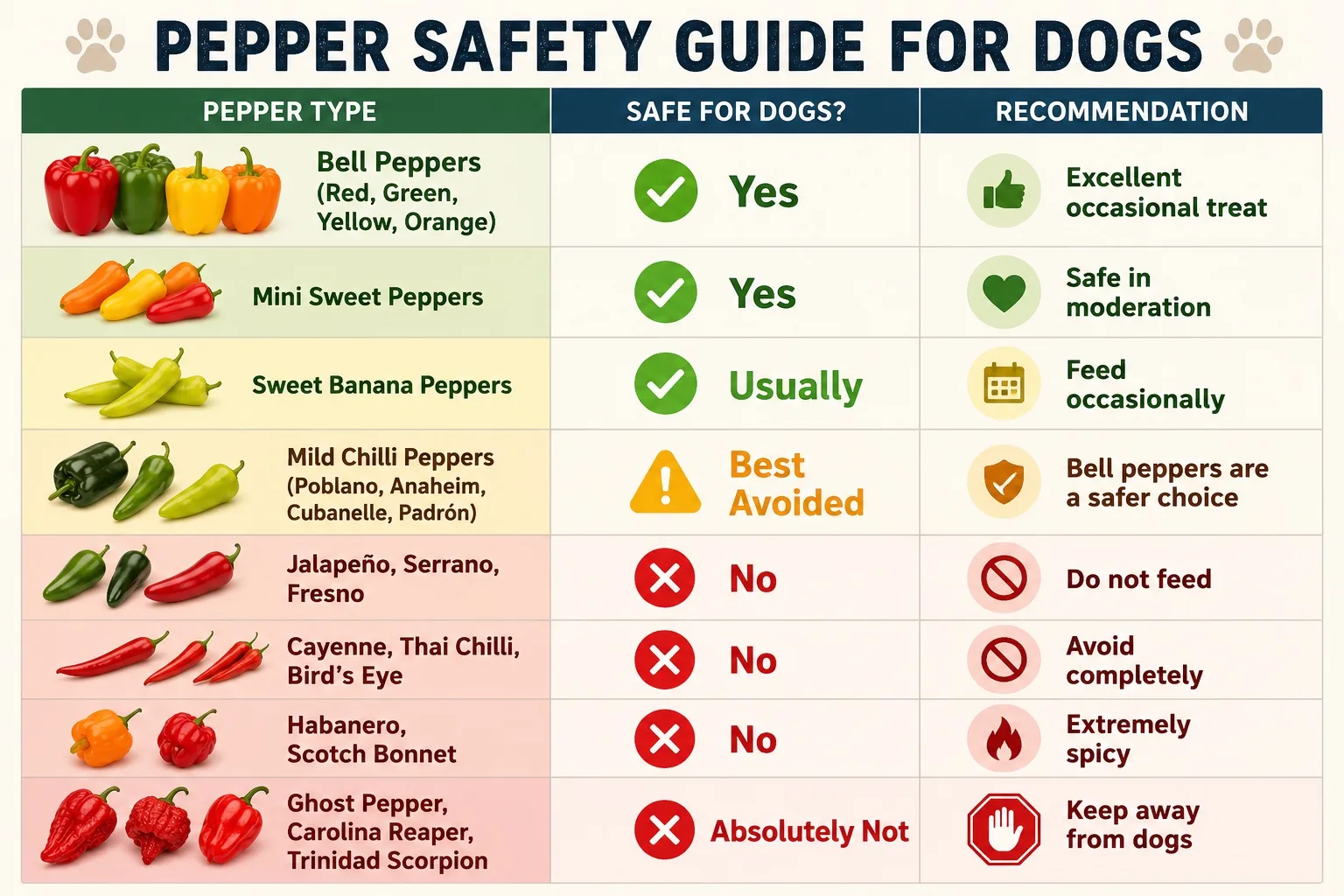
Pepper Safety at a Glance
Before we look at each pepper individually, here’s a quick overview of some of the most common varieties.
| Pepper Type | Safe for Dogs? | Notes |
|---|---|---|
| Red Bell Pepper | ✅ Yes | Most nutritious bell pepper. |
| Green Bell Pepper | ✅ Yes | Safe in moderation. |
| Yellow Bell Pepper | ✅ Yes | Rich in vitamins. |
| Orange Bell Pepper | ✅ Yes | Safe occasional treat. |
| Banana Pepper (Sweet) | ✅ Usually | Only if it's the sweet variety. |
| Poblano | ⚠️ Small amounts | Mild heat; not recommended as a regular treat. |
| Anaheim | ⚠️ Mild | Best avoided despite relatively low heat. |
| Jalapeño | ❌ No | Contains capsaicin. |
| Serrano | ❌ No | Hotter than jalapeños. |
| Cayenne | ❌ No | Highly irritating. |
| Habanero | ❌ No | Extremely spicy. |
| Ghost Pepper | ❌ No | Very high capsaicin levels. |
| Carolina Reaper | ❌ No | One of the hottest peppers in the world. |
Are Peppers Good for Dogs?
The answer depends on the type of pepper.
Sweet peppers, such as bell peppers, can be a healthy and refreshing snack when served in moderation. They’re low in calories, naturally high in water, and provide several vitamins and antioxidants that support your dog’s overall health.
However, peppers should never replace a complete and balanced dog food. Think of them as an occasional treat rather than a dietary staple.
Hot peppers, on the other hand, offer little nutritional benefit for dogs. Their capsaicin content can irritate the digestive system and leave your dog uncomfortable, making them a poor choice even in small amounts.
As a general rule, if you find a pepper spicy, don’t feed it to your dog.
Why Are Spicy Peppers Bad for Dogs?
The main reason is a natural compound called capsaicin.
Capsaicin is responsible for the heat in chilli peppers. While humans may enjoy spicy foods, dogs don’t tolerate capsaicin well.
Unlike chocolate, grapes, or xylitol, capsaicin isn’t usually considered highly toxic. However, it can still cause significant discomfort, especially if your dog eats a large amount or consumes an extremely hot pepper.
Possible effects include:
- Excessive drooling
- Pawing at the mouth
- Drinking large amounts of water
- Vomiting
- Diarrhoea
- Stomach pain
- Restlessness
- Loss of appetite
The hotter the pepper, the more capsaicin it contains. This is why bell peppers are generally safe, while varieties like habaneros, ghost peppers, and Carolina Reapers should always be avoided.
What Should You Do If Your Dog Eats a Hot Pepper?
Many dogs accidentally eat a spicy pepper after finding dropped food or helping themselves from a plate. While this is rarely a life-threatening emergency, it’s important to monitor them closely.
If your dog eats a small piece of a hot pepper:
- Offer plenty of fresh water.
- Watch for signs of stomach upset over the next 24 hours.
- Avoid giving additional human foods or home remedies unless advised by your veterinarian.
Contact your veterinarian promptly if your dog:
- Eats a large quantity of spicy peppers
- Consumes an extremely hot variety, such as a Ghost Pepper or Carolina Reaper
- Has repeated vomiting or diarrhoea
- Appears unusually lethargic
- Has difficulty breathing
- Shows signs of severe pain or distress
If your dog has underlying digestive disease or is a puppy, it’s always safer to seek veterinary advice.
Can Puppies Eat Peppers?
Puppies can technically eat small amounts of plain bell pepper once they’re eating solid food, but it isn’t necessary.
Young puppies have sensitive digestive systems, and introducing too many new foods can increase the risk of stomach upset.
If you’d like your puppy to try bell pepper:
- Start with one or two small pieces.
- Remove the stem and seeds.
- Serve it plain without seasoning.
- Monitor for vomiting or diarrhoea.
Never give puppies spicy peppers, as they’re more likely to react to capsaicin than healthy adult dogs.
Can Dogs Eat Raw or Cooked Peppers?
Both raw and cooked bell peppers can be safe, provided they’re prepared correctly.
Here’s a quick comparison:
| Preparation | Safe? | Notes |
|---|---|---|
| Raw bell peppers | ✅ | Wash thoroughly and cut into bite-sized pieces. |
| Steamed bell peppers | ✅ | Softer and easier for some dogs to digest. |
| Boiled bell peppers | ✅ | Safe if served plain. |
| Roasted bell peppers | ✅ | Fine if unseasoned and oil-free. |
| Grilled bell peppers | ✅ | Safe without spices, garlic, or onions. |
| Stuffed peppers | ❌ | Often contain onions, garlic, cheese, or seasonings that may be harmful. |
| Pickled peppers | ❌ | Too much salt and vinegar. |
| Fried peppers | ❌ | High in fat and often heavily seasoned. |
Regardless of how they’re prepared, peppers should always be served plain. Avoid adding:
- Garlic
- Onion
- Salt
- Butter
- Chilli flakes
- Pepper seasoning
- Heavy oils or sauces
These ingredients are far more concerning than the bell pepper itself.
We prefer steaming vegetables rather than frying or seasoning them. A simple vegetable steamer basket makes it easy to prepare peppers and other dog-safe vegetables without adding ingredients that may be harmful to dogs. Check the latest price on Amazon.
Check this Food Steamer on Amazon

45 Pepper Types: Which Ones Are Safe for Dogs?
Not all peppers are created equal. While sweet peppers can be a healthy snack, spicy varieties contain capsaicin and should be avoided. Below is a breakdown of 35 common pepper types and whether they’re safe for dogs.
Can Dogs Eat Red Bell Peppers?
Safe? ✅ Yes
Red bell peppers are the healthiest pepper variety for dogs. Because they’re fully ripened, they contain higher levels of vitamins A and C, beta-carotene, and antioxidants than green bell peppers. Serve them raw or lightly steamed in bite-sized pieces, and always remove the stem and seeds before feeding.
Can Dogs Eat Green Bell Peppers?
Safe? ✅ Yes
Green bell peppers are simply unripe bell peppers. They’re perfectly safe for dogs in moderation, although they contain slightly fewer antioxidants than red bell peppers. Their crisp texture also makes them a refreshing low-calorie snack.
Can Dogs Eat Yellow Bell Peppers?
Safe? ✅ Yes
Yellow bell peppers are safe and provide many of the same vitamins and minerals as other sweet bell peppers. Wash them thoroughly and offer small slices as an occasional treat.
Can Dogs Eat Orange Bell Peppers?
Safe? ✅ Yes
Orange bell peppers are another excellent choice. They’re naturally sweet, rich in antioxidants, and contain no capsaicin, making them safe for most healthy dogs when fed in moderation.
Can Dogs Eat Mini Bell Peppers?
Safe? ✅ Yes
Mini bell peppers are a safe, crunchy snack for dogs. They’re smaller but packed with nutrients. Slice them into small pieces and remove the seeds for easy digestion.
Can Dogs Eat Mini Sweet Peppers?
Safe? ✅ Yes
Mini sweet peppers belong to the same family as bell peppers and are completely safe for dogs. Because of their smaller size and sweeter flavour, they’re easy to cut into bite-sized treats for training or rewards.
Can Dogs Eat Banana Peppers?
Safe? ⚠️ Usually
Banana peppers are only mildly spicy, but they can still upset your dog’s stomach and cause discomfort. While they aren’t toxic, their slight heat and acidity may lead to digestive issues such as drooling, gas, or loose stools. Dogs have more sensitive stomachs than humans, so it’s best to avoid feeding them any type of spicy pepper.
If your dog accidentally eats a small piece, offer fresh water and watch for signs of irritation or discomfort. Stick to dog-safe vegetables like bell peppers or carrots instead; they’re gentle on the stomach and provide valuable nutrients without the risk.
Can Dogs Eat Cubanelle Peppers?
Safe? ⚠️ Usually
Cubanelle peppers are considered mild peppers with very low heat. While they aren’t highly spicy, they’re not as beneficial as bell peppers. If offered, they should be plain, fresh, and given only occasionally.
Can Dogs Eat Anaheim Peppers?
Safe? ⚠️ Best Avoided
Anaheim peppers are milder than many chilli peppers but still contain capsaicin. Even mild heat can irritate sensitive dogs, so it’s generally safer to choose sweet bell peppers instead.
Can Dogs Eat Poblano Peppers?
Safe? ⚠️ Best Avoided
Poblano peppers are relatively mild for humans but still contain enough capsaicin to upset a dog’s stomach. While a tiny accidental bite is unlikely to be dangerous, they shouldn’t be offered intentionally.
Can Dogs Eat Shishito Peppers?
Safe? ⚠️ Not Recommended
Most shishito peppers are mild, but some can be surprisingly spicy. Since there’s no easy way to tell which one contains more heat, it’s better to avoid feeding them to your dog.
Can Dogs Eat Pepperoncini?
Safe? ❌ No
Pepperoncini peppers are commonly sold pickled in vinegar and salt, making them unsuitable for dogs. Even fresh pepperoncini contain capsaicin and can irritate your dog’s digestive system.
Can Dogs Eat Cherry Peppers?
Safe? ❌ No
Dogs should not eat cherry peppers. These peppers can cause stomach upset, vomiting, or diarrhoea due to their spiciness and capsaicin content. Even small amounts may irritate a dog’s digestive system.
Can Dogs Eat Jalapeños?
Safe? ❌ No
Dogs should never eat jalapeños. These peppers are too spicy for their digestive systems and can cause irritation, stomach pain, diarrhea, and vomiting. Even a small amount may lead to significant discomfort or distress.
Dogs are much more sensitive to capsaicin, the compound that makes peppers hot, than humans. Always keep spicy foods, including jalapeños, chili peppers, and dishes seasoned with them, safely out of reach. If your dog accidentally eats one, monitor them closely for signs of discomfort and provide plenty of water. Contact your vet if symptoms persist or worsen.
Can Dogs Eat Serrano Peppers?
Safe? ❌ No
Serrano peppers are much hotter than jalapeños. Even a small amount can cause burning sensations, excessive drooling, and gastrointestinal distress. Keep these far from your dog’s food.
Can Dogs Eat Fresno Peppers?
Safe? ❌ No
Fresno peppers resemble red jalapeños and contain similar levels of capsaicin. Dogs gain no nutritional benefit from eating them, and the potential for stomach upset outweighs any advantages.
Can Dogs Eat Cayenne Peppers?
Safe? ❌ No
Cayenne peppers contain a high concentration of capsaicin, the compound responsible for their intense heat. Even a small amount can irritate your dog’s mouth, throat, and digestive tract, leading to drooling, vomiting, diarrhoea, and abdominal discomfort. Keep cayenne peppers and cayenne powder away from pets.
Can Dogs Eat Thai Chilli Peppers?
Safe? ❌ No
Thai chilli peppers are significantly hotter than jalapeños and can cause severe digestive upset in dogs. They provide no nutritional benefit and should never be offered as a treat.
Can Dogs Eat Bird’s Eye Chilli?
Safe? ❌ No
Bird’s Eye chillies are extremely spicy despite their small size. Their high capsaicin content can cause burning sensations, stomach irritation, excessive drooling, vomiting, and diarrhoea in dogs.
Can Dogs Eat Tabasco Peppers?
Safe? ❌ No
Tabasco peppers are the peppers used to make Tabasco sauce and contain substantial amounts of capsaicin. Fresh peppers and Tabasco sauce should both be kept away from dogs, as sauces also contain vinegar, salt, and other ingredients that aren’t suitable for pets.
Can Dogs Eat Scotch Bonnet Peppers?
Safe? ❌ No
Dogs should not eat Scotch Bonnet peppers. These peppers are extremely hot and contain high levels of capsaicin, which can cause mouth and stomach irritation, vomiting, diarrhoea, excessive drooling, and dehydration in dogs. Even a small amount can be painful, so it’s best to avoid Scotch Bonnets entirely.
Can Dogs Eat Habanero Peppers?
Safe? ❌ No
Habaneros are extremely hot peppers that contain far more capsaicin than jalapeños. If eaten, they can cause intense mouth irritation, excessive thirst, drooling, vomiting, diarrhoea, and abdominal pain. Seek veterinary advice if your dog consumes a large amount.
Can Dogs Eat Habanero Peppers?
Safe? ❌ No
Habaneros are extremely hot peppers that contain far more capsaicin than jalapeños. If eaten, they can cause intense mouth irritation, excessive thirst, drooling, vomiting, diarrhoea, and abdominal pain. Seek veterinary advice if your dog consumes a large amount.
Can Dogs Eat Carolina Reaper Peppers?
Safe? ❌ Absolutely Not
Dogs should never eat Carolina Reaper peppers. This pepper is one of the hottest in the world, containing extremely high levels of capsaicin, which can cause severe pain, burning sensations, vomiting, diarrhoea, dehydration, and even respiratory distress in dogs. Always keep Carolina Reapers far away from pets.
Can Dogs Eat Trinidad Scorpion Peppers?
Safe? ❌ No
No, dogs should never eat Trinidad Scorpion peppers. These are also among the hottest peppers in the world, containing dangerously high levels of capsaicin, which can cause severe mouth pain, stomach upset, vomiting, diarrhoea, and even inflammation of the digestive tract. Ingesting these peppers can be extremely distressing and harmful.
Can Dogs Eat Hungarian Wax Peppers?
Safe? ⚠️ Best Avoided
Hungarian Wax peppers vary in heat depending on how ripe they are. Some are relatively mild, while others are surprisingly spicy. Because it’s difficult to predict their heat level, it’s safest not to feed them to dogs.
Can Dogs Eat Padrón Peppers?
Safe? ⚠️ Not Recommended
Most Padrón peppers are mild, but one in every few peppers can be unexpectedly spicy. Since there’s no easy way to tell which ones contain more capsaicin, they aren’t an ideal choice for dogs.
Can Dogs Eat Pequin Peppers?
Safe? ❌ No
Pequin peppers are small but surprisingly hot. Their capsaicin content is high enough to cause digestive upset, making them unsuitable for dogs.
Can Dogs Eat Chiltepin Peppers?
Safe? ❌ No
Often called the “mother of all peppers,” Chiltepin peppers pack considerable heat despite their tiny size. Dogs should not eat them due to the risk of stomach irritation.
Can Dogs Eat Guajillo Peppers?
Safe? ⚠️ Best Avoided
Guajillo peppers are usually sold dried and are commonly used in sauces and Mexican dishes. Although milder than many chillies, they still contain capsaicin and are often prepared with ingredients such as garlic, onions, and spices that are unsafe for dogs.
Can Dogs Eat Pasilla Peppers?
Safe? ⚠️ Best Avoided
No, dogs cannot eat Pasilla peppers. Although milder than some chillies, Pasillas still contain capsaicin, which can irritate a dog’s mouth, stomach, and digestive tract. Eating them may cause vomiting, diarrhoea, or excessive thirst.
Can Dogs Eat Mulato Peppers?
Safe? ⚠️ Best Avoided
Mulato peppers are dried poblano peppers. While they’re relatively mild, they still contain capsaicin and are commonly used in heavily seasoned dishes. Plain bell peppers remain the safer option.
Can Dogs Eat Hatch Peppers?
Safe? ⚠️ Not Recommended
Hatch peppers range from mild to fairly hot depending on the variety. Because of this variation, it’s difficult to know whether a particular pepper is safe. It’s better to avoid feeding them altogether.
Can Dogs Eat New Mexico Chilli Peppers?
Safe? ❌ No
New Mexico chillies are moderately spicy and contain enough capsaicin to irritate a dog’s digestive system. They should not be intentionally fed.
Can Dogs Eat Cascabel Peppers?
Safe? ⚠️ Best Avoided
Dogs should not eat cascabel peppers. Cascabels are spicy and contain capsaicin, a compound that can cause mouth irritation, stomach pain, vomiting, and diarrhoea in dogs. It may also lead to dehydration and discomfort.
Can Dogs Eat 7 Pot Douglah Peppers?
Safe? ❌ No
Dogs should never eat 7 Pot Douglah peppers. This pepper is one of the hottest varieties on Earth, containing an extremely high concentration of capsaicin. Even a small amount can cause intense burning sensations, vomiting, diarrhoea, drooling, and stomach pain in dogs.
Can Dogs Eat Malagueta Peppers?
Safe? ❌ No
Dogs should not eat Malagueta peppers. These small, spicy peppers contain capsaicin, which can irritate a dog’s mouth, throat, and digestive tract. Eating Malagueta peppers may cause vomiting, diarrhoea, drooling, and stomach pain.
Can Dogs Eat Piri Piri Peppers?
Safe? ❌ Absolutely Not
Dogs should not eat Piri Piri peppers. These peppers are extremely spicy and contain capsaicin, which can irritate a dog’s mouth, throat, and stomach. Even small amounts may cause vomiting, diarrhoea, or abdominal pain. Piri Piri seasoning and sauces are even more harmful due to added salt, garlic, and oils. Always stick to dog-safe treats instead.
Can Dogs Eat Aji Amarillo Peppers?
Safe? ❌ Absolutely Not
Dogs should not eat Aji Amarillo peppers. Although these Peruvian peppers are milder than many hot varieties, they still contain capsaicin, which can cause digestive upset, drooling, and discomfort in dogs. It’s best to keep Aji Amarillo, raw, cooked, or in sauces, away from your dog’s bowl.
Can Dogs Eat Lemon Drop Peppers?
Safe? ❌ Not Recomended
Dogs should not eat Lemon Drop peppers. Despite their fruity, citrus-like flavor, these peppers contain capsaicin, the compound that makes chilies hot. Even a small amount can cause mouth irritation, vomiting, or stomach pain in dogs. Always avoid giving spicy foods like Lemon Drop peppers to your dogs.
Can Dogs Eat Brazilian Starfish Peppers?
Safe? ❌ No
Dogs should not eat Brazilian Starfish peppers. These colorful, uniquely shaped chillies may look harmless, but like other varieties, they also contain capsaicin, which can cause burning sensations, drooling, stomach upset, and diarrhoea in dogs. It’s best to keep Brazilian Starfish peppers out of your dog’s diet.
Can Dogs Eat Rocoto Peppers?
Safe? ❌ Absolutely Not
Dogs should not consume even a particle of Rocoto peppers. These peppers are extremely spicy and contain high levels of capsaicin, which can irritate a dog’s mouth, throat, and digestive system. Eating Rocoto can lead to vomiting, diarrhoea, excessive drooling, and discomfort.
Can Dogs Eat Monzano Peppers?
Safe? ❌ No
Dogs should not eat Manzano peppers (also known as Apple Chilli). Like other hot peppers, Manzano peppers contain capsaicin, which can cause burning sensations, stomach pain, vomiting, and diarrhoea in dogs. Even a small amount can be too spicy for them.
Can Dogs Eat Chili Peppers?
Safe? ❌ No
All chili peppers contain varying amounts of capsaicin, which is harmful to dogs. Eating them can lead to abdominal pain, panting, drooling, and vomiting.
Can Dogs Eat Chipotle Peppers?
Safe? ❌ No
Chipotle peppers are smoked and derived from jalapeños, making them spicy and often seasoned. Never give smoked or processed peppers to dogs.
How Much Bell Pepper Can Dogs Eat?
Even though bell peppers are safe, they should only be an occasional treat rather than a regular part of your dog’s diet.
As a general guideline, treats—including vegetables—should make up no more than 10% of your dog’s daily calorie intake.
Here’s a simple serving guide:
| Dog Size | Recommended Amount |
|---|---|
| Extra Small (under 10 lbs / 4.5 kg) | 1–2 small pieces |
| Small (10–25 lbs / 4.5–11 kg) | 2–3 bite-sized pieces |
| Medium (25–50 lbs / 11–23 kg) | 3–5 pieces |
| Large (50–90 lbs / 23–41 kg) | Up to ¼ of a bell pepper |
| Giant (90+ lbs / 41+ kg) | Up to ½ of a bell pepper occasionally |
Introduce peppers gradually and monitor your dog for any digestive upset before offering them again.
How to Feed Bell Peppers Safely
If you’d like to add bell peppers to your dog’s diet, a little preparation goes a long way.
Before serving:
✅ Wash the pepper thoroughly.
✅ Remove the stem.
✅ Remove the seeds and white core.
✅ Cut into bite-sized pieces.
✅ Serve plain without seasoning.
Avoid feeding peppers that are:
- Fried
- Pickled
- Stuffed
- Covered in cheese
- Mixed with onions or garlic
- Coated in sauces or spices
Steaming bell peppers until slightly soft can make them easier for some dogs—especially seniors—to chew and digest.
Pepper Comparison Chart
Frequently Asked Questions
Can dogs eat pepper seeds?
A few seeds aren’t usually harmful, but it’s best to remove the seeds before serving peppers because they can be difficult to digest.
Can dogs eat pepper stems?
No. Pepper stems are tough, difficult to digest, and may present a choking hazard, particularly for small dogs.
Can dogs eat cooked peppers?
Yes, provided they’re plain and free from butter, onions, garlic, salt, or other seasonings.
Can dogs eat stuffed peppers?
No. Stuffed peppers often contain ingredients such as onions, garlic, cheese, spices, or excessive salt that can be harmful to dogs.
Can dogs eat black pepper?
Small amounts of ground black pepper aren’t usually toxic, but large amounts can irritate your dog’s stomach and respiratory tract. It’s best to avoid seasoning your dog’s food with black pepper.
Are peppers poisonous to dogs?
Sweet bell peppers are not poisonous and can be a healthy treat. However, spicy peppers should be avoided because they may cause digestive irritation.
My dog ate a jalapeño. What should I do?
Monitor your dog for drooling, vomiting, diarrhoea, or abdominal discomfort. Offer fresh water and contact your veterinarian if symptoms are severe or persistent.
Which pepper is the safest for dogs?
Red bell peppers are generally considered the healthiest and safest option because they’re naturally sweet, contain no capsaicin, and are rich in vitamins and antioxidants.
Final Verdict
Not all peppers are off-limits for dogs. In fact, sweet bell peppers can be a healthy, crunchy snack when served plain and in moderation. They’re low in calories, rich in antioxidants, and packed with vitamins that support your dog’s overall health.
Spicy peppers are a different story. Varieties such as jalapeños, serranos, cayenne peppers, habaneros, ghost peppers, and Carolina Reapers contain capsaicin, which can irritate your dog’s digestive system and cause unnecessary discomfort.
When in doubt, remember this simple rule:
If the pepper is sweet, it’s usually safe in moderation. If it’s spicy, keep it away from your dog.
By choosing safe vegetables, preparing them correctly, and feeding them as occasional treats, you can give your dog a little extra variety without compromising their health.