
Table of Contents
Quick Answer
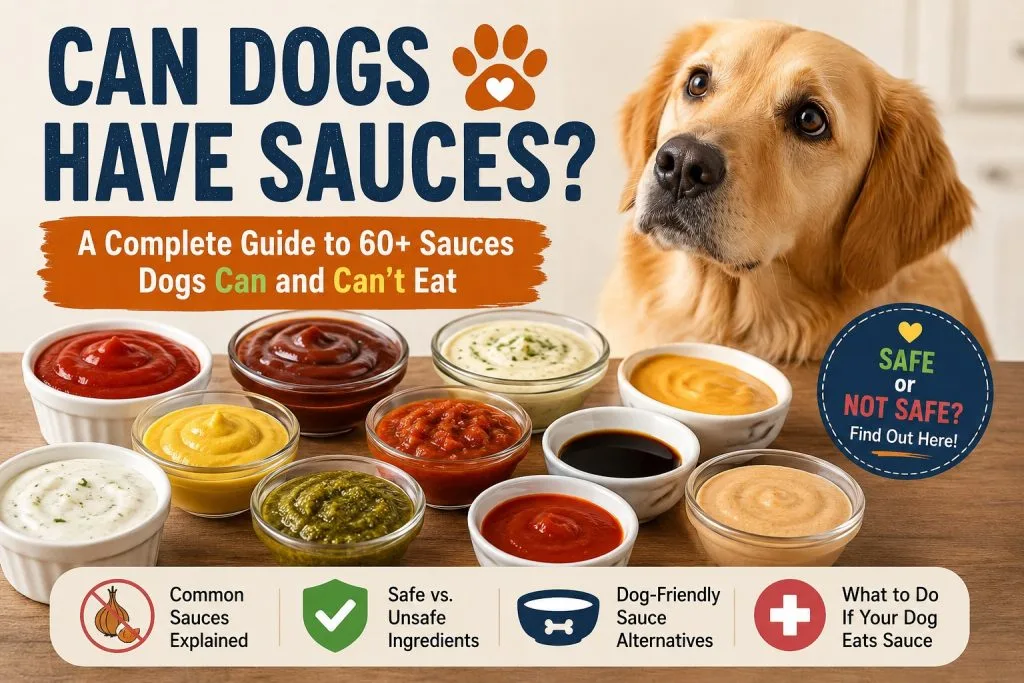
No, most human sauces are not safe for dogs. While a tiny lick of certain plain sauces is unlikely to cause serious harm in a healthy dog, many popular sauces contain ingredients that can be dangerous, including onion, garlic, excessive salt, sugar, chili peppers, artificial sweeteners (such as xylitol), alcohol, caffeine, and unhealthy fats.
Some simple homemade sauces made specifically for dogs—such as plain pumpkin puree, unsalted bone broth, or plain yogurt—can be offered occasionally as food toppers. However, commercial sauces like ketchup, soy sauce, barbecue sauce, hot sauce, Alfredo sauce, and ranch dressing should generally be avoided.
Can Dogs Have Sauces?
Sauces are designed to enhance the flavor of human food, but they are rarely formulated with dogs’ nutritional needs or safety in mind. Even sauces that seem harmless often contain multiple ingredients that can upset a dog’s digestive system or, in some cases, cause poisoning.
Unlike humans, dogs are much more sensitive to certain foods. Ingredients that are perfectly safe for people can lead to gastrointestinal upset, red blood cell damage, pancreatitis, or neurological symptoms in dogs.
For example:
- Garlic and onions can damage red blood cells and may cause anemia.
- Soy sauce contains extremely high levels of sodium.
- Barbecue sauce often combines sugar, garlic, onion, spices, and preservatives.
- Hot sauces contain capsaicin, which can irritate a dog’s digestive tract.
- Dessert sauces may contain chocolate, xylitol, caffeine, or excessive sugar.
Because recipes vary widely between brands, it’s difficult to declare an entire category of sauces as universally safe. Whenever possible, dogs should eat their food without added human condiments.
If your dog has eaten a large amount of sauce or consumed a sauce containing toxic ingredients such as onion, garlic, xylitol, chocolate, or alcohol, contact your veterinarian immediately.
At a Glance: Can Dogs Eat Different Types of Sauces?
| Sauce Category | Safe for Dogs? | Recommendation |
|---|---|---|
| Plain homemade pumpkin sauce | ✅ Yes | Safe in moderation |
| Plain unsalted bone broth | ✅ Yes | Excellent food topper |
| Plain yogurt sauce | ✅ Yes | Small amounts only |
| Tomato sauces | ❌ Usually No | Often contain onion and garlic |
| Pasta sauces | ❌ No | Avoid |
| Soy-based sauces | ❌ No | Extremely high in sodium |
| Hot sauces | ❌ No | Can irritate the digestive tract |
| Barbecue sauces | ❌ No | High in sugar, salt, garlic, and spices |
| Cream sauces | ⚠️ Usually Avoid | Rich in fat and dairy |
| Salad dressings | ❌ Usually No | Often contain garlic, onion, and seasonings |
| Dessert sauces | ❌ Usually No | High sugar and sometimes chocolate or xylitol |
| Alcohol-based sauces | ❌ Never | Potentially toxic |
Why Are Most Human Sauces Unsafe for Dogs?
Many people assume that if the main food is safe—for example, chicken or rice—the sauce must also be harmless. Unfortunately, this is often the opposite.
Most commercial sauces contain multiple ingredients that can be problematic for dogs.
Onion
Fresh onions, onion powder, dehydrated onion, and onion flakes all belong to the Allium family.
They can damage a dog’s red blood cells, potentially leading to hemolytic anemia. Even cooked onions remain toxic.
Garlic
Garlic is also part of the Allium family.
Although sometimes promoted in alternative pet remedies, veterinary toxicology experts generally advise against feeding garlic because excessive amounts can damage red blood cells similarly to onions.
Garlic is found in:
- Pasta sauce
- Pizza sauce
- Garlic butter
- Ranch dressing
- Marinades
- Barbecue sauce
- Aioli
- Garlic dipping sauces
Excess Salt (Sodium)
Many bottled sauces contain surprisingly large amounts of sodium.
Too much salt may contribute to:
- Excessive thirst
- Vomiting
- Diarrhea
- Weakness
- Dehydration
Soy sauce, teriyaki sauce, Worcestershire sauce, and many gravies are particularly high in sodium.
Chili Peppers and Spices
Capsaicin—the compound that makes chili peppers spicy—is not toxic in the traditional sense but can cause significant digestive irritation.
Dogs that eat spicy sauces may develop:
- Drooling
- Vomiting
- Diarrhea
- Stomach pain
- Restlessness
Sugar
Dogs do not require added sugar in their diet.
Frequently feeding sugary sauces may contribute to:
- Weight gain
- Dental disease
- Obesity
- Diabetes risk in susceptible dogs
Artificial Sweeteners
Some sugar-free sauces and syrups contain xylitol, an artificial sweetener that is extremely toxic to dogs.
Xylitol can cause:
- Rapid insulin release
- Severe hypoglycemia
- Liver failure
- Seizures
- Death if untreated
Always check ingredient labels before allowing your dog access to any sugar-free product.
Alcohol
Certain cooking sauces, wine reductions, and specialty marinades contain alcohol.
Even relatively small amounts may affect dogs more severely than humans because of their smaller body size and different metabolism.
Alcohol-containing sauces should never be intentionally fed to dogs.
Chocolate and Cocoa
Dessert sauces may contain cocoa powder or chocolate.
Chocolate toxicity depends on:
- Type of chocolate
- Amount eaten
- Dog’s body weight
Dark chocolate and cocoa powder are especially concerning because they contain higher levels of theobromine.
High Fat Content
Cream sauces, cheese sauces, butter sauces, and rich gravies often contain significant amounts of fat.
A large fatty meal may trigger digestive upset and, in some dogs, contribute to pancreatitis—a painful and potentially serious inflammation of the pancreas.
Are Any Sauces Safe for Dogs?
While most commercial sauces should be avoided, a few simple homemade options can make your dog’s meals more appealing without introducing unnecessary risks.
Generally, a dog-safe sauce should be:
- Free from onion and garlic
- Unsalted or very low in sodium
- Free from artificial sweeteners
- Mild and unseasoned
- Low in fat
- Made with dog-safe ingredients
Examples include:
- Plain pumpkin puree
- Unsalted chicken broth
- Unsalted beef broth
- Unsalted bone broth
- Plain Greek yogurt
- Mashed sweet potato
- Plain apple puree (without added sugar)
- Small amounts of xylitol-free peanut butter thinned with water
These should be viewed as occasional meal toppers rather than everyday additions to your dog’s diet.
How We Rated Each Sauce
Throughout this guide, every sauce is assigned one of three ratings:
| Rating | Meaning |
|---|---|
| ✅ Safe | Generally safe in small amounts when prepared without harmful ingredients. |
| ⚠️ Use Caution | Not usually toxic but may cause digestive upset or contain ingredients that require careful label checking. |
| ❌ Avoid | Contains ingredients that are commonly unsafe or potentially toxic for dogs and should not be intentionally fed. |
In the following sections, we’ll review more than 60 of the most common sauces, explain why each one falls into its category, and discuss any exceptions or safer alternatives where appropriate.
Tomato-Based Sauces
Tomato-based sauces are among the most common condiments found in homes, but they’re also some of the most misunderstood when it comes to dogs. While plain ripe tomatoes are generally safe in moderation, most commercial tomato sauces contain ingredients that are not.
The biggest concerns are onion, garlic, excess salt, sugar, herbs, and spices. Even if the tomato itself isn’t harmful, the added ingredients often make these sauces unsuitable for dogs.
Can Dogs Eat Ketchup?
Rating: ❌ Avoid
Ketchup contains much more than tomatoes. Most commercial brands include:
- Onion powder
- Garlic powder
- Salt
- Sugar or high-fructose corn syrup
- Vinegar
- Spices
- Preservatives
A tiny accidental lick is unlikely to harm a healthy adult dog, but ketchup should never be offered intentionally.
Why it’s not recommended
- High sodium content
- High sugar content
- Possible onion or garlic powder
- No nutritional benefit
If your dog only licked a small amount: Monitor for stomach upset.
If your dog ate a large quantity: Contact your veterinarian, especially if the product contains onion or garlic.
Can Dogs Eat Tomato Sauce?
Rating: ⚠️ Depends on the Ingredients
Not all tomato sauces are created equal.
Plain homemade tomato puree
If it’s made only from ripe tomatoes with no seasoning, a very small amount is generally considered low risk.
Commercial tomato sauce
Most store-bought tomato sauces contain:
- Garlic
- Onion
- Salt
- Herbs
- Sugar
These versions are best avoided.
Bottom line: Read the ingredient list carefully. Plain is very different from pasta sauce.
Can Dogs Eat Marinara Sauce?
Rating: ❌ No
Marinara almost always contains:
- Garlic
- Onion
- Olive oil
- Salt
- Herbs
Garlic and onion are the primary concerns.
Even though one spoonful rarely causes severe poisoning in a large dog, marinara isn’t worth the risk.
Can Dogs Eat Pasta Sauce?
Rating: ❌ Avoid
Whether it’s labeled as:
- Pasta sauce
- Spaghetti sauce
- Italian sauce
…it usually contains several dog-unsafe ingredients.
Common additions include:
- Onion
- Garlic
- Basil
- Oregano
- Salt
- Sugar
If your dog steals pasta with sauce, the actual amount eaten and your dog’s size will influence the risk. Contact your veterinarian if a significant amount was consumed, particularly by a small dog.
Can Dogs Eat Pizza Sauce?
Rating: ❌ No
Pizza sauce is often even more concentrated than pasta sauce.
It frequently contains:
- Garlic powder
- Onion powder
- Salt
- Sugar
- Italian herbs
Since pizza itself is also high in fat, cheese, and sodium, dogs should not be fed pizza with sauce.
Can Dogs Eat Arrabbiata Sauce?
Rating: ❌ Never
Arrabbiata sauce combines tomato with:
- Garlic
- Chili peppers
- Salt
The spicy peppers can irritate your dog’s digestive tract, while garlic adds another layer of concern.
Can Dogs Eat Tomato Puree?
Rating: ⚠️ Only if Plain
Pure tomato puree containing nothing except tomatoes is generally safer than seasoned sauces.
However:
- Avoid products with added salt.
- Avoid products with onion or garlic.
- Feed only small amounts.
Can Dogs Eat Salsa?
Rating: ❌ No
Traditional salsa commonly contains:
- Onion
- Garlic
- Jalapeños
- Chili peppers
- Salt
- Lime juice
- Cilantro
The combination of onions and spicy peppers makes salsa unsuitable for dogs.
Asian Sauces
Asian sauces are incredibly flavorful, but many rely heavily on salt, fermented ingredients, garlic, onions, sugar, or chili peppers. As a result, very few are appropriate for dogs.
Can Dogs Have Soy Sauce?
Rating: ❌ No
Soy sauce is one of the saltiest condiments available.
Even a few tablespoons may contain several thousand milligrams of sodium.
Excessive sodium intake can lead to:
- Intense thirst
- Vomiting
- Diarrhea
- Weakness
- Neurological signs in severe cases
Dogs should never be intentionally fed soy sauce.
Can Dogs Eat Teriyaki Sauce?
Rating: ❌ Avoid
Teriyaki sauce usually contains:
- Soy sauce
- Sugar
- Garlic
- Ginger
- Salt
It combines high sodium with sugar and garlic, making it a poor choice for dogs.
Can Dogs Eat Hoisin Sauce?
Rating: ❌ No
Hoisin sauce is rich in:
- Soybeans
- Sugar
- Garlic
- Salt
- Vinegar
- Chinese spices
Because of its high sodium and garlic content, it should be avoided.
Can Dogs Eat Oyster Sauce?
Rating: ❌ Avoid
Oyster sauce is made from concentrated oyster extract but also contains:
- Soy sauce
- Salt
- Sugar
- Cornstarch
The sodium content alone makes it unsuitable.
Can Dogs Eat Fish Sauce?
Rating: ❌ No
Although fish itself is healthy for dogs, fish sauce is almost pure fermented fish and salt.
Its sodium level is extremely high.
Dogs should never be given fish sauce intentionally.
Can Dogs Eat Ponzu Sauce?
Rating: ❌ Avoid
Ponzu combines:
- Soy sauce
- Citrus juice
- Vinegar
- Salt
The soy sauce component makes it unsuitable.
Can Dogs Eat Sweet Soy Sauce (Kecap Manis)?
Rating: ❌ No
Sweet soy sauce contains:
- Soy sauce
- Large amounts of sugar
- Salt
It offers no nutritional benefit and significantly increases sodium and sugar intake.
Can Dogs Eat Black Bean Sauce?
Rating: ❌ Avoid
Black bean sauce often contains:
- Fermented beans
- Garlic
- Onion
- Soy sauce
- Salt
Multiple problematic ingredients make it inappropriate for dogs.
Can Dogs Eat Garlic Sauce?
Rating: ❌ Never
This is one of the easiest sauces to classify.
Garlic sauce is specifically made with garlic, often in concentrated amounts.
Dogs should not be intentionally fed garlic sauce.
Can Dogs Eat Chili Garlic Sauce?
Rating: ❌ Never
This sauce combines two problematic ingredients:
- Garlic
- Chili peppers
Both can upset your dog’s digestive system, and garlic may contribute to red blood cell damage when consumed in sufficient quantities.
Can Dogs Eat Sriracha?
Rating: ❌ No
Sriracha contains:
- Chili peppers
- Garlic
- Vinegar
- Sugar
- Salt
Even though a small lick usually causes only temporary stomach upset, it should never be offered intentionally.
Can Dogs Eat Gochujang?
Rating: ❌ Avoid
This Korean fermented chili paste contains:
- Chili peppers
- Salt
- Garlic
- Fermented soybeans
- Rice
It’s spicy, salty, and heavily seasoned, making it unsuitable for dogs.
Can Dogs Eat Thai Sweet Chili Sauce?
Rating: ❌ No
Sweet chili sauce combines:
- Sugar
- Chili peppers
- Garlic
- Vinegar
Although it’s less spicy than some hot sauces, it still contains ingredients that are inappropriate for dogs.
Can Dogs Eat XO Sauce?
Rating: ❌ Avoid
XO sauce is a rich seafood condiment that commonly includes:
- Dried seafood
- Chili
- Garlic
- Salt
- Oil
Its high sodium and spice content make it unsuitable for canine diets.
Mustard, Spicy Condiments & Similar Sauces
Mustard and spicy condiments deserve special attention because many people assume they’re harmless. However, mustard seeds themselves may cause gastrointestinal irritation, and most prepared mustard products contain additional ingredients such as vinegar, salt, spices, and sometimes garlic or onion powder.
Can Dogs Eat Yellow Mustard?
Rating: ❌ Avoid
Yellow mustard is made from mustard seeds, vinegar, salt, turmeric, and spices. Even small amounts can cause stomach upset in some dogs, and it provides no nutritional benefit.
Can Dogs Eat Dijon Mustard?
Rating: ❌ No
Dijon mustard often contains white wine or wine vinegar in addition to mustard seeds, salt, and spices. Because of its richer seasoning and potential alcohol-derived ingredients, it should not be fed to dogs.
Can Dogs Eat Honey Mustard?
Rating: ❌ Avoid
Honey mustard combines mustard with added sugar or honey and frequently includes mayonnaise or other seasonings. The mustard remains the primary concern, while the added sugar offers no benefit.
Can Dogs Eat Wholegrain Mustard?
Rating: ❌ No
Whole mustard seeds may still irritate the digestive tract, and commercial preparations usually contain vinegar, salt, and spices. Dogs should not be intentionally fed wholegrain mustard.
Cream Sauces, Cheese Sauces & Dairy-Based Sauces
Cream-based sauces are rich, flavorful, and popular in many cuisines, but they are rarely a good choice for dogs. Although dairy itself isn’t toxic to most dogs, many adult dogs have some degree of lactose intolerance, and cream sauces are often high in fat, salt, butter, garlic, and onions.
Regularly feeding rich sauces may contribute to obesity and increase the risk of pancreatitis in susceptible dogs.
Can Dogs Eat Alfredo Sauce?
Rating: ❌ Avoid
Alfredo sauce typically contains:
- Heavy cream
- Butter
- Parmesan cheese
- Garlic
- Salt
Even if garlic is omitted, Alfredo sauce is extremely rich and fatty, making it unsuitable for dogs.
Can Dogs Eat White Sauce (Béchamel)?
Rating: ⚠️ Use Caution
Traditional white sauce contains:
- Butter
- Flour
- Milk
A tiny amount of plain homemade béchamel without onion, garlic, or excessive salt is unlikely to be toxic, but many dogs may still develop digestive upset because of the dairy and fat content.
Can Dogs Eat Cheese Sauce?
Rating: ❌ Avoid
Commercial cheese sauces often contain:
- Processed cheese
- Salt
- Butter
- Artificial flavorings
- Preservatives
Many products also include onion or garlic powder.
Can Dogs Eat Ranch Dressing?
Rating: ❌ No
Ranch dressing commonly contains:
- Garlic
- Onion
- Mayonnaise
- Sour cream
- Herbs
- Salt
It contains several ingredients that are unsuitable for dogs.
Can Dogs Eat Caesar Dressing?
Rating: ❌ Avoid
Caesar dressing often includes:
- Garlic
- Parmesan cheese
- Anchovies
- Egg
- Lemon juice
- Oil
The garlic content makes it an easy “avoid.”
Can Dogs Eat Blue Cheese Dressing?
Rating: ❌ No
Blue cheese itself isn’t recommended for dogs because some mold-ripened cheeses may contain compounds that can cause illness if consumed in sufficient amounts.
Combined with the high fat and sodium content, blue cheese dressing should not be intentionally fed.
Can Dogs Eat Sour Cream Sauce?
Rating: ⚠️ Use Caution
Plain sour cream isn’t toxic, but many dogs struggle to digest dairy.
Commercial sour cream sauces frequently include:
- Onion
- Garlic
- Herbs
- Salt
Plain, unseasoned sour cream in a very small amount may be tolerated by some dogs, but seasoned versions should be avoided.
Can Dogs Eat Carbonara Sauce?
Rating: ❌ Avoid
Carbonara sauce often includes:
- Cheese
- Eggs
- Bacon or pancetta
- Cream (in some recipes)
- Black pepper
The high fat and sodium content make it an unsuitable choice.
Gravies
Many owners enjoy sharing leftover roast dinners with their dogs, but gravy is often the least suitable part of the meal.
Commercial and homemade gravies commonly contain onion, garlic, excess salt, flour, butter, and rich meat drippings.
Can Dogs Eat Chicken Gravy?
Rating: ⚠️ Depends
Plain homemade gravy
If prepared specifically for dogs without:
- Onion
- Garlic
- Excess salt
…it can occasionally be used as a meal topper.
Commercial chicken gravy
Most commercial products contain ingredients that make them unsuitable.
Can Dogs Eat Beef Gravy?
Rating: ⚠️ Use Caution
The same rules apply.
A homemade, dog-friendly beef gravy may be acceptable in moderation.
Most store-bought gravies contain excessive sodium and seasonings.
Can Dogs Eat Turkey Gravy?
Rating: ⚠️ Usually Avoid
Holiday turkey gravy frequently contains:
- Onion
- Garlic
- Butter
- Salt
Dogs should instead be offered plain cooked turkey without gravy.
Can Dogs Eat Mushroom Gravy?
Rating: ❌ Avoid
Although many store-bought mushrooms are safe for dogs, mushroom gravy typically includes:
- Onion
- Garlic
- Butter
- Cream
- Salt
These added ingredients make it unsuitable.
Barbecue & Steak Sauces
These sauces are among the least appropriate choices for dogs because they often combine multiple problematic ingredients, including sugar, salt, garlic, onion, spices, vinegar, and smoke flavorings.
Can Dogs Eat Barbecue Sauce?
Rating: ❌ Never
Barbecue sauce often contains:
- Brown sugar
- Molasses
- Onion
- Garlic
- Tomato paste
- Salt
- Vinegar
- Liquid smoke
- Chili powder
Even a small serving provides no nutritional benefit.
Can Dogs Eat Steak Sauce?
Rating: ❌ Avoid
Most steak sauces contain:
- Vinegar
- Salt
- Garlic
- Onion
- Tamarind
- Spices
They are far too salty and heavily seasoned for dogs.
Can Dogs Eat Worcestershire Sauce?
Rating: ❌ No
Traditional Worcestershire sauce contains:
- Vinegar
- Molasses
- Tamarind
- Anchovies
- Garlic
- Onion
- Salt
The combination of onion, garlic, and sodium makes it inappropriate.
Can Dogs Eat Burger Sauce?
Rating: ❌ Avoid
Burger sauce recipes vary but commonly include:
- Mayonnaise
- Ketchup
- Mustard
- Pickle relish
- Onion powder
- Garlic powder
Several unsafe ingredients are usually present.
Mediterranean & International Sauces
Many international sauces are made with fresh herbs, oils, seeds, and vegetables. While some ingredients are nutritious for humans, the seasonings and flavorings used in these sauces often make them unsuitable for dogs.
Can Dogs Eat Pesto?
Rating: ❌ No
Traditional pesto contains:
- Basil
- Garlic
- Parmesan cheese
- Olive oil
- Pine nuts
- Salt
Garlic is the primary concern, while the oil and cheese also increase the fat content.
Can Dogs Eat Chimichurri?
Rating: ❌ Avoid
Chimichurri commonly includes:
- Garlic
- Parsley
- Olive oil
- Vinegar
- Chili flakes
Because of the garlic and spices, dogs should not eat chimichurri.
Can Dogs Eat Romesco Sauce?
Rating: ❌ Avoid
Romesco is usually prepared with:
- Roasted peppers
- Tomatoes
- Almonds
- Garlic
- Olive oil
Again, garlic makes it unsuitable.
Can Dogs Eat Tahini Sauce?
Rating: ⚠️ Use Caution
Plain tahini is simply ground sesame seeds and is not considered toxic to dogs. However, tahini sauces often include:
- Garlic
- Lemon juice
- Salt
Only plain, unsalted tahini in very small amounts is generally considered acceptable.
Can Dogs Eat Aioli?
Rating: ❌ Never
Traditional aioli is essentially a garlic emulsion made with:
- Garlic
- Egg yolk
- Olive oil
Since garlic is one of the main ingredients, aioli should never be fed to dogs.
Can Dogs Eat Buffalo Sauce?
Rating: ❌ Avoid
Buffalo sauce usually combines:
- Hot sauce
- Butter
- Vinegar
- Salt
The spicy peppers and high fat content make it unsuitable.
Can Dogs Eat Curry Sauce?
Rating: ❌ No
Curry sauces vary widely but often contain:
- Onion
- Garlic
- Chili
- Salt
- Cream or coconut milk
- Numerous spices
Many of these ingredients can upset a dog’s digestive system, and some curry blends may include ingredients that are unsuitable for dogs.
Can Dogs Eat Mint Sauce?
Rating: ⚠️ Depends
Plain fresh mint leaves are generally not considered toxic to dogs in small amounts. However, commercial mint sauce usually contains:
- Sugar
- Vinegar
- Salt
Because recipes vary, it is best to avoid commercial mint sauce and instead offer fresh mint only if advised by your veterinarian and your dog tolerates it.
Oil- and Herb-Based Sauces
These sauces may appear healthier because they rely on herbs and olive oil, but many still include garlic, onions, or excessive amounts of oil.
Can Dogs Eat Green Sauce (Salsa Verde)?
Rating: ❌ Usually Avoid
“Salsa verde” recipes differ by region. Many contain:
- Onion
- Garlic
- Chili peppers
- Tomatillos
- Cilantro
Because the ingredients vary widely and often include onion or garlic, it’s safest not to feed salsa verde to dogs.
Can Dogs Eat Garlic Butter Sauce?
Rating: ❌ Never
Garlic butter combines two undesirable ingredients for dogs:
- Garlic
- Large amounts of butter
Even a small serving is not recommended.
Can Dogs Eat Lemon Butter Sauce?
Rating: ⚠️ Usually Avoid
Although lemon itself is not highly toxic in tiny amounts, butter sauces are rich in fat and often seasoned with garlic and salt. Plain cooked fish or chicken is a much better option than adding lemon butter sauce.
Can Dogs Eat Herb Sauce?
Rating: ⚠️ Depends on the Recipe
Some herb sauces are made with only dog-safe herbs and a little water or broth, while others contain garlic, onions, wine, or cream.
Always check every ingredient before assuming an herb sauce is safe.
Sweet, Dessert & Breakfast Sauces
Sweet sauces are rarely a good choice for dogs. While a few ingredients—such as plain fruit puree or a small amount of honey—may be acceptable in moderation, most commercial dessert sauces are loaded with sugar, artificial sweeteners, chocolate, or other ingredients that provide no nutritional benefit and may even be dangerous.
Can Dogs Eat Chocolate Sauce?
Rating: ❌ Never
Chocolate sauce often contains:
- Cocoa powder
- Chocolate
- Sugar
- Milk
- Artificial flavorings
Chocolate contains theobromine and caffeine, both of which are toxic to dogs.
Signs of chocolate poisoning
- Vomiting
- Diarrhea
- Restlessness
- Rapid heart rate
- Tremors
- Seizures
If your dog eats chocolate sauce, contact your veterinarian or an emergency veterinary clinic immediately.
Can Dogs Eat Caramel Sauce?
Rating: ❌ Avoid
Caramel sauce is extremely high in sugar and may also contain:
- Butter
- Cream
- Artificial flavorings
While a tiny lick is unlikely to cause poisoning, caramel offers no health benefits and should not become part of a dog’s diet.
Can Dogs Eat Strawberry Sauce?
Rating: ⚠️ Use Caution
Plain strawberries are generally safe for dogs, but commercial strawberry sauce often contains:
- Added sugar
- Artificial colors
- Preservatives
If you’d like to give your dog strawberries, fresh fruit is a much healthier option than syrupy sauces.
Can Dogs Eat Blueberry Sauce?
Rating: ⚠️ Use Caution
Blueberries are considered a healthy treat for many dogs.
However, blueberry sauces frequently contain:
- Sugar
- Corn syrup
- Preservatives
Choose fresh or frozen plain blueberries instead.
Can Dogs Eat Maple Syrup?
Rating: ⚠️ Occasionally, in Tiny Amounts
Pure maple syrup is not considered toxic to dogs, but it is almost entirely sugar.
Regular consumption may contribute to:
- Weight gain
- Dental disease
- Obesity
Artificial pancake syrups should be avoided, especially if they contain xylitol.
Can Dogs Eat Karo Syrup?
Rating: ⚠️ Use Caution
Karo syrup is not toxic to dogs, but it is almost entirely sugar and should not be given as a regular treat. In some cases, veterinarians may recommend rubbing a small amount on a dog’s gums as a temporary first-aid measure for suspected low blood sugar (hypoglycemia) while seeking immediate veterinary care.
Outside of emergencies, Karo syrup offers no nutritional benefits and excessive amounts may contribute to weight gain, dental problems, and digestive upset. A small accidental lick is unlikely to harm a healthy dog, but it should not be part of your dog’s regular diet.
Can Dogs Eat Honey?
Rating: ⚠️ Small Amounts Only
Honey is not a sauce in the traditional sense, but it’s commonly used as a topping.
Healthy adult dogs can generally tolerate very small amounts.
Avoid feeding honey to:
- Puppies under one year of age
- Dogs with diabetes (unless advised by your veterinarian)
Quick Summary
| Sauce Type | Rating |
|---|---|
| Ketchup | ❌ Avoid |
| Tomato Sauce | ⚠️ Plain only |
| Marinara | ❌ Avoid |
| Pasta Sauce | ❌ Avoid |
| Pizza Sauce | ❌ Avoid |
| Arrabbiata | ❌ Avoid |
| Tomato Puree | ⚠️ Plain only |
| Salsa | ❌ Avoid |
| Soy Sauce | ❌ Avoid |
| Teriyaki | ❌ Avoid |
| Hoisin | ❌ Avoid |
| Oyster Sauce | ❌ Avoid |
| Fish Sauce | ❌ Avoid |
| Ponzu | ❌ Avoid |
| Sweet Soy Sauce | ❌ Avoid |
| Black Bean Sauce | ❌ Avoid |
| Garlic Sauce | ❌ Avoid |
| Chili Garlic Sauce | ❌ Avoid |
| Sriracha | ❌ Avoid |
| Gochujang | ❌ Avoid |
| Thai Sweet Chili Sauce | ❌ Avoid |
| XO Sauce | ❌ Avoid |
| Yellow Mustard | ❌ Avoid |
| Dijon Mustard | ❌ Avoid |
| Honey Mustard | ❌ Avoid |
| Wholegrain Mustard | ❌ Avoid |
| Alfredo Sauce | ❌ Avoid |
| White Sauce (Béchamel) | ⚠️ Use Caution |
| Cheese Sauce | ❌ Avoid |
| Ranch Dressing | ❌ Avoid |
| Caesar Dressing | ❌ Avoid |
| Blue Cheese Dressing | ❌ Avoid |
| Sour Cream Sauce | ⚠️ Use Caution |
| Carbonara Sauce | ❌ Avoid |
| Chicken Gravy | ⚠️ Plain homemade only |
| Beef Gravy | ⚠️ Plain homemade only |
| Turkey Gravy | ⚠️ Usually avoid |
| Mushroom Gravy | ❌ Avoid |
| Barbecue Sauce | ❌ Never |
| Steak Sauce | ❌ Avoid |
| Worcestershire Sauce | ❌ Avoid |
| Burger Sauce | ❌ Avoid |
| Pesto | ❌ Avoid |
| Chimichurri | ❌ Avoid |
| Romesco | ❌ Avoid |
| Tahini Sauce | ⚠️ Plain only |
| Aioli | ❌ Never |
| Buffalo Sauce | ❌ Avoid |
| Curry Sauce | ❌ Avoid |
| Mint Sauce | ⚠️ Use caution |
| Salsa Verde | ❌ Usually avoid |
| Garlic Butter Sauce | ❌ Never |
| Lemon Butter Sauce | ⚠️ Usually avoid |
| Herb Sauce | ⚠️ Depends on ingredients |
| Chocolate Sauce | ❌ Never |
| Caramel Sauce | ❌ Avoid |
| Strawberry Sauce | ⚠️ Use Caution |
| Blueberry Sauce | ⚠️ Use Caution |
| Maple Syrup | ⚠️ Ocassionally, in tiny amounts |
| Karo Syrup | ⚠️ Use Caution |
Safe Homemade Sauces for Dogs
If you’d like to make your dog’s meals a little more exciting, there are much safer alternatives than human condiments.
These simple recipes use dog-friendly ingredients and should be offered only as occasional meal toppers—not as meal replacements.
Pumpkin Gravy
Ingredients
- ½ cup plain pumpkin puree
- ¼ cup warm unsalted chicken broth
Mix until smooth and drizzle a small amount over your dog’s regular food.
Bone Broth Sauce
Ingredients:
- Unsalted bone broth
- A teaspoon of pumpkin puree (optional)
This is one of the healthiest ways to add moisture and flavor to dry kibble.
Sweet Potato Sauce
Mash cooked sweet potato with warm water until it reaches a smooth, sauce-like consistency.
No butter, sugar, salt, or spices should be added.
Plain Yogurt Sauce
Mix:
- Plain, unsweetened Greek yogurt
- A small amount of water
Only feed if your dog tolerates dairy well.
Apple Puree Topping
Use plain applesauce made from apples only.
Avoid products containing:
- Sugar
- Cinnamon
- Artificial sweeteners
- Xylitol
Peanut Butter Drizzle
Combine:
- Xylitol-free peanut butter
- Warm water
Stir until smooth and use sparingly as a special treat.
Better Alternatives to Human Sauces
Instead of adding table sauces to your dog’s food, consider healthier options that provide flavor without unnecessary salt, sugar, or spices.
Good alternatives include:
✅ Plain pumpkin puree
✅ Unsalted bone broth
✅ Plain cooked chicken broth
✅ Mashed sweet potato
✅ Plain Greek yogurt
✅ Cooked mashed carrots
✅ Mashed butternut squash
✅ Plain cottage cheese (in moderation)
✅ Unsalted sardine water (occasionally)
✅ Warm water to soften kibble
These options can improve palatability while keeping your dog’s diet balanced.
What Should I Do If My Dog Eats Sauce?
The right response depends on what kind of sauce your dog ate, how much was consumed, and your dog’s size and health status.
Step 1: Identify the Sauce
Check the ingredient label or recipe.
Pay particular attention to:
- Onion
- Garlic
- Xylitol
- Chocolate
- Alcohol
- Excessive salt
Step 2: Estimate the Amount
Ask yourself:
- Was it just a lick?
- A spoonful?
- Half a bottle?
- An entire meal covered in sauce?
The quantity helps determine the level of concern.
Step 3: Monitor Your Dog
Watch for signs such as:
- Vomiting
- Diarrhea
- Excessive drooling
- Lethargy
- Loss of appetite
- Increased thirst
- Restlessness
Step 4: Contact Your Veterinarian
Seek veterinary advice promptly if:
- Your dog ate a sauce containing xylitol, chocolate, alcohol, or a significant amount of onion or garlic.
- Your dog consumed a large quantity of a very salty or spicy sauce.
- Your dog is a puppy, senior, or has an underlying medical condition.
- Symptoms develop or worsen after eating the sauce.
Do not attempt to induce vomiting unless specifically instructed by a veterinarian or a poison control professional at the ASPCA Animal Poison Control Center.
Symptoms to Watch For
Mild Symptoms
These may occur after eating small amounts of rich or spicy sauces:
- Vomiting
- Diarrhea
- Mild stomach discomfort
- Temporary loss of appetite
- Increased thirst
- Excessive drooling
Serious Symptoms
These require prompt veterinary attention:
- Repeated vomiting
- Bloody diarrhea
- Weakness or collapse
- Difficulty breathing
- Tremors or seizures
- Pale gums
- Unresponsiveness
- Severe lethargy
Frequently Asked Questions
Can dogs eat sauce with their food?
Generally, no. Most commercial sauces contain ingredients that are unsuitable for dogs. Plain, homemade alternatives such as pumpkin puree or unsalted bone broth are safer choices.
Can dogs eat sauce from fast food?
No. Fast-food sauces are usually high in salt, sugar, fat, and seasonings such as garlic and onion powder.
Is homemade sauce always safe?
Not necessarily. Homemade sauces can still contain harmful ingredients like garlic, onions, excessive salt, or spicy peppers. Always review the full ingredient list.
Can puppies eat sauces?
Puppies have more sensitive digestive systems than adult dogs. They should not be fed human sauces, even in small amounts, unless the sauce has been prepared specifically for dogs using safe ingredients.
What is the safest sauce for dogs?
Simple homemade toppings such as plain pumpkin puree, unsalted bone broth, or plain Greek yogurt (for dogs that tolerate dairy) are among the safest options.
Can dogs eat gravy?
Only if it has been made specifically for dogs without onion, garlic, excess salt, or rich seasonings. Most commercial gravies should be avoided.
Are spicy sauces toxic to dogs?
While most spicy sauces are not toxic in the same way as chocolate or xylitol, they can cause significant gastrointestinal irritation and should not be offered to dogs.
Key Takeaways
- Most human sauces are not recommended for dogs because they often contain onion, garlic, excess salt, sugar, spices, or artificial sweeteners.
- Plain homemade toppings such as pumpkin puree, unsalted bone broth, and mashed sweet potato are much safer alternatives.
- If your dog eats a sauce containing xylitol, chocolate, alcohol, or a significant amount of onion or garlic, contact your veterinarian immediately.
- When in doubt, it’s safest to feed your dog plain, balanced meals without human condiments.
Veterinary Disclaimer
This article is intended for educational purposes only and should not replace professional veterinary advice. If your dog has eaten a potentially harmful sauce, develops concerning symptoms, or has an underlying health condition, contact your veterinarian or an emergency veterinary clinic as soon as possible.