
Table of Contents
Quick Answer
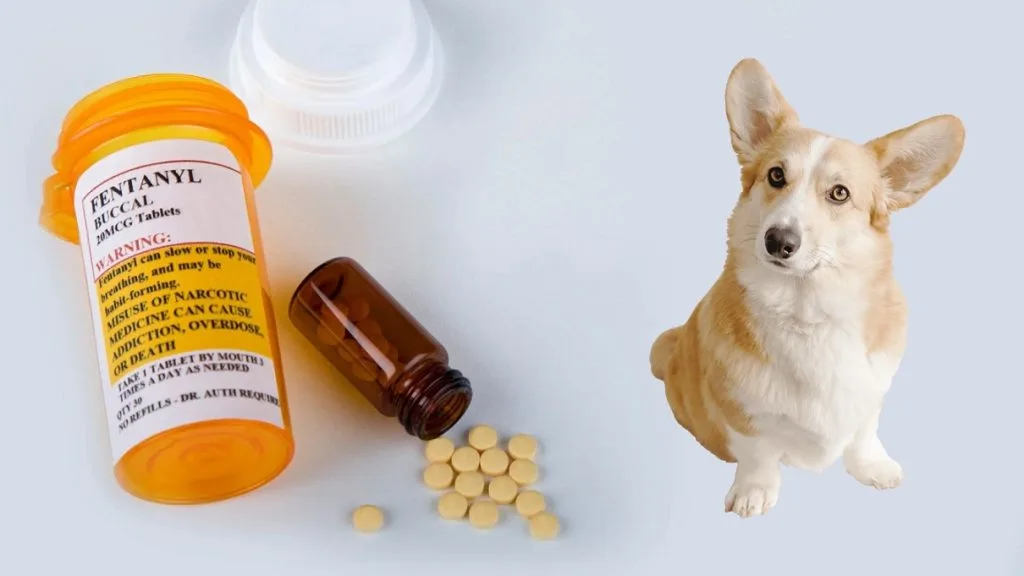
Fentanyl is a powerful prescription opioid pain medication that veterinarians use to manage severe pain in dogs, particularly during surgery, after major procedures, or in critically ill patients. It works quickly and provides effective pain relief but requires close veterinary supervision because it can cause serious side effects, including slowed breathing and excessive sedation. Pet owners should never give human fentanyl products to a dog unless specifically prescribed by a veterinarian. If your dog accidentally ingests fentanyl or chews a fentanyl patch, seek emergency veterinary care immediately.
Veterinary Advice Disclaimer
This article is for educational purposes only and should not replace professional veterinary advice. Fentanyl is a prescription opioid that should only be administered under the direction of a licensed veterinarian. Never give your dog human fentanyl products or adjust prescribed medications without veterinary guidance.
Key Takeaways
- Fentanyl is a synthetic opioid used by veterinarians to control severe pain in dogs.
- It is significantly more potent than morphine and is administered only under strict veterinary supervision.
- Common veterinary uses include surgery, trauma, intensive care, and advanced cancer pain management.
- Injectable fentanyl and transdermal (skin) patches are the most common forms used in veterinary medicine.
- Side effects may include drowsiness, slowed breathing, vomiting, constipation, and a decreased heart rate.
- A fentanyl overdose is a medical emergency that requires immediate veterinary treatment.
- Never give your dog a human fentanyl product unless it has been specifically prescribed by your veterinarian.
- Store and dispose of fentanyl products carefully to prevent accidental exposure to pets, children, and other family members.
What Is Fentanyl?
Fentanyl is a synthetic opioid analgesic (pain-relieving medication) used to manage moderate to severe pain in both human and veterinary medicine. It belongs to the same class of drugs as morphine but is considerably more potent, allowing veterinarians to provide rapid and effective pain relief for dogs experiencing significant discomfort.
Rather than treating the underlying disease or injury, fentanyl works by altering how the brain and spinal cord perceive pain. This helps keep dogs comfortable during surgery, after major procedures, or while recovering from traumatic injuries.
Because fentanyl is highly potent, it is classified as a controlled medication in many countries. Veterinary clinics follow strict protocols for prescribing, storing, administering, and disposing of it to ensure patient safety and comply with legal requirements.
Unlike over-the-counter pain relievers, fentanyl should never be administered without veterinary supervision. The appropriate dose, route of administration, and duration of treatment vary depending on factors such as:
- The dog’s body weight
- Age
- Overall health
- Liver and kidney function
- Type and severity of pain
- Other medications being administered
Careful monitoring is essential because dogs can respond differently to opioid medications, and adjustments may be needed to provide effective pain relief while minimizing side effects.
When Do Veterinarians Use Fentanyl in Dogs?
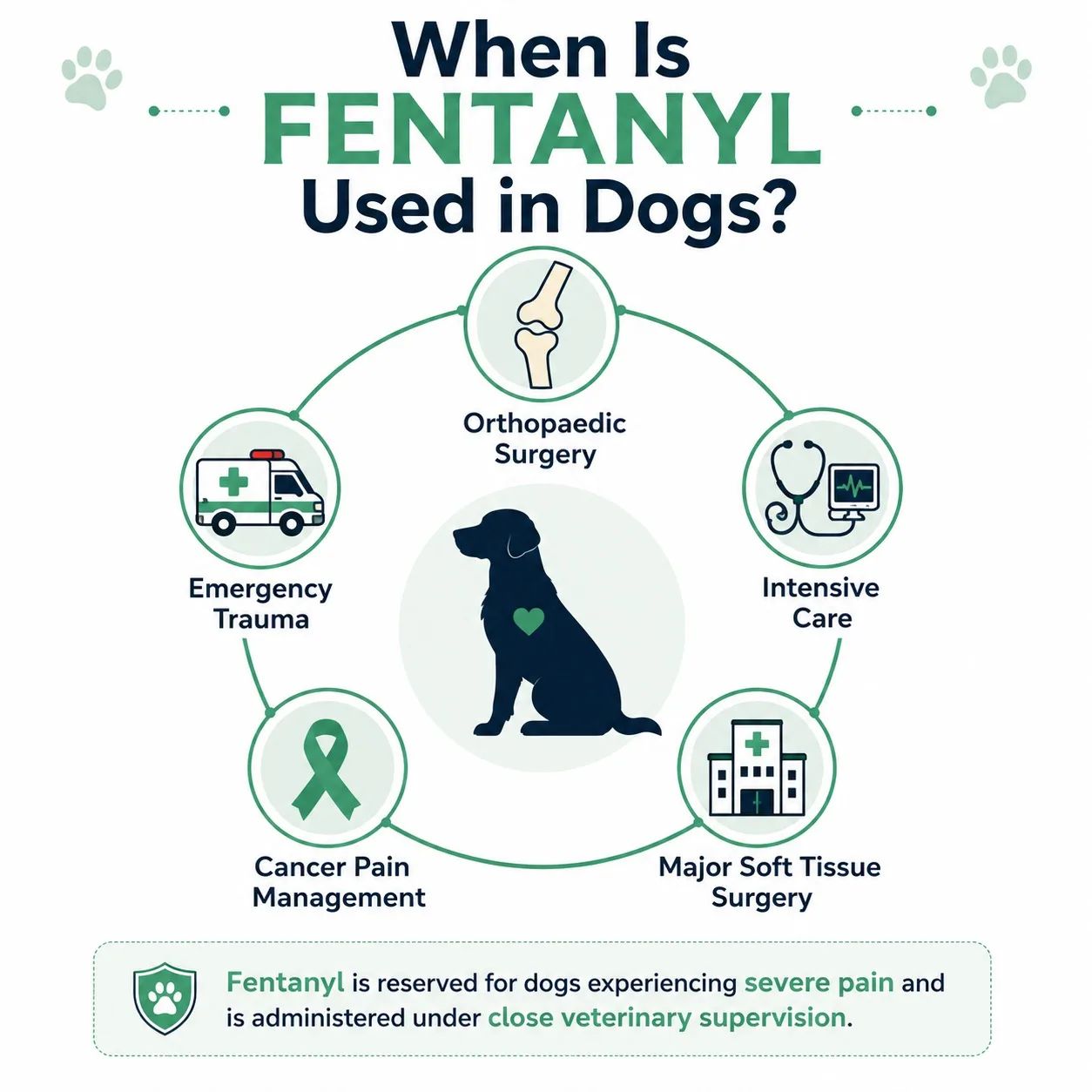
Veterinarians reserve fentanyl for situations where a dog is experiencing significant pain that requires stronger pain relief than many other medications can provide. It is commonly used in veterinary hospitals because it acts quickly, can be carefully adjusted to the patient’s needs, and is effective for both short-term and continuous pain management.
Common situations where fentanyl may be recommended include:
Major Surgical Procedures
Fentanyl is frequently used during and immediately after surgeries such as:
- Orthopaedic procedures
- Cruciate ligament (ACL/CCL) repair
- Fracture repair
- Abdominal surgery
- Thoracic surgery
- Emergency surgery
- Spinal surgery
By providing powerful pain relief before, during, and after an operation, fentanyl helps reduce the body’s stress response and supports a smoother recovery.
Severe Traumatic Injuries
Dogs that have experienced serious injuries, such as:
- Road traffic accidents
- Crush injuries
- Multiple fractures
- Severe bite wounds
- Extensive soft tissue trauma
may receive fentanyl while they are stabilised in hospital.
Rapid pain control is an important part of emergency care because untreated pain can increase stress, raise heart rate and blood pressure, and complicate recovery.
Cancer-Related Pain
Some dogs with advanced cancer experience severe pain that cannot be adequately controlled with anti-inflammatory medications alone.
In selected cases, veterinarians may incorporate fentanyl into a broader pain management plan alongside other medications and supportive therapies to improve comfort and quality of life.
Intensive Care (ICU)
Dogs admitted to an intensive care unit may receive fentanyl if they are critically ill and require continuous pain management.
Examples include patients recovering from:
- Major surgery
- Severe pancreatitis
- Multiple traumatic injuries
- Extensive burns
- Serious infections requiring intensive monitoring
Because these patients are closely observed by veterinary staff, fentanyl can be adjusted as their condition changes.
Multimodal Pain Management
Modern veterinary medicine often relies on multimodal analgesia, which means combining several pain-relief strategies that work in different ways.
Instead of depending on a single medication, veterinarians may use fentanyl together with carefully selected medications such as local anaesthetics, non-steroidal anti-inflammatory drugs (NSAIDs), or other supportive therapies when appropriate. This approach can improve pain control while allowing lower doses of individual medications.
The exact combination depends on the dog’s medical condition and is determined by the veterinarian.
How Does Fentanyl Work?
Pain is more than just a physical sensation—it is a complex process involving nerves, the spinal cord, and the brain. Fentanyl helps control pain by interfering with the way pain signals are processed, allowing dogs to remain more comfortable during recovery or treatment.
After administration, fentanyl enters the bloodstream and travels to the brain and spinal cord, where it binds to specialised proteins called mu-opioid receptors. These receptors are part of the body’s natural pain-control system.
When fentanyl activates these receptors, it:
- Reduces the perception of pain.
- Decreases the emotional response to pain.
- Helps dogs remain calmer and more comfortable.
- Lowers the body’s stress response to injury or surgery.
Because fentanyl is highly potent and acts quickly, it is particularly useful for managing severe pain in hospital settings where patients can be closely monitored.
It’s important to remember that fentanyl does not treat the underlying cause of pain. Instead, it helps control pain while the veterinarian addresses the disease, injury, or surgical condition causing it.
How Quickly Does Fentanyl Start Working?
One of fentanyl’s biggest advantages is its rapid onset of action.
The exact timing depends on how the medication is administered.
Injectable Fentanyl
When given intravenously (IV), fentanyl typically begins working within minutes, making it an excellent choice for:
- Anaesthesia
- Emergency medicine
- Trauma patients
- Surgical procedures
This rapid effect allows veterinarians to adjust pain relief almost immediately if needed.
Continuous Rate Infusion (CRI)
In intensive care and surgical patients, fentanyl is sometimes delivered as a continuous rate infusion (CRI) using an infusion pump.
This method provides:
- Consistent pain relief
- Stable blood levels
- Easy dose adjustments
- Continuous monitoring by veterinary staff
CRI is commonly used for dogs recovering from major surgery or those requiring prolonged hospitalisation.
Transdermal Fentanyl Patches
Unlike injections, fentanyl patches release medication slowly through the skin over time.
Because the drug must first be absorbed through the skin, patches do not provide immediate pain relief. Veterinarians usually apply them well before they are expected to reach their full effect and may use additional pain medication during the initial period if necessary.
Patches are most commonly used for dogs that require longer-lasting pain management under veterinary supervision.
Forms of Fentanyl Used in Dogs
Veterinarians choose the form of fentanyl based on your dog’s condition, the type of pain being treated, and whether the dog is hospitalised or recovering at home.
Injectable Fentanyl
Injectable fentanyl is the most commonly used form in veterinary hospitals.
It is administered by trained veterinary professionals and allows rapid pain control during:
- Surgery
- Emergency treatment
- Intensive care
- Diagnostic procedures requiring anaesthesia
Because its effects occur quickly, veterinarians can carefully adjust the dose according to the dog’s response.
Continuous Rate Infusion (CRI)
Rather than giving repeated injections, some dogs receive fentanyl through a controlled infusion pump.
Benefits include:
- Steady pain relief
- Reduced fluctuations in drug levels
- Individualised dosing
- Continuous veterinary monitoring
This approach is often used in referral hospitals and emergency veterinary centres.
Transdermal Fentanyl Patch
A fentanyl patch is a medicated adhesive patch that delivers fentanyl gradually through the skin over an extended period.
Veterinarians may consider a patch for selected dogs requiring prolonged pain control after surgery or for certain chronic pain conditions.
Because the patch contains a powerful opioid, owners should never:
- Cut the patch.
- Remove and reapply it unless instructed.
- Allow children to handle it.
- Permit other pets to chew or lick it.
If a patch becomes loose or falls off, contact your veterinarian for advice rather than attempting to replace or secure it yourself.
Benefits of Fentanyl for Dogs
When used appropriately under veterinary supervision, fentanyl offers several important benefits.
Excellent Pain Relief
Fentanyl is one of the most effective pain medications available in veterinary medicine for managing severe acute pain.
Keeping pain under control helps dogs rest more comfortably and recover more effectively.
Rapid Action
Injectable fentanyl begins working quickly, making it invaluable during emergencies and surgical procedures where immediate pain control is essential.
Adjustable Treatment
Because injectable fentanyl can be carefully titrated, veterinarians can increase or decrease the amount being administered according to each dog’s individual needs.
This flexibility is particularly valuable for critically ill patients whose pain levels may change over time.
Supports Smoother Recovery
Dogs that receive effective pain management are often better able to:
- Rest comfortably.
- Eat sooner after surgery.
- Move more normally during recovery.
- Experience less stress associated with pain.
Pain control is therefore considered an important component of overall recovery rather than simply improving comfort.
Works Well in Multimodal Pain Management
Fentanyl is frequently incorporated into a broader pain management plan that may include additional medications and supportive care.
Using multiple approaches allows veterinarians to target pain through different mechanisms while tailoring treatment to the individual patient.
Pain Management Alternatives for Dogs
Fentanyl is reserved for dogs experiencing moderate to severe pain, particularly in hospital settings. However, it is only one of many tools veterinarians use to manage pain.
The most appropriate treatment depends on factors such as your dog’s medical condition, the source of pain, age, overall health, and whether pain management is needed for a short period or long term.
Rather than relying on a single medication, veterinarians often use multimodal pain management, combining different therapies that work through separate mechanisms to improve pain control while reducing the dose of any one drug.
Non-Steroidal Anti-Inflammatory Drugs (NSAIDs)
Veterinary NSAIDs are commonly prescribed to reduce pain and inflammation associated with conditions such as:
- Osteoarthritis
- Orthopaedic injuries
- Soft tissue injuries
- Recovery after many surgical procedures
Examples include:
- Carprofen
- Meloxicam
- Deracoxib
- Firocoxib
- Robenacoxib (where approved)
These medications should only be used under veterinary supervision, as they may not be suitable for every dog.
Gabapentin
Gabapentin is frequently used to help manage neuropathic (nerve-related) pain and is also commonly incorporated into multimodal pain management plans.
It may be recommended for dogs with:
- Chronic pain
- Spinal disorders
- Nerve injuries
- Osteoarthritis
- Recovery after surgery
- Tramadol
Tramadol may still be prescribed for selected dogs, although its effectiveness can vary considerably between individuals.
Depending on the condition being treated, veterinarians may recommend tramadol alongside other pain medications rather than using it alone.
Local Anaesthetics and Regional Nerve Blocks
During many surgical procedures, veterinarians use local anaesthetics to temporarily block pain signals from specific parts of the body.
These techniques can significantly reduce the amount of opioid medication needed during and after surgery.
Rehabilitation and Physical Therapy
For dogs recovering from orthopaedic surgery or living with chronic musculoskeletal conditions, rehabilitation may include:
- Controlled exercise
- Therapeutic stretching
- Hydrotherapy
- Massage
- Laser therapy
- Balance exercises
These treatments aim to improve mobility, strength, and overall comfort when incorporated into a comprehensive treatment plan.
Complementary Therapies
Some veterinarians also offer complementary therapies such as:
- Acupuncture
- Therapeutic laser treatment
- Pulsed electromagnetic field therapy (PEMF)
Although research continues to evolve, these therapies may be appropriate for selected patients as part of an individualized pain management plan.
Which Pain Management Option Is Best?
There is no single best pain medication for every dog.
For severe pain—such as after major surgery, traumatic injuries, or certain cancers—fentanyl may be the most appropriate option because of its rapid and powerful analgesic effects.
For milder or long-term conditions, your veterinarian may recommend NSAIDs, gabapentin, rehabilitation, or a combination of treatments instead.
The goal is always the same: to provide effective pain relief while minimizing side effects and improving your dog’s quality of life.
What Are the Side Effects of Fentanyl in Dogs?
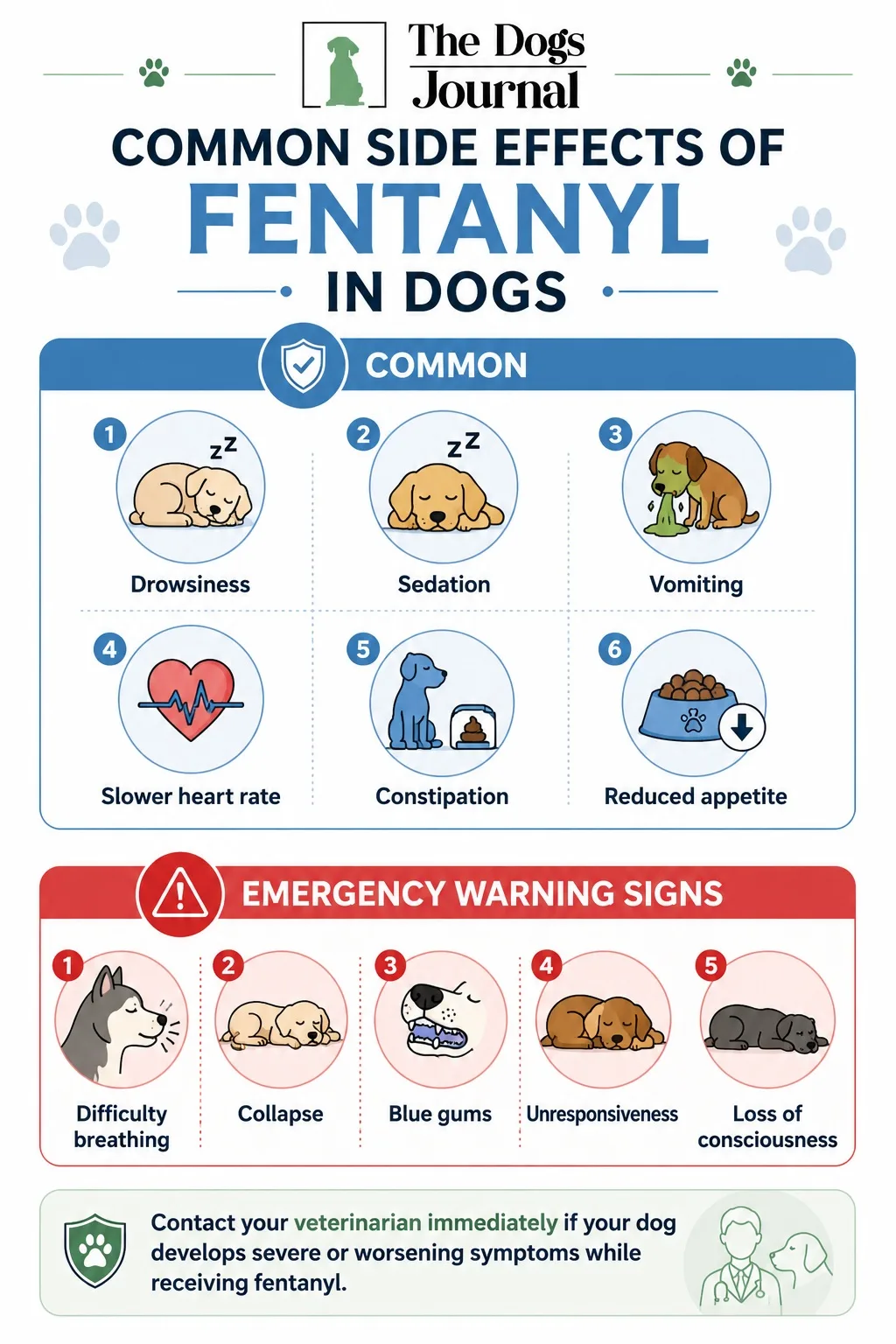
Like all opioid medications, fentanyl can cause side effects. Most are expected and can often be managed by adjusting the dose or providing supportive care, particularly when dogs are monitored in a veterinary hospital.
The likelihood and severity of side effects vary depending on the dog’s age, overall health, concurrent medications, and the amount of fentanyl administered.
Common Side Effects
Some dogs may experience:
- Sleepiness or drowsiness
- Sedation
- Slower breathing
- Reduced heart rate
- Vomiting
- Nausea
- Decreased appetite
- Constipation
- Temporary urinary retention
- Mild disorientation during recovery
These effects are generally monitored closely by veterinary staff and often improve as the medication wears off.
Less Common Side Effects
In some cases, dogs may experience:
- Agitation or restlessness
- Panting
- Vocalisation
- Muscle rigidity
- Changes in body temperature
- Excessive salivation
These reactions are less common but should be reported to your veterinarian promptly.
Serious Side Effects
Although uncommon when fentanyl is administered appropriately, serious adverse effects can occur, particularly if a dog receives too much medication or has an unexpected sensitivity.
Seek immediate veterinary attention if your dog develops:
- Difficulty breathing
- Very slow or absent breathing
- Collapse
- Unresponsiveness
- Blue or grey gums
- Extreme weakness
- Loss of consciousness
These signs may indicate an overdose or another medical emergency requiring urgent treatment.
Fentanyl Toxicity and Overdose in Dogs
Although fentanyl is an extremely effective pain medication when used appropriately, it can become life-threatening if a dog receives too much or is accidentally exposed. Because fentanyl is highly potent, even small amounts intended for humans can pose a serious risk to dogs.
An overdose is a medical emergency that requires immediate veterinary attention.
How Can a Dog Be Exposed to Too Much Fentanyl?
Accidental exposure may occur if a dog:
- Chews or swallows a fentanyl patch.
- Accesses human fentanyl medication.
- Receives an incorrect dose.
- Is unusually sensitive to opioid medications.
- Is prescribed fentanyl while taking certain other medications that increase sedation (as determined by a veterinarian).
Fortunately, accidental exposure is uncommon when fentanyl is stored and used according to veterinary instructions.
Signs of a Fentanyl Overdose
The severity of symptoms depends on the amount of fentanyl involved, the dog’s size, overall health, and how quickly treatment begins.
Possible signs include:
- Extreme drowsiness or inability to wake up
- Difficulty breathing
- Very slow or shallow breathing
- Weakness or collapse
- Pinpoint pupils
- Slow heart rate
- Pale, blue, or grey gums
- Loss of consciousness
- Coma
Breathing problems are the most serious concern because they can quickly become life-threatening if left untreated.
Important: Never wait for symptoms to worsen. If you suspect your dog has been exposed to fentanyl, contact your veterinarian or the nearest emergency veterinary hospital immediately.
What Should You Do if You Suspect an Overdose?
If you believe your dog has been exposed to fentanyl:
Contact a Veterinarian Immediately
Call your regular veterinarian or the nearest emergency veterinary clinic as soon as possible.
Be prepared to provide:
- Your dog’s weight
- Approximate time of exposure
- Type of fentanyl product involved (if known)
- Estimated amount
- Current symptoms
Do Not Attempt Home Treatment
Do not:
- Give human medications.
- Offer food or milk as a remedy.
- Wait to “see what happens.”
- Attempt home treatments found online.
These actions may delay appropriate veterinary care.
Do Not Induce Vomiting Unless Specifically Directed
Dogs that are already drowsy or showing neurological signs may accidentally inhale vomit into their lungs if vomiting is induced.
Only attempt to induce vomiting if your veterinarian specifically instructs you to do so.
Go to an Emergency Veterinary Hospital
Treatment is often most successful when started early.
Depending on your dog’s condition, your veterinarian may:
- Provide oxygen therapy.
- Monitor heart rate and breathing.
- Administer intravenous fluids.
- Use medications to reverse opioid effects when appropriate.
- Continue observation until your dog is stable.
Can Fentanyl Poisoning Be Treated?
Yes—many dogs recover well when treatment begins promptly.
Veterinarians focus on:
- Supporting breathing.
- Monitoring heart function.
- Maintaining normal blood pressure.
- Preventing complications.
- Reversing opioid effects when indicated.
One medication that may be used is naloxone, an opioid antagonist that can rapidly reverse many of fentanyl’s effects. Because fentanyl may last longer than naloxone in some situations, repeated doses or ongoing monitoring may be necessary.
The outlook is generally much better when veterinary care is sought as soon as exposure is suspected.
What If My Dog Eats a Fentanyl Patch?
Swallowing a fentanyl patch is considered a veterinary emergency.
Even after a patch has been used, it may still contain enough fentanyl to cause serious poisoning if chewed or swallowed.
Dogs are naturally curious and may mistake a patch for food because of its texture or scent.
What Should You Do?
If your dog has chewed or swallowed a fentanyl patch:
- Contact your veterinarian or an emergency veterinary hospital immediately.
- Tell the veterinarian whether the patch was new or already used, if you know.
- Take the packaging or remaining patch with you if it can be done safely.
- Follow your veterinarian’s instructions while travelling to the clinic.
Do not assume that a used patch is harmless.
How Can You Prevent Accidental Exposure?
Simple precautions can greatly reduce the risk of fentanyl poisoning.
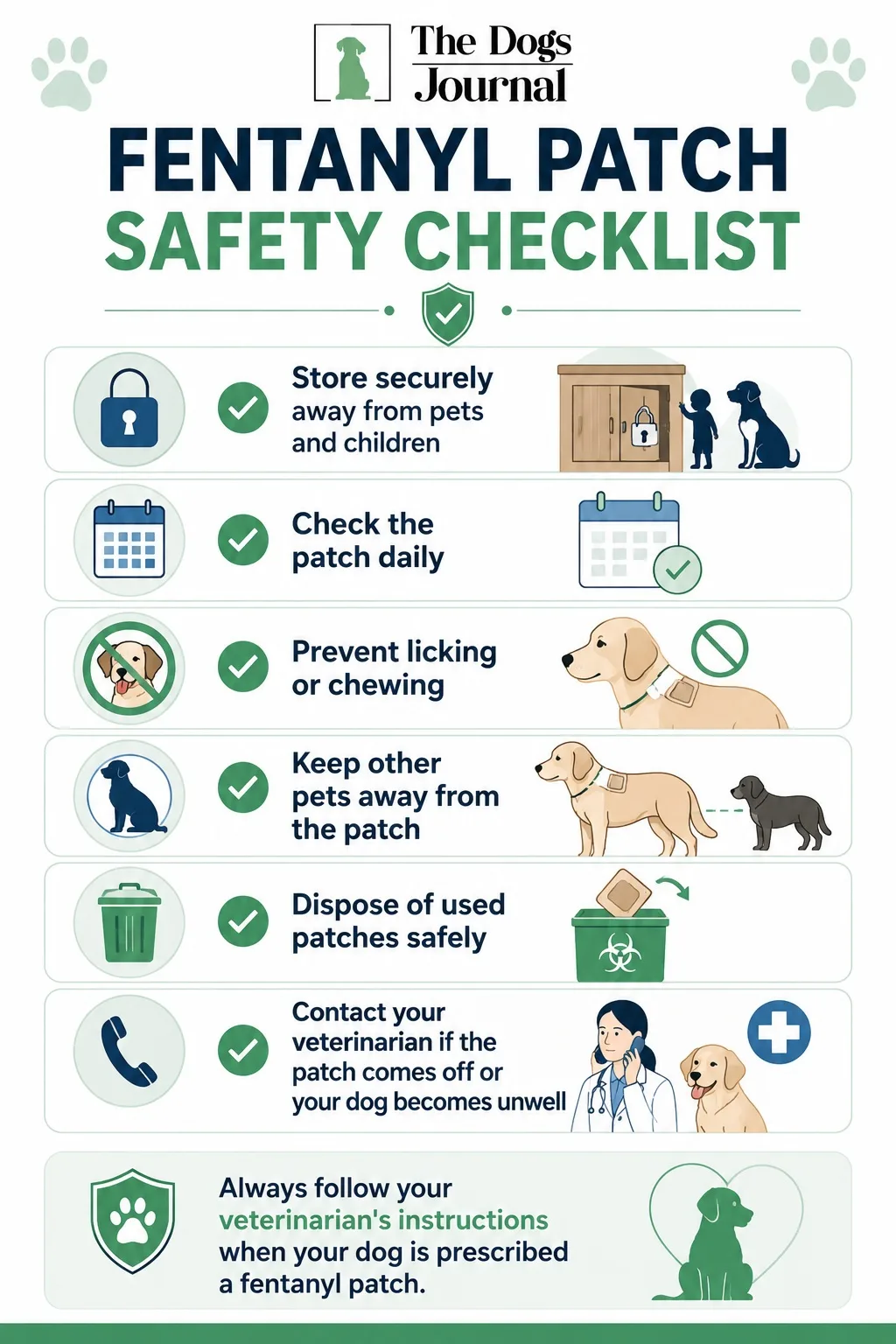
Store Medication Securely
Keep fentanyl:
- In its original packaging.
- Out of reach of pets.
- In a secure cabinet or locked drawer.
- Away from children.
Monitor Dogs Wearing a Patch
If your veterinarian has prescribed a fentanyl patch:
- Check that it remains securely attached.
- Prevent your dog from chewing, scratching, or removing it.
- Prevent other pets from licking or chewing the patch.
- Contact your veterinarian if it becomes loose or falls off.
Dispose of Used Patches Safely
Used patches may still contain active medication.
Follow your veterinarian’s or local authority’s disposal recommendations, and ensure discarded patches remain inaccessible to pets and children.
Fentanyl Patch Safety Tips for Dog Owners
If your dog is sent home wearing a fentanyl patch, your veterinarian will provide detailed instructions. Following these carefully helps maximise pain relief while reducing the risk of accidental exposure.
Check the Patch Daily
Inspect the application site once or twice a day to make sure:
- The patch remains attached.
- The edges have not lifted.
- Your dog is not chewing or scratching the area.
- The skin around the patch appears healthy.
Avoid handling the medicated surface directly whenever possible.
Prevent Licking and Chewing
Some dogs may become interested in the patch, especially if it is placed in an easily reached area.
Your veterinarian may recommend:
- An Elizabethan collar (E-collar)
- A recovery suit
- A protective bandage (only if specifically instructed)
These measures help prevent accidental removal or ingestion.
Keep Other Pets Away
In multi-pet households, supervise interactions to prevent another dog or cat from licking, chewing, or removing the patch.
Never Modify the Patch
Do not:
- Cut it.
- Fold it.
- Tape over the medicated surface.
- Apply additional adhesive unless directed by your veterinarian.
Changing the patch may affect how the medication is released.
Contact Your Veterinarian If…
Call your veterinarian if:
- The patch falls off.
- Your dog removes it.
- The application site becomes severely irritated.
- Your dog appears excessively sleepy.
- Your dog develops breathing difficulties or any other concerning symptoms.
Prompt communication helps ensure your dog’s pain remains well controlled while maintaining safety.
Drug Interactions: Can Fentanyl Be Used with Other Medications?
Yes, but only under veterinary supervision.
Dogs receiving fentanyl are often taking other medications, especially after surgery or during treatment for serious illnesses. While many of these combinations are both common and beneficial, they require careful planning because some drugs can increase sedation or affect breathing.
Your veterinarian will evaluate your dog’s medical history, current medications, and overall health before deciding which pain-relief plan is most appropriate.
Medications That May Be Used Alongside Fentanyl
As part of a multimodal pain management plan, a veterinarian may prescribe fentanyl with:
- Non-steroidal anti-inflammatory drugs (NSAIDs)
- Local anesthetics
- Certain sedatives or anesthetic drugs
- Gabapentin
- Muscle relaxants (in selected cases)
Using different types of pain medication allows veterinarians to target pain through multiple pathways, often improving comfort while minimizing reliance on any single medication.
Why Medication Interactions Matter
Because fentanyl affects the central nervous system, combining it with certain medications may increase the risk of:
- Excessive sedation
- Slowed breathing
- Low blood pressure
- Reduced heart rate
- Poor coordination
For this reason, you should never add, stop, or change any medication without first consulting your veterinarian.
Important: Always tell your veterinarian about every medication, supplement, or herbal product your dog is taking before fentanyl is administered.
How Are Dogs Monitored While Receiving Fentanyl?
Because fentanyl is a potent opioid, dogs receiving it—particularly by injection or continuous infusion—are monitored closely by the veterinary team.
Careful monitoring helps ensure your dog receives effective pain relief while allowing any side effects to be recognised and managed promptly.
Vital Signs That Are Commonly Monitored
Depending on your dog’s condition, the veterinary team may monitor:
- Heart rate
- Respiratory rate
- Blood pressure
- Body temperature
- Oxygen levels
- Level of consciousness
- Pain score
- Hydration status
These assessments are performed regularly throughout treatment and recovery.
Why Pain Scoring Is Important
Modern veterinary hospitals often use structured pain assessment tools rather than relying on a single observation.
Veterinarians and veterinary nurses evaluate factors such as:
- Body posture
- Facial expression
- Willingness to move
- Appetite
- Vocalisation
- Response to touch
- Overall comfort
If your dog’s pain appears inadequately controlled, the treatment plan may be adjusted accordingly.
Monitoring After Surgery
Following surgery, your veterinarian will continue assessing your dog until the effects of anesthesia and fentanyl begin to wear off.
Before discharge, the veterinary team will ensure your dog is:
- Breathing normally
- Awake enough to go home safely
- Comfortable
- Stable
- Ready for home recovery
Some dogs may remain sleepy for a period after treatment, which is expected. Your veterinarian will explain what is considered normal and which signs require immediate attention.
Can Dogs Detect Fentanyl?
Yes—but not all dogs.
Some specially trained working dogs can detect fentanyl and other narcotics using their remarkable sense of smell.
These dogs are carefully trained by law enforcement or specialised organisations to recognise the unique scent of controlled substances while working safely around potentially hazardous materials.
How Do Detection Dogs Find Fentanyl?
A dog’s nose contains hundreds of millions of scent receptors, allowing it to detect odours at concentrations far below what humans can perceive.
Through reward-based training, detection dogs learn to recognise the scent profile of fentanyl and indicate its presence to their handler.
Importantly, they are trained to alert without directly contacting the substance, helping reduce unnecessary exposure.
Can My Pet Dog Smell Fentanyl?
Although pet dogs have an excellent sense of smell, they are not trained to identify fentanyl or distinguish it from countless other scents in everyday environments.
You should never rely on a household pet to detect medications or potentially dangerous substances.
Caring for Your Dog After Receiving Fentanyl
If your dog has received fentanyl during a hospital stay or surgery, your veterinarian will provide detailed discharge instructions.
Following these instructions carefully can help support a smooth recovery.
Encourage Rest
Provide a quiet, comfortable area where your dog can recover without unnecessary activity.
Limit running, jumping, or rough play until your veterinarian advises that normal exercise can resume.
Offer Food and Water as Directed
Some dogs may have a reduced appetite or mild nausea after surgery or anesthesia.
Offer food according to your veterinarian’s recommendations and ensure fresh water is always available unless instructed otherwise.
Watch for Expected Effects
Your dog may appear:
- Sleepier than usual
- Less active
- Slightly unsteady
- Less interested in food for a short period
These effects often improve as the medication wears off.
Know When to Contact Your Veterinarian
Contact your veterinarian immediately if your dog develops:
- Difficulty breathing
- Persistent vomiting
- Extreme weakness
- Collapse
- Severe agitation
- Inability to wake up normally
- Blue or grey gums
- Any other symptoms that concern you
When in doubt, it’s always safer to seek veterinary advice.
Frequently Asked Questions
Is fentanyl stronger than morphine?
Yes. Fentanyl is significantly more potent than morphine, which is one reason it is reserved for managing severe pain under close veterinary supervision.
Can my dog come home wearing a fentanyl patch?
Yes, in some cases.
Certain dogs recovering from surgery or requiring ongoing pain management may be discharged with a fentanyl patch. Your veterinarian will explain how to monitor the patch safely and when it should be removed.
How long does fentanyl last in dogs?
The duration depends on the formulation used.
Injectable fentanyl provides relatively short-term pain relief, while transdermal patches release medication gradually over a much longer period. Your veterinarian will choose the most appropriate option based on your dog’s needs.
Can fentanyl make my dog sleepy?
Yes.
Sleepiness and sedation are among the most common effects of fentanyl. Mild drowsiness is often expected, but excessive sedation or difficulty waking your dog should be reported to your veterinarian immediately.
Is fentanyl safe for puppies?
When used by a veterinarian, fentanyl can be used in puppies when clinically appropriate. The dose and monitoring are carefully tailored to the individual patient.
Owners should never administer fentanyl products to puppies without veterinary direction.
Can fentanyl be used for chronic pain?
In selected cases, veterinarians may use fentanyl as part of a comprehensive pain management plan, particularly for dogs with advanced cancer or severe conditions requiring specialist care.
Long-term pain management is always individualised and regularly reassessed.
Conclusion
Fentanyl is one of the most effective pain medications available in veterinary medicine and plays an important role in managing severe pain associated with surgery, trauma, critical illness, and certain cancers. When administered by trained veterinary professionals, it provides rapid and reliable pain relief that can improve comfort and support recovery.
Because fentanyl is a highly potent opioid, it must be used with great care. Proper dosing, close monitoring, and careful handling of fentanyl patches are essential to minimise the risk of serious side effects or accidental exposure.
If your dog has been prescribed fentanyl, follow your veterinarian’s instructions carefully and never adjust the treatment yourself. If you suspect your dog has accidentally ingested fentanyl or develops signs such as difficulty breathing, collapse, or extreme sedation, seek emergency veterinary care without delay.