Table of Contents
Quick Answer
The Thai Bangkaew Dog is a rare, medium-sized spitz breed from Thailand known for its loyalty, intelligence, alert nature, and striking wolf-like appearance. Originally developed as a guardian and hunting companion, this breed forms exceptionally strong bonds with its family but can be reserved around strangers. Thai Bangkaews require experienced handling, regular training, daily exercise, and consistent mental stimulation. They are best suited to active households with secure yards rather than apartment living.
Thai Bangkaew Dog at a Glance
| Characteristic | Details |
|---|---|
| Origin | Thailand |
| Breed Group | Spitz / Working / Companion |
| Size | Medium |
| Height | 17–22 inches (43–56 cm) |
| Weight | 35–55 pounds (16–25 kg) |
| Lifespan | 12–15 years |
| Coat | Double coat |
| Coat Length | Medium to long |
| Shedding | High (seasonal heavy shedding) |
| Temperament | Loyal, alert, intelligent, protective |
| Energy Level | High |
| Trainability | Moderate to high |
| Good With Children | Yes, when properly socialized |
| Good With Other Dogs | Sometimes; early socialization is important |
| Good With Cats | Depends on upbringing |
| Apartment Friendly | Generally No |
| Beginner Friendly | Better for experienced owners |
Thai Bangkaew Dog Breed Overview
The Thai Bangkaew Dog is one of Thailand’s best-known native breeds and remains relatively uncommon outside its homeland. Developed over many generations in the Bangkaew village of Phitsanulok Province, these dogs were valued for guarding homes, protecting livestock, and accompanying hunters through forests.
Today, they continue to excel as devoted family guardians while also participating in dog sports, obedience, agility, and scent work.
Although their fluffy coat and fox-like face often attract attention, the Thai Bangkaew is far more than a beautiful dog. This is an intelligent working breed that thrives when given a job, regular exercise, and meaningful interaction with its family.
Without sufficient physical and mental stimulation, they may become bored and develop unwanted behaviors such as excessive barking, digging, or territorial tendencies.
Thai Bangkaew Dog Breed Scorecard
| Trait | Rating |
|---|---|
| Family Companion | ⭐⭐⭐⭐☆ |
| Affection with Family | ⭐⭐⭐⭐⭐ |
| Intelligence | ⭐⭐⭐⭐⭐ |
| Trainability | ⭐⭐⭐⭐☆ |
| Watchdog Ability | ⭐⭐⭐⭐⭐ |
| Guarding Instinct | ⭐⭐⭐⭐⭐ |
| Energy Level | ⭐⭐⭐⭐⭐ |
| Exercise Needs | ⭐⭐⭐⭐⭐ |
| Shedding | ⭐⭐⭐⭐⭐ |
| Grooming Needs | ⭐⭐⭐⭐☆ |
| Adaptability | ⭐⭐⭐☆☆ |
| Apartment Living | ⭐⭐☆☆☆ |
| Good with Children | ⭐⭐⭐⭐☆ |
| Good with Other Pets | ⭐⭐⭐☆☆ |
| First-Time Owner Suitability | ⭐⭐☆☆☆ |
History and Origin
The Thai Bangkaew Dog originated in Bangkaew village, located in Thailand’s Phitsanulok Province. While the breed’s exact ancestry remains uncertain, historians and breed enthusiasts generally believe it developed from crosses between local village dogs and ancient Asian spitz-type dogs that accompanied traders and travelers through the region.
Local tradition also suggests that the breed’s development may have involved a native black-and-white temple dog kept by Buddhist monks. Over many decades, selective breeding favored dogs that displayed intelligence, courage, loyalty, and excellent guarding instincts.
The resulting breed became highly respected for protecting homes and farms from intruders while also assisting hunters in rural Thailand.
During the twentieth century, organized breeding programs helped standardize the breed’s appearance and temperament. Recognition by international kennel organizations gradually increased awareness of the Thai Bangkaew outside Thailand, although it remains relatively rare in many countries.
Today, responsible breeders continue working to preserve the breed’s distinctive appearance, confident personality, and strong working instincts.
Physical Characteristics
Size
Thai Bangkaew Dogs are sturdy, athletic, medium-sized dogs built for endurance rather than speed.
Typical adult measurements include:
Male:
- Height: 18–22 inches
- Weight: 40–55 pounds
Female
- Height: 17–20 inches
- Weight: 35–45 pounds
Individual dogs may fall slightly outside these ranges depending on genetics, nutrition, and overall body condition.
Coat
One of the breed’s defining features is its thick, weather-resistant double coat.
It consists of:
- Dense insulating undercoat
- Longer straight outer coat
- Feathering on the legs
- Thick neck ruff (especially in males)
- Well-plumed tail
This coat helps protect the breed from varying weather conditions but also means regular grooming is essential throughout the year.
Colors
The Thai Bangkaew commonly appears in combinations of:
- White and black
- White and gray
- White and red
- White and brown
- White with sable markings
Most dogs display symmetrical facial markings and darker patches across the body while maintaining a predominantly white base coat.
Head and Expression
The breed has a classic spitz appearance featuring:
- Broad wedge-shaped head
- Medium-length muzzle
- Dark almond-shaped eyes
- Small erect triangular ears
- Black nose
- Alert, confident expression
Their attentive facial expression reflects the breed’s naturally observant personality.
Tail
The tail is heavily feathered and carried curled over the back or to one side, contributing to the breed’s balanced and elegant silhouette.
How Big Does a Thai Bangkaew Dog Get?
Most Thai Bangkaew Dogs reach their full height by around 12 months of age but continue filling out until approximately 18–24 months. Mature adults typically weigh between 35 and 55 pounds, making them large enough to serve as capable watchdogs while remaining manageable for active families.
Thai Bangkaew Dog Temperament and Personality
The Thai Bangkaew Dog is best known for its unwavering loyalty, confidence, and strong protective instincts. Unlike many companion breeds that eagerly greet everyone they meet, the Thai Bangkaew tends to be naturally reserved with unfamiliar people. This cautious nature makes it an excellent watchdog but also highlights the importance of early socialization.
With its family, however, the breed is affectionate, playful, and deeply devoted. Many owners describe Thai Bangkaews as “one-family dogs” because they often form especially close bonds with one or two people while remaining loyal to the entire household.
This is not a breed that enjoys being left alone for long periods. Without enough companionship, exercise, and mental stimulation, a Thai Bangkaew may become vocal, destructive, or overly territorial.
Temperament at a Glance
| Trait | Rating |
|---|---|
| Loyalty | ⭐⭐⭐⭐⭐ |
| Intelligence | ⭐⭐⭐⭐⭐ |
| Affection Toward Family | ⭐⭐⭐⭐⭐ |
| Friendliness with Strangers | ⭐⭐☆☆☆ |
| Protectiveness | ⭐⭐⭐⭐⭐ |
| Confidence | ⭐⭐⭐⭐☆ |
| Playfulness | ⭐⭐⭐⭐☆ |
| Independence | ⭐⭐⭐⭐☆ |
Are Thai Bangkaew Dogs Good Family Dogs?
Yes—for the right family.
The Thai Bangkaew can make a wonderful companion for active households that understand the needs of an intelligent working breed.
They generally thrive in homes where they:
- Spend plenty of time with their owners
- Receive consistent training
- Have a secure outdoor area to exercise
- Participate in daily activities
- Receive clear leadership and routine
Families looking for a calm, low-maintenance dog may find the breed challenging. On the other hand, owners who enjoy hiking, outdoor adventures, obedience training, or dog sports often appreciate the Thai Bangkaew’s enthusiasm and intelligence.
Are Thai Bangkaew Dogs Good With Children?
When raised alongside respectful children and properly socialized, Thai Bangkaew Dogs are usually gentle and affectionate with family members.
Older children often make the best companions because they can participate in training sessions, games, and exercise.
As with any breed:
- Teach children how to interact respectfully with dogs.
- Never disturb a dog while eating or sleeping.
- Supervise interactions with young children.
- Avoid rough play that may encourage guarding or defensive behavior.
The breed’s protective instincts may cause it to become defensive if it believes a family member is being threatened, making supervision especially important during children’s play with visiting friends.
Are They Good With Other Dogs?
The answer depends largely on early socialization.
A Thai Bangkaew that grows up around other dogs often develops appropriate social skills and can live peacefully with canine companions.
However, because the breed is naturally confident and territorial, introductions should be handled carefully.
Many owners find success by:
- Socializing puppies early
- Attending puppy classes
- Rewarding calm interactions
- Avoiding confrontational greetings
- Supervising introductions to unfamiliar dogs
Dogs of the same sex may occasionally be more likely to compete for dominance than opposite-sex pairs.
Can Thai Bangkaew Dogs Live With Cats?
They can—but early introductions make a significant difference.
Puppies raised alongside household cats frequently learn to coexist peacefully.
Cats introduced later may require gradual, supervised introductions.
Because individual dogs vary, some Thai Bangkaews retain a stronger prey drive than others. Small pets such as rabbits, guinea pigs, hamsters, and pet birds should always be supervised, as many working breeds instinctively chase smaller animals.
Are Thai Bangkaew Dogs Aggressive?
A well-bred, well-socialized Thai Bangkaew should not be unnecessarily aggressive.
However, they are naturally:
- Alert
- Protective
- Territorial
- Confident
- Suspicious of strangers
These traits helped the breed guard homes and farms for generations.
Problems typically arise when dogs receive inadequate socialization, inconsistent training, prolonged isolation, or insufficient exercise.
Owners should focus on building confidence through positive experiences rather than encouraging protective behavior.
Intelligence and Trainability
The Thai Bangkaew is a highly intelligent breed that learns quickly and enjoys solving problems.
Its intelligence comes with a degree of independence, meaning it may question commands it considers unnecessary.
Training should therefore emphasize consistency, patience, and positive reinforcement rather than harsh corrections.
They excel at learning:
- Basic obedience
- Advanced commands
- Trick training
- Agility
- Rally obedience
- Scent work
- Puzzle-solving games
Short, engaging sessions generally produce better results than long, repetitive drills.
Are Thai Bangkaew Dogs Easy to Train?
They are moderately easy to train, but they are not typically recommended for first-time owners.
Because they are intelligent and observant, they quickly recognize inconsistent rules.
Successful owners:
- Begin training during puppyhood
- Keep sessions fun and rewarding
- Use food rewards, toys, or praise
- Maintain consistent household rules
- Avoid punishment-based methods
A confident, fair, and patient approach usually produces the best results.
Exercise Requirements
The Thai Bangkaew is an energetic working breed that requires at least 60–90 minutes of daily exercise.
Simply letting the dog into a backyard is rarely enough.
A balanced routine should include both physical activity and mental enrichment.
Good exercise options include:
- Brisk walks
- Hiking
- Jogging with experienced adult dogs
- Fetch
- Agility training
- Nose work
- Structured play sessions
Without enough activity, boredom may lead to barking, digging, chewing, or escape attempts.
Mental Stimulation Needs
Mental exercise is just as important as physical exercise.
Because Thai Bangkaews enjoy problem-solving, owners should regularly provide activities that challenge their minds.
Ideas include:
- Food puzzle toys
- Hide-and-seek games
- Obedience practice
- Scent trails
- Interactive feeders
- Rotating chew toys
- Learning new tricks
Just 15–20 minutes of mental work each day can help reduce boredom and improve overall behavior.
Double Puzzle Feeder

Can Thai Bangkaew Dogs Live in Apartments?
Apartment living is possible but generally not ideal.
This breed does best in homes with:
- A securely fenced yard
- Daily outdoor exercise
- Space to move freely
- Opportunities for training and play
Owners living in apartments would need to commit to multiple daily walks, enrichment activities, and careful management of barking.
Without sufficient stimulation, a Thai Bangkaew may become frustrated in confined spaces.
Is the Thai Bangkaew Dog Good for First-Time Owners?
Generally, no.
While intelligent and deeply loyal, the breed’s independence, high energy, and protective instincts can be challenging for inexperienced owners.
First-time owners may find it easier to start with a breed that is naturally more social and eager to please.
However, motivated beginners who are committed to training, socialization, and meeting the breed’s exercise needs may still succeed with guidance from experienced trainers.
Ideal Home for a Thai Bangkaew Dog
The breed is best suited to owners who:
✅ Have previous dog experience
✅ Enjoy active outdoor lifestyles
✅ Can provide daily training and enrichment
✅ Want a naturally alert watchdog
✅ Have a securely fenced yard
✅ Can spend plenty of time with their dog
It may not be the best choice for those who:
❌ Are away from home for long hours
❌ Prefer a low-energy companion
❌ Live in small apartments without time for regular exercise
❌ Want a dog that is immediately friendly with every stranger
Grooming and Coat Care
The Thai Bangkaew Dog’s beautiful double coat is one of its most distinctive features, but it also requires consistent maintenance to keep it healthy and free from mats.
The coat consists of a dense, soft undercoat that provides insulation and a longer, harsher outer coat that repels dirt and moisture. This combination protects the dog in a variety of weather conditions but also means regular brushing is essential, especially during seasonal shedding periods.
Fortunately, the breed’s coat naturally sheds dirt well, so frequent bathing is usually unnecessary.
How Often Should You Brush a Thai Bangkaew Dog?
Brush your Thai Bangkaew:
- 2–3 times per week during most of the year
- Daily during seasonal coat blowouts (typically spring and fall)
- More often after hiking or outdoor adventures to remove burrs, leaves, and debris
Regular brushing helps:
- Remove loose undercoat
- Prevent tangles
- Reduce shedding around the home
- Improve air circulation to the skin
- Distribute natural skin oils throughout the coat
- Recommended Grooming Tools
A few quality grooming tools can make coat maintenance much easier:
- Slicker brush: View on Amazon
- Undercoat rake (for seasonal shedding): View on Amazon
- Stainless steel grooming comb: View on Amazon
- Dog-safe ear cleaner: View on Amazon
- Soft microfiber towel: View on Amazon
Do Thai Bangkaew Dogs Shed?
Yes.
The Thai Bangkaew is considered a heavy shedder because of its thick double coat.
Owners should expect:
- Moderate shedding throughout the year
- Heavy shedding during spring and fall coat changes
- Extra brushing during seasonal shedding periods
Regular grooming significantly reduces loose hair inside the home but will not eliminate shedding completely.
If minimal shedding is your priority, this is probably not the ideal breed.
Bathing
Unlike some breeds, Thai Bangkaew Dogs generally do not require frequent baths.
Most healthy adults only need bathing:
- Every 6–8 weeks
- After becoming unusually dirty
- When recommended by a veterinarian
Bathing too often can strip natural oils from the coat and contribute to dry skin.
Always use a shampoo formulated specifically for dogs, followed by thorough rinsing and complete drying of the dense undercoat.
Nail, Ear, and Dental Care
Complete grooming extends beyond the coat.
Nail Care
Trim nails approximately every 3–4 weeks, or whenever you hear them clicking on hard floors.
Overgrown nails can:
- Affect posture
- Cause discomfort
- Increase the risk of injury
Ear Care
Inspect ears weekly for:
- Excess wax
- Redness
- Unpleasant odor
- Signs of infection
Clean only with a veterinarian-approved ear cleaner. Avoid inserting cotton swabs deep into the ear canal.
Dental Care
Brush your dog’s teeth at least 2–3 times per week, ideally every day.
Good dental care helps reduce:
- Plaque buildup
- Gum disease
- Bad breath
- Tooth loss later in life
Dental chews approved by your veterinarian can also support oral health but should not replace brushing.
Feeding and Nutrition
Proper nutrition plays a major role in maintaining healthy skin, coat quality, muscle condition, and long-term health.
Because the Thai Bangkaew is an active breed, its calorie requirements vary depending on age, activity level, body condition, and whether the dog has been neutered or spayed.
Rather than feeding a fixed amount, owners should monitor body condition and adjust portions as needed with guidance from their veterinarian.
What Should a Thai Bangkaew Eat?
A balanced commercial dog food that meets recognized nutritional standards is suitable for most healthy Thai Bangkaew Dogs.
Look for foods that provide:
- High-quality animal protein
- Healthy fats, including omega-3 fatty acids
- Appropriate vitamins and minerals
- Controlled calcium and phosphorus levels for growing puppies
Fresh drinking water should always be available.
Owners choosing home-prepared or raw diets should consult a board-certified veterinary nutritionist to ensure the diet is complete and balanced.
Feeding Guide by Life Stage
| Life Stage | Meals Per Day |
|---|---|
| 8–12 weeks | 3–4 |
| 3–6 months | 3 |
| 6–12 months | 2 |
| Adults | 2 |
| Seniors | Usually 2 (adjust as advised by your veterinarian) |
Avoid overfeeding, as excess weight places additional stress on joints and may increase the risk of health problems.
Healthy Treats
Treats are useful for training but should make up no more than about 10% of your dog’s daily calorie intake.
Healthier options include:
- Freeze-dried single-ingredient treats
- Small pieces of cooked lean chicken
- Plain cooked turkey
- Dog-safe fruits in moderation
- Dog-safe vegetables in moderation
Avoid feeding excessive table scraps, as they can contribute to obesity and nutritional imbalance.
Common Health Problems
The Thai Bangkaew Dog is generally considered a healthy breed, especially when responsibly bred. However, like all purebred dogs, it can be predisposed to certain inherited or acquired health conditions.
Regular veterinary examinations, appropriate nutrition, exercise, and responsible breeding practices can help reduce many health risks.
Hip Dysplasia
Hip dysplasia occurs when the hip joint develops abnormally, leading to instability and gradual arthritis.
Possible signs include:
- Difficulty rising
- Reluctance to jump
- Stiffness after exercise
- Reduced activity
- Hind-limb lameness
Maintaining a healthy body weight and avoiding excessive exercise during rapid growth may help reduce stress on developing joints.
Patellar Luxation
Some Thai Bangkaew Dogs may experience kneecap instability, known as patellar luxation.
Symptoms may include:
- Skipping while walking
- Intermittent limping
- Sudden lifting of one hind leg
- Difficulty running
Mild cases may require monitoring, while severe cases can sometimes require surgery.
Progressive Retinal Atrophy (PRA)
Progressive Retinal Atrophy is an inherited eye disease that gradually causes vision loss.
Early signs may include:
- Difficulty seeing at night
- Hesitation in unfamiliar environments
- Dilated pupils
- Gradual blindness
Responsible breeders often screen breeding dogs to reduce the risk of passing inherited eye diseases to future generations.
Allergies and Skin Problems
Like many double-coated breeds, Thai Bangkaews can occasionally develop:
- Environmental allergies
- Food allergies
- Hot spots
- Secondary skin infections
Persistent itching, licking, ear infections, or skin redness should be evaluated by a veterinarian.
Obesity
Although active by nature, Thai Bangkaew Dogs can become overweight if they consume more calories than they burn.
Maintaining an ideal body condition supports:
- Joint health
- Heart health
- Mobility
- Longevity
Regular exercise and portion control remain the best preventive measures.
Lifespan
The average Thai Bangkaew Dog lifespan is approximately 12–15 years.
Many individuals enjoy long, healthy lives when they receive:
- Balanced nutrition
- Routine veterinary care
- Appropriate exercise
- Mental stimulation
- Weight management
- Preventive healthcare, including parasite control and vaccinations
Senior dogs may require more frequent veterinary checkups to monitor for age-related conditions.
Puppy Growth and Development
Thai Bangkaew puppies mature steadily over the first two years of life.
General Growth Timeline
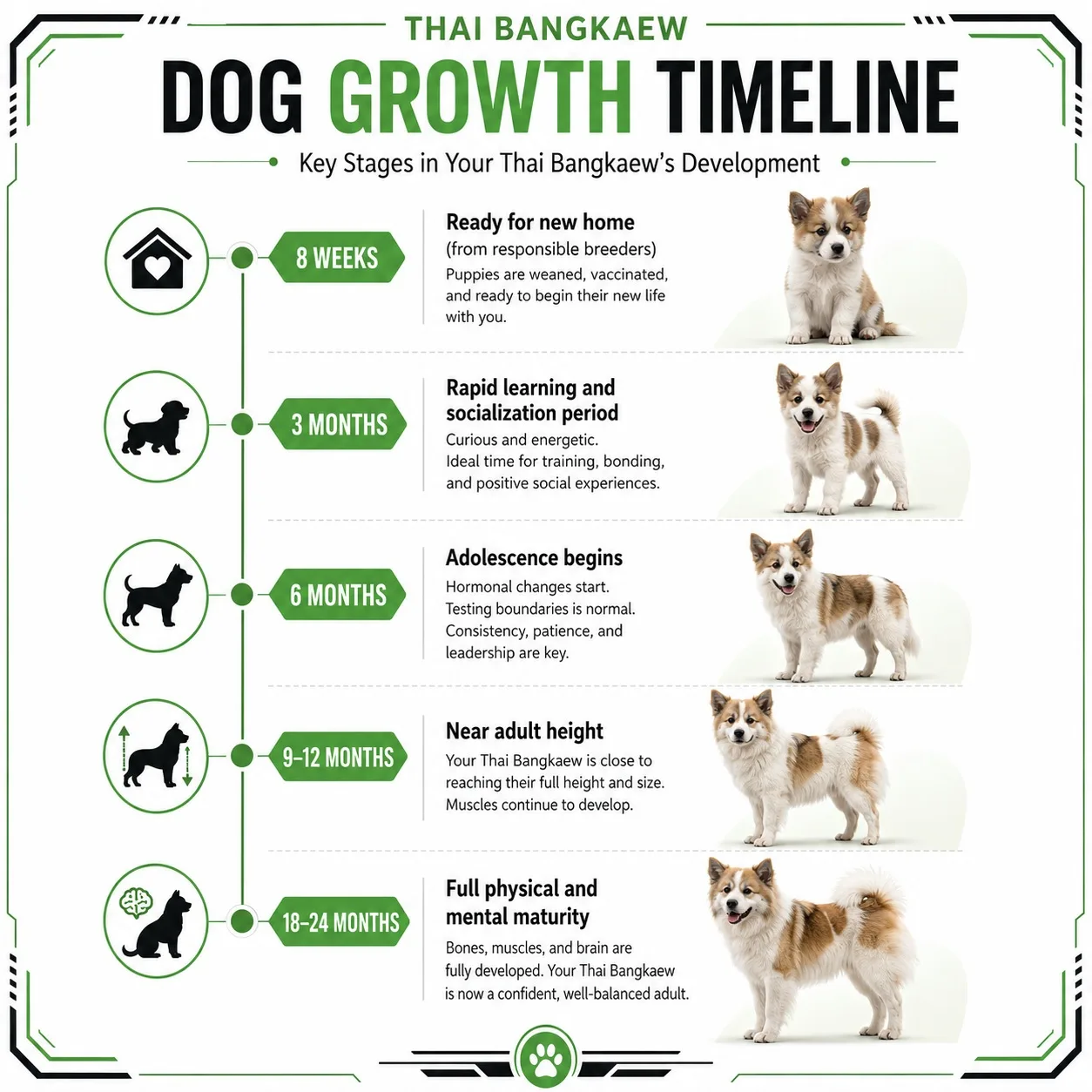
The first year is particularly important for:
- Positive socialization
- Basic obedience training
- Appropriate exercise
- Nutritionally balanced growth
- Preventive veterinary care
Living Environment
The Thai Bangkaew thrives in homes that provide both space and daily engagement.
Best suited for:
- Homes with securely fenced yards
- Active individuals or families
- Rural or suburban environments
- Owners who enjoy outdoor activities
Less suited for:
- Small apartments without sufficient exercise
- Homes where the dog is left alone most of the day
- Sedentary lifestyles
A secure fence is important because curious, intelligent dogs may attempt to roam if given the opportunity.
Climate Suitability
The breed’s thick double coat provides excellent insulation in cooler weather but also requires attention during hot climates.
Cold Weather
✅ Generally adapts well to cool and moderately cold temperatures.
Hot Weather
Extra precautions are necessary:
- Exercise during cooler parts of the day
- Provide constant access to fresh water
- Offer shade outdoors
- Never leave the dog in a parked vehicle
- Watch for signs of heat stress
Although the coat offers some insulation from heat, it does not make the breed immune to overheating.
Thai Bangkaew Dog Price
The cost of a Thai Bangkaew Dog varies considerably depending on the country, breeder reputation, pedigree, health testing, and whether the puppy is intended as a companion or for showing.
Because the breed is relatively uncommon outside Thailand, puppies may be more expensive in countries where responsible breeders are scarce.
Typical Puppy Prices
| Location | Estimated Price* |
|---|---|
| Thailand | $600–$1,500 |
| United States | $1,500–$3,000+ |
| Europe | $1,800–$3,500+ |
| Australia | Rare; prices vary depending on availability |
*These are approximate estimates. Prices vary based on lineage, health testing, breeder reputation, import costs, and local demand.
Remember that the purchase price is only a small part of the total cost of owning a dog.
Monthly Cost of Owning a Thai Bangkaew Dog
Prospective owners should budget for ongoing expenses throughout the dog’s lifetime.
Estimated Monthly Costs
| Expense | Estimated Monthly Cost |
|---|---|
| Quality Dog Food | $50–$100 |
| Treats | $10–$30 |
| Flea & Tick Prevention | $15–$30 |
| Pet Insurance (optional) | $30–$80 |
| Grooming Supplies | $10–$25 |
| Toys & Enrichment | $15–$40 |
| Routine Veterinary Care (averaged) | $20–$60 |
Pros and Cons of the Thai Bangkaew Dog
Every breed has strengths and challenges. Understanding both can help determine whether the Thai Bangkaew is the right fit for your lifestyle.
Pros
- Extremely loyal to its family
- Excellent natural watchdog
- Highly intelligent and quick to learn
- Beautiful wolf-like appearance
- Generally healthy with a long lifespan
- Athletic and enjoys outdoor activities
- Forms strong bonds with owners
- Excels in obedience and dog sports when properly trained
Cons
- Heavy seasonal shedding
- Requires regular grooming
- Needs plenty of daily exercise
- Can be wary of strangers
- Strong territorial instincts
- Not ideal for inexperienced owners
- May not tolerate small pets without early socialization
- Can become destructive if bored or under-exercised
Similar Breeds
If you appreciate the Thai Bangkaew Dog but are exploring other breeds, consider these alternatives:
| Breed | Similarities | Key Difference |
|---|---|---|
| Finnish Spitz | Alert, intelligent, spitz appearance | More sociable with strangers |
| Japanese Spitz | Fluffy white coat, loyal companion | Smaller and generally easier for beginners |
| Shiba Inu | Independent, fox-like appearance | Smaller and more independent |
| Akita | Protective and loyal | Significantly larger and stronger |
| Korean Jindo | Intelligent, devoted, excellent watchdog | Often has an even stronger prey drive |
| Eurasier | Calm, family-oriented spitz | Typically more reserved and less territorial |
Is the Thai Bangkaew Dog Right for You?
The Thai Bangkaew Dog can be an exceptional companion, but only if its needs match your lifestyle.
This breed may be an excellent choice if you:
✔ Have previous dog ownership experience
✔ Enjoy an active lifestyle
✔ Can provide daily physical exercise
✔ Have time for training and mental enrichment
✔ Want a naturally protective family companion
✔ Have a securely fenced yard
You may want to consider another breed if you:
✘ Prefer a low-maintenance dog
✘ Work long hours away from home
✘ Live in a small apartment with limited exercise opportunities
✘ Want a dog that welcomes every stranger
✘ Are unwilling to commit to regular grooming
When matched with the right owner, the Thai Bangkaew is a devoted, intelligent, and rewarding companion that often forms lifelong bonds with its family.
Frequently Asked Questions
Are Thai Bangkaew Dogs rare?
Yes. They remain relatively rare outside Thailand, although interest in the breed has gradually increased in North America, Europe, and other regions.
Are Thai Bangkaew Dogs good for first-time owners?
Generally, no. Their intelligence, protective instincts, and high energy levels make them better suited to experienced owners who are comfortable with consistent training and socialization.
Do Thai Bangkaew Dogs bark a lot?
They can be vocal, particularly when alerting their family to unfamiliar people or unusual activity. Proper training and sufficient mental and physical exercise can help prevent excessive barking.
Can Thai Bangkaew Dogs be left alone?
They can tolerate short periods alone but should not be left by themselves for extended hours on a regular basis. Prolonged isolation may lead to boredom, anxiety, and unwanted behaviors.
Are Thai Bangkaew Dogs easy to groom?
They require moderate to high grooming because of their thick double coat. Brushing several times a week—and daily during heavy shedding seasons—helps keep the coat healthy and reduces loose hair.
Do Thai Bangkaew Dogs get along with other pets?
Many do when raised with them from puppyhood. Early socialization and careful introductions are important, particularly with other dogs and small animals.
Final Thoughts
The Thai Bangkaew Dog is far more than a striking-looking spitz breed. It is an intelligent, energetic, and deeply loyal companion that thrives when given structure, purpose, and close family interaction.
While its protective instincts and grooming needs may not suit every household, owners who invest time in training, socialization, and daily exercise are often rewarded with a confident, affectionate, and dependable companion.
If you’re looking for an active, devoted dog with a rich history and a strong personality, the Thai Bangkaew is certainly a breed worth considering.