

Veterinary disclaimer: This article is for educational purposes only and should not replace advice from your veterinarian. Because ringworm is highly contagious and can spread to other pets and people, always consult your veterinarian if you suspect your dog has a fungal skin infection.
Table of Contents
Quick Answer
Ringworm in dogs is not caused by a worm. It is a contagious fungal infection that affects the skin, hair, and sometimes the nails. Despite its name, ringworm is caused by dermatophyte fungi that feed on keratin, the protein found in hair and skin.
Common signs include circular patches of hair loss, scaly or crusty skin, broken hairs, and mild to moderate itching. While healthy adult dogs can develop ringworm, puppies, senior dogs, and pets with weakened immune systems are generally at greater risk.
Treatment usually involves a combination of oral antifungal medication, topical treatments, and thorough cleaning of the dog’s environment. Most dogs recover within 6 to 12 weeks, although treatment may continue until your veterinarian confirms that the infection has cleared.
Because ringworm can spread to humans and other animals, prompt diagnosis, good hygiene, and proper treatment are essential.
Ringworm in Dogs at a Glance
| Feature | Information |
|---|---|
| Disease Type | Fungal skin infection |
| Caused By | Dermatophyte fungi |
| Contagious to Dogs | ✅ Yes |
| Contagious to Cats | ✅ Yes |
| Contagious to Humans | ✅ Yes |
| Common Symptoms | Hair loss, circular lesions, scaling, crusts |
| Typical Treatment | Oral and topical antifungal medications |
| Recovery Time | Usually 6–12 weeks |
| Prevention | Hygiene, environmental cleaning, isolation of infected pets |
What Is Ringworm in Dogs?
Ringworm is one of the most misunderstood skin diseases in dogs. Many first-time pet owners assume it is caused by a parasite or worm because of its name. In reality, ringworm is a fungal infection that affects the outer layers of the skin, hair follicles, and occasionally the nails.
The name “ringworm” comes from the circular, ring-like skin lesions that often develop during infection. However, not every dog develops these classic rings. Some dogs may only have patchy hair loss or mild flaky skin, making the condition easy to confuse with allergies, mange, hot spots, or bacterial skin infections.
The fungi responsible for ringworm thrive by feeding on keratin, a protein naturally found in:
- Hair
- Skin
- Nails
- Claws
As the fungus grows, it damages hair shafts and causes inflammation in the surrounding skin, leading to the characteristic bald patches and scaling.
Fortunately, ringworm is rarely life-threatening. However, because it spreads easily and can infect humans, it should never be ignored.
What Causes Ringworm in Dogs?
Ringworm is caused by a group of fungi known as dermatophytes. These fungi reproduce by releasing microscopic spores that can survive in the environment for months under the right conditions.
The three dermatophytes most commonly associated with canine ringworm are:
- Microsporum canis (the most common cause in dogs and cats)
- Microsporum gypseum (often acquired from contaminated soil)
- Trichophyton mentagrophytes (commonly associated with rodents and wildlife)
Unlike bacteria, dermatophytes do not need broken skin to cause infection. If spores come into contact with susceptible skin or hair, they may establish an infection.
How Do Dogs Get Ringworm?
Dogs become infected when fungal spores come into contact with their skin or coat.
The most common routes of transmission include:
Direct Contact with an Infected Animal
This is the most common source of infection.
Your dog may catch ringworm after interacting with:
- Another dog
- A cat
- Rabbits
- Rodents
- Farm animals
- Wildlife
Cats, particularly long-haired cats, often carry ringworm without showing obvious signs and may unknowingly infect dogs living in the same household.
Contact with Contaminated Objects
Ringworm spores can survive on many everyday items.
Examples include:
- Dog beds
- Blankets
- Brushes
- Combs
- Grooming tables
- Crates
- Food bowls
- Collars
- Toys
- Towels
If these items are not thoroughly cleaned, they can continue spreading spores even after an infected pet appears to recover.
Environmental Exposure
Some dermatophytes naturally live in soil.
Dogs that enjoy digging, hiking, or spending time in damp outdoor environments may occasionally become infected after exposure to contaminated soil, especially if they have small skin abrasions.
Which Dogs Are Most at Risk?
Although any dog can develop ringworm, certain factors increase the likelihood of infection.
Higher-risk dogs include:
- Puppies with immature immune systems
- Senior dogs
- Dogs recovering from illness
- Pets taking immune-suppressing medications
- Dogs with poor nutrition
- Long-haired breeds
- Dogs living in shelters
- Rescue dogs
- Dogs from breeding kennels
- Multi-pet households
Crowded environments make it much easier for fungal spores to spread from one animal to another.
Stress may also contribute by weakening the immune system, making dogs more susceptible to infection.
Is Ringworm Contagious?
Yes. Ringworm is considered highly contagious.
The infection spreads through fungal spores rather than through blood or bodily fluids. These microscopic spores can attach to hair, skin flakes, bedding, clothing, furniture, carpets, and grooming equipment.
Because the spores are extremely resilient, they can remain infectious in the environment for many months if proper cleaning and disinfection are not performed.
Can Dogs Spread Ringworm to Other Dogs?
Absolutely.
Dogs sharing:
- Beds
- Toys
- Grooming tools
- Water bowls
- Play areas
are at increased risk if one pet develops ringworm.
This is why veterinarians often recommend temporarily separating infected pets from healthy ones during treatment.
Can Dogs Spread Ringworm to Cats?
Yes.
Cats are actually considered one of the most important reservoirs of ringworm.
Some infected cats show no obvious symptoms while continuing to shed fungal spores around the home. If your household includes both dogs and cats, your veterinarian may recommend examining all pets—even those that appear healthy.
Can Humans Catch Ringworm from Dogs?
Yes.
Ringworm is a zoonotic disease, meaning it can spread from animals to humans.
People typically become infected through direct contact with an infected dog’s fur or skin, or by touching contaminated objects such as bedding, blankets, grooming tools, or furniture.
Individuals at higher risk include:
- Young children
- Older adults
- Pregnant women
- People receiving chemotherapy
- Organ transplant recipients
- Individuals with weakened immune systems
Healthy adults can also develop ringworm, but infections are often easier to treat than in vulnerable individuals.
Simple hygiene measures—such as washing your hands after handling your dog and cleaning contaminated items promptly—can significantly reduce the risk of transmission.
Can Ringworm Live in Your Home?
Unfortunately, yes.
One of the biggest challenges with ringworm is that fungal spores can remain viable in the home long after the visible skin lesions have improved.
Spores may persist on:
- Carpets
- Upholstered furniture
- Hardwood floors
- Curtains
- Bedding
- Vehicle seats
- Dog crates
- Grooming supplies
This is why successful treatment involves more than just medicating your dog. Cleaning and disinfecting the environment are equally important to help prevent reinfection and protect other pets and family members.
Ringworm Symptoms in Dogs
Ringworm can look very different from one dog to another. While many people picture a perfectly round bald patch, that’s only one possible presentation. Some dogs develop several small lesions, while others have widespread skin changes or almost no visible symptoms at all.
Recognizing the early signs can help you seek veterinary care sooner and reduce the chance of spreading the infection to other pets or family members.
Early Signs of Ringworm
In the early stages, ringworm may resemble a minor skin irritation. Because the symptoms are often subtle, many owners initially mistake it for a scratch, insect bite, or seasonal allergy.
Common early signs include:
- Small patches of hair loss
- Broken or brittle hairs
- Mild redness
- Dry or flaky skin
- Circular areas of thinning fur
- Scaly skin
- Mild itching (or no itching at all)
Many dogs continue eating, playing, and behaving normally, so the infection can go unnoticed until the lesions become larger.
Advanced Symptoms
Without treatment, ringworm may spread to multiple areas of the body.
As the infection progresses, you may notice:
- Larger bald patches
- Crusty or scab-like skin
- Thick scaling
- Inflamed skin
- Hair breaking close to the skin
- Irregular-shaped lesions
- Darkened or thickened skin in chronic cases
- Nail infections (less common)
Dogs with weakened immune systems may develop more extensive skin involvement than healthy adults.
What Does Ringworm Look Like?
Although every case is different, ringworm commonly has several recognizable features.
Typical lesions include:
- Circular or oval patches of hair loss
- A scaly or crusty border
- Broken hairs around the edge
- Skin that appears pink, red, or gray
- A center that may begin healing while the outer edge continues expanding
As the fungus grows outward, lesions often enlarge over time, creating the “ring” appearance that gave the disease its name.
However, not every dog develops a classic ring-shaped lesion. Some dogs have irregular patches of hair loss, while others only develop dry, flaky skin.
Because of this variation, ringworm should never be diagnosed based on appearance alone.
Where Does Ringworm Usually Appear?
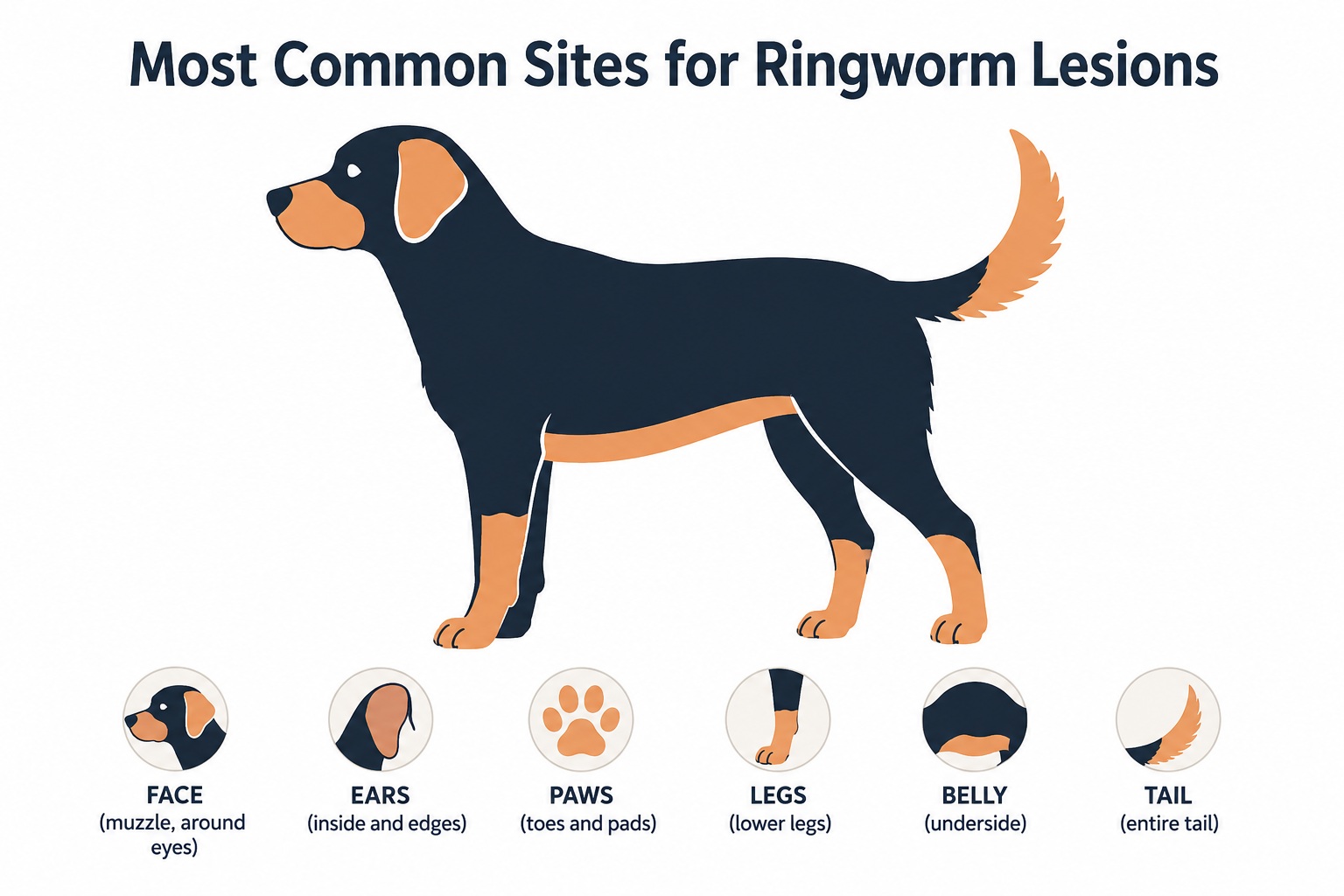
Ringworm can affect almost any part of the body, but certain areas are more commonly involved.
Typical locations include:
- Face
- Around the eyes
- Ears
- Nose
- Muzzle
- Front legs
- Paws
- Between the toes
- Tail
- Belly
- Chest
Long-haired dogs may have lesions hidden beneath the coat, making regular grooming and skin checks especially important.
Does Ringworm Itch?
Sometimes—but not always.
Unlike flea allergies or many other skin conditions, ringworm often causes little or only mild itching.
Some dogs hardly scratch at all, while others may lick or chew affected areas because of irritation.
If your dog is intensely itchy, another condition—such as allergies, mange, bacterial skin infection, or fleas—may also be present. Your veterinarian can help determine the underlying cause.
Can Ringworm Cause Hair Loss?
Yes.
Hair loss is one of the hallmark signs of ringworm.
The fungi invade hair shafts, weakening them until they break close to the skin. This creates the characteristic patches of missing fur.
Hair usually grows back after the infection has been successfully treated, although regrowth may take several weeks.
In severe or prolonged infections, the coat may take longer to return to normal.
Can Ringworm Affect a Dog’s Nails?
Although uncommon, ringworm can infect the claws and nail beds.
Signs may include:
- Brittle nails
- Thickened claws
- Misshapen nails
- Cracked nails
- Inflamed skin around the nail
These cases often require longer treatment because fungal infections of the nails can be more difficult to eliminate.
Ringworm vs. Other Skin Conditions
Many skin diseases cause hair loss and redness, making it difficult to identify ringworm based on appearance alone.
| Condition | Common Signs | Key Difference |
|---|---|---|
| Ringworm | Circular hair loss, scaling, broken hairs | Contagious fungal infection; may spread to people |
| Hot Spots | Moist, painful, rapidly developing sores | Usually wet rather than dry and scaly |
| Mange | Hair loss, crusting, intense itching (often) | Caused by mites rather than fungi |
| Flea Allergy Dermatitis | Severe itching, hair loss near tail | Fleas or flea dirt are often present |
| Yeast Infection | Greasy skin, odor, redness | Frequently affects skin folds and ears |
| Seasonal Allergies | Generalized itching, licking paws | Usually symmetrical and not contagious |
| Bacterial Skin Infection | Pustules, crusts, redness | Often develops secondary to allergies or skin damage |
Because these conditions can look similar, laboratory testing is often necessary to confirm a diagnosis.
When Should You See a Veterinarian?
Schedule a veterinary appointment if your dog has:
- Circular patches of hair loss
- Persistent scaling or crusting
- Lesions spreading to multiple areas
- Hair loss that doesn’t improve
- Skin changes after contact with an infected animal
- Multiple pets developing similar symptoms
- Family members with suspicious circular skin rashes
Prompt diagnosis not only helps your dog recover sooner but also reduces the risk of spreading the infection throughout your household
Can Ringworm Heal on Its Own?
In some healthy dogs, mild infections may eventually resolve without treatment as the immune system clears the fungus.
However, waiting is generally not recommended because:
- The infection can spread to other areas of your dog’s body.
- Your dog may infect other pets in the household.
- People can catch ringworm from infected animals.
- Fungal spores can contaminate your home and remain infectious for months.
Early treatment is usually faster, reduces environmental contamination, and helps protect both pets and people.
How Serious Is Ringworm?
For most healthy dogs, ringworm is more inconvenient than dangerous. It rarely causes severe illness or becomes life-threatening.
The main concerns are:
- It is highly contagious.
- It can spread to humans and other animals.
- Recovery often takes several weeks.
- Thorough environmental cleaning is essential to prevent reinfection.
With timely veterinary treatment and good hygiene practices, the vast majority of dogs recover fully and go on to live normal, healthy lives.
How Is Ringworm Diagnosed in Dogs?
Although ringworm often has a recognizable appearance, it cannot be diagnosed accurately by appearance alone. Many other skin conditions—including mange, bacterial infections, allergies, and yeast dermatitis—can look very similar.
Your veterinarian may recommend one or more diagnostic tests to confirm the infection and determine the most appropriate treatment plan.
Physical Examination
The first step is a thorough skin examination.
Your veterinarian will assess:
- The size and location of skin lesions
- Hair loss patterns
- Presence of scaling or crusts
- Nail involvement
- Signs of secondary bacterial infections
- Whether other skin conditions may be contributing
They’ll also ask about:
- Recent contact with other animals
- Visits to grooming salons or boarding facilities
- New pets in the household
- Any family members with suspicious skin rashes
- Wood’s Lamp Examination
A Wood’s lamp emits ultraviolet (UV) light that can cause some strains of Microsporum canis to fluoresce with an apple-green color.
This test is:
- Quick
- Painless
- Performed during the examination
However, it’s important to understand its limitations:
- Not all ringworm species glow.
- Some infected hairs won’t fluoresce.
- Other materials can occasionally produce false-positive fluorescence.
A Wood’s lamp is therefore considered a screening tool, not a definitive test.
Fungal Culture
A fungal culture is widely regarded as the gold standard for diagnosing ringworm.
Your veterinarian collects:
- Hair samples
- Skin scales
- Crusts from affected areas
These samples are placed on a special culture medium that encourages fungal growth.
A culture helps determine:
- Whether ringworm is present
- Which dermatophyte species is involved
- Whether treatment has successfully eliminated the infection
The downside is that results may take 1–3 weeks, depending on how quickly the fungus grows.
PCR Testing
Some veterinary laboratories now use PCR (Polymerase Chain Reaction) testing to detect fungal DNA.
Advantages include:
- Faster results than cultures
- High sensitivity
- Species identification in many cases
PCR is becoming more common but may not be available at every veterinary clinic.
Microscopic Examination
Your veterinarian may also examine hairs under a microscope to look for fungal spores attached to the hair shafts.
While this can support a diagnosis, it is usually combined with other tests because microscopic examination alone cannot rule out every case.
How Is Ringworm Treated in Dogs?
Successful treatment usually requires more than one approach.
Most veterinarians combine:
- Oral antifungal medication
- Topical treatment
- Environmental cleaning
- Follow-up testing when necessary
Treating only the skin or only the home often results in reinfection.
Oral Antifungal Medications
Dogs with widespread lesions, multiple affected areas, long coats, or persistent infections often require prescription oral medication.
Commonly prescribed medications include:
- Itraconazole
- Terbinafine
- Fluconazole (selected cases)
- Griseofulvin (used less frequently today)
These medications work by stopping fungal growth and allowing healthy skin and hair to recover.
Important
Never give your dog antifungal medication without veterinary guidance. Dosage depends on:
- Body weight
- Age
- Overall health
- Liver function
- Pregnancy status
- Other medications your dog may be taking
Your veterinarian may recommend blood tests during longer treatment courses to monitor for potential side effects.
Topical Treatments
Topical therapy helps reduce the number of fungal spores on the skin and lowers the risk of spreading the infection.
Your veterinarian may prescribe:
- Antifungal creams
- Antifungal sprays
- Antifungal lotions
- Medicated wipes
Topical products work best when used together with oral medication in moderate to severe cases.
For localized infections, some dogs may recover with topical treatment alone if your veterinarian considers it appropriate.
Medicated Antifungal Shampoos
Bathing is often an important part of treatment because it removes spores from the coat and skin.
Veterinary-prescribed shampoos may contain ingredients such as:
- Miconazole
- Chlorhexidine
- Ketoconazole (in some formulations)
Most dogs are bathed one to three times per week, depending on the veterinarian’s instructions.
Allowing the shampoo to remain on the coat for the recommended contact time is essential for maximum effectiveness.
You can use Douxo S3 Medicated Dog Shampoo to treat ringworm in your dog, but you must first ask your veterinarian before using this or any medicated shampoo. Find more about this Shampoo on Amazon.
Lime Sulfur Dips
Although the smell can be unpleasant, lime sulfur dips remain one of the most effective topical treatments for ringworm.
Benefits include:
- Reducing fungal spores
- Lowering environmental contamination
- Helping shorten recovery in many cases
Owners should follow veterinary instructions carefully because improper dilution can irritate the skin.
Should You Shave Your Dog?
Not usually.
Complete shaving is rarely necessary and may actually irritate the skin.
However, your veterinarian may recommend carefully clipping long-haired dogs when:
- The coat traps fungal spores.
- Extensive lesions are hidden beneath dense fur.
- Applying topical medication is difficult.
Never shave infected skin without veterinary guidance.
Can You Treat Ringworm at Home?
Home care plays an important role, but home remedies should not replace proven veterinary treatment.
There is no strong scientific evidence that remedies such as:
- Apple cider vinegar
- Coconut oil
- Garlic
- Essential oils
- Baking soda
- Hydrogen peroxide
can reliably eliminate ringworm in dogs.
Some home treatments may even worsen skin irritation or be toxic if licked.
If you suspect ringworm, consult your veterinarian rather than relying on internet remedies.
Cleaning Your Home During Treatment
Environmental cleaning is just as important as treating your dog.
Because fungal spores can survive for months, thorough cleaning helps prevent reinfection.
Your cleaning routine should include:
Vacuum Frequently
Vacuum:
- Carpets
- Rugs
- Upholstery
- Pet resting areas
- Vehicle interiors if your dog travels regularly
Dispose of vacuum bags promptly or empty the canister outside after each use. Check out this Vacuum Clear by Eureka on Amazon.
Wash Bedding Regularly
Wash:
- Dog beds
- Blankets
- Towels
- Clothing that has contacted your dog
Use hot water whenever the fabric allows and dry items thoroughly.
Disinfect Hard Surfaces
Clean and disinfect:
- Floors
- Crates
- Grooming tables
- Food and water bowls
- Grooming brushes
- Scissors
- Nail clippers
Always follow the manufacturer’s directions for any disinfectant and ensure products are safe to use around pets.
Limit Spread
Until your veterinarian advises otherwise:
- Keep infected dogs away from healthy pets.
- Avoid dog parks and grooming appointments.
- Wash your hands after handling your dog.
- Wear disposable gloves when applying medication if recommended.
How Long Does Ringworm Take to Heal?
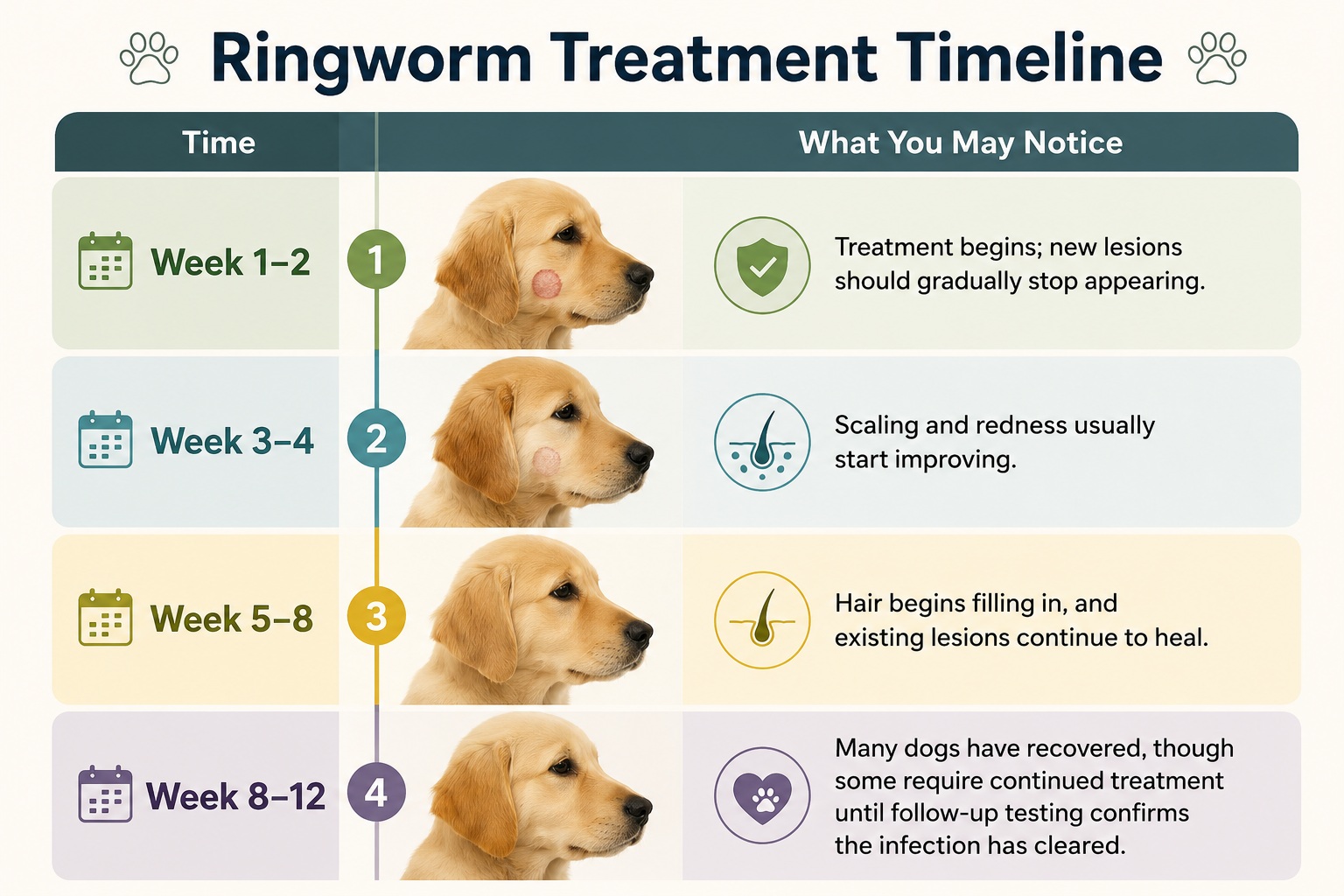
Most dogs recover within 6 to 12 weeks, although treatment length varies depending on:
- Severity of infection
- Number of lesions
- Immune system health
- Coat length
- Environmental contamination
- Consistency of treatment
Hair often takes additional time to grow back completely, even after the fungus has been eliminated.
Typical Recovery Timeline
When Is a Dog No Longer Contagious?
Many owners assume that once the skin looks normal, the infection is gone. Unfortunately, that’s not always the case.
A dog may continue shedding fungal spores even after the lesions begin to heal.
For this reason, veterinarians may recommend continuing treatment until:
- Clinical signs have resolved, and
- Follow-up testing (often a fungal culture or PCR, depending on the clinic) indicates the infection has cleared.
Stopping treatment too early increases the risk of recurrence and continued spread to other pets or people.
How to Prevent Ringworm in Dogs
While it’s impossible to eliminate the risk entirely, good hygiene and routine health care can significantly reduce your dog’s chances of developing ringworm.
The goal is to limit exposure to fungal spores and keep your dog’s immune system healthy enough to fight off infection.
Check New Pets Before Introducing Them
If you’ve adopted a new puppy, rescue dog, or cat, avoid introducing them to your existing pets immediately.
A short quarantine period allows you to monitor for signs of skin disease, coughing, diarrhea, or parasites before they spread to other animals.
If you notice hair loss, scaling, or suspicious skin lesions, schedule a veterinary examination before allowing close contact.
Keep Grooming Tools Clean
Brushes, combs, nail clippers, and grooming tables can harbor fungal spores if they’re shared between pets.
Regularly clean and disinfect:
- Brushes
- Combs
- Clippers
- Nail trimmers
- Grooming scissors
Professional groomers should also follow proper sanitation procedures between appointments.
Wash Bedding Regularly
Dog beds, blankets, and towels collect loose hair and skin flakes that may contain fungal spores.
Washing them routinely helps reduce the overall fungal burden in your home.
Vacuum Frequently
Hair and skin debris trapped in carpets and upholstery can contain infectious spores.
Vacuum:
- Carpets
- Rugs
- Upholstered furniture
- Dog resting areas
- Vehicle seats if your dog travels often
Homes with multiple pets may benefit from more frequent cleaning.
Support Overall Skin Health
A healthy skin barrier helps protect against many infections.
Support your dog’s skin health by:
- Feeding a complete and balanced diet
- Maintaining a healthy weight
- Managing allergies promptly
- Following your veterinarian’s parasite prevention recommendations
- Scheduling routine wellness examinations
Good nutrition won’t prevent ringworm on its own, but it contributes to healthy skin and immune function.
Avoid Sharing Grooming Supplies
If one pet develops ringworm, avoid sharing:
- Brushes
- Bedding
- Towels
- Clothing
- Toys when practical
Separate supplies until your veterinarian confirms the infection has resolved.
Ringworm in Puppies
Puppies develop ringworm more frequently than healthy adult dogs because their immune systems are still maturing.
Young puppies may also experience more widespread infections due to:
- Close contact with littermates
- Shared bedding
- Stress from moving to a new home
- Exposure at shelters or breeding facilities
If your puppy develops suspicious hair loss, early veterinary treatment can help reduce spread throughout the household.
Ringworm in Senior Dogs
Older dogs may be more susceptible because of:
- Age-related immune changes
- Chronic illnesses
- Medications that suppress immunity
Any new skin lesion in a senior dog should be evaluated by a veterinarian, as other conditions—including skin tumors—can sometimes resemble ringworm.
Are Certain Dog Breeds More Prone to Ringworm?
Ringworm can affect any dog breed. However, dogs that spend significant time outdoors or in environments where they frequently encounter wildlife and other animals may have a higher risk of exposure.
Terrier breeds are often reported to experience ringworm more frequently, including:
- Teddy Roosevelt Terrier
- Boston Terriers
- Yorkshire Terriers
- Brazilian Terriers
Young puppies, senior dogs, and dogs with weakened immune systems are also more vulnerable.vet
Can Dogs Get Ringworm More Than Once?
Yes.
Recovering from ringworm does not provide lifelong immunity.
A dog can become infected again if exposed to fungal spores in the future.
Repeat infections are more likely when:
- Environmental cleaning was incomplete
- Another pet remains infected
- Wildlife or rodents are carrying dermatophytes
- The dog’s immune system is weakened
Proper cleaning and treating all affected pets greatly reduce the chance of recurrence.
Living With a Dog That Has Ringworm
Although ringworm is contagious, there’s usually no need to panic.
Most families can safely care for an infected dog by following sensible precautions.
Helpful practices include:
- Washing hands after handling your dog.
- Wearing gloves when applying topical medication if advised by your veterinarian.
- Keeping infected pets out of bedrooms or on furniture until treatment is underway, particularly if someone in the home has a weakened immune system.
- Cleaning frequently touched surfaces and laundering bedding regularly.
- Following the full treatment plan even if your dog’s skin appears to improve early.
Most households successfully eliminate ringworm without long-term problems when treatment and environmental cleaning are consistent.
Frequently Asked Questions
Is Ringworm Painful for Dogs?
Ringworm is usually not painful, although irritated skin may become uncomfortable if secondary bacterial infections develop.
Does Ringworm Always Itch?
No.
Some dogs experience mild itching, while others show little to no discomfort.
Can I Touch My Dog If It Has Ringworm?
Yes, but use good hygiene.
Wash your hands thoroughly afterward, and consider wearing disposable gloves if you’re applying medication or handling affected skin.
Can My Dog Sleep in My Bed?
It’s generally best to avoid this until treatment is well underway or your veterinarian confirms the infection has cleared.
Because ringworm can spread through hair and skin flakes, limiting close contact helps reduce the risk of transmission.
Can Humans Catch Ringworm From Dogs?
Yes.
Ringworm is a zoonotic infection, meaning it can spread from animals to people.
Children, older adults, and individuals with weakened immune systems are typically at greater risk.
Can Cats Catch Ringworm From Dogs?
Absolutely.
Cats are highly susceptible and may even carry the fungus without obvious symptoms.
If one pet is diagnosed, your veterinarian may recommend evaluating all pets in the household.
Can Ringworm Go Away Without Treatment?
Some mild infections may eventually resolve in healthy dogs, but treatment is generally recommended because the infection remains contagious and environmental contamination can persist.
Should I Use Human Antifungal Cream?
Only if your veterinarian specifically recommends it.
Some human medications may not be suitable for dogs, especially if they are likely to lick the treated area.
Will Bleach Kill Ringworm?
Certain disinfectants, including appropriately diluted bleach solutions, can help kill fungal spores on hard, non-porous surfaces.
However:
- Never apply bleach to your dog’s skin.
- Never mix bleach with other cleaning products.
- Always follow product safety instructions and ensure treated areas are safe before allowing pets back into them.
- Can My Dog Be Vaccinated Against Ringworm?
At present, there is no widely used routine vaccine for preventing ringworm in dogs.
Prevention focuses on hygiene, early diagnosis, and reducing exposure to fungal spores.
Will My Dog’s Hair Grow Back?
In most cases, yes.
Once the infection has cleared, healthy hair usually regrows over the following weeks or months.
Severe or long-standing infections may take longer to return to their normal appearance.
Key Takeaways
- Ringworm is a fungal infection, not a parasitic worm.
- It spreads through fungal spores and is contagious to dogs, cats, and humans.
- Typical signs include hair loss, scaling, crusts, and circular skin lesions, although appearances vary.
- A veterinarian may use a Wood’s lamp, fungal culture, PCR testing, or microscopic examination to confirm the diagnosis.
- Treatment usually combines oral medication, topical therapy, medicated shampoos, and thorough environmental cleaning.
- Most dogs recover within 6 to 12 weeks, but treatment should continue until your veterinarian confirms the infection has cleared.
- Good hygiene, regular cleaning, and early veterinary care help prevent reinfection and protect everyone in the household.
Final Thoughts
Ringworm is one of the more common contagious skin diseases seen in dogs, but it’s also one of the most manageable when diagnosed early. Although the name can sound alarming, most dogs make a full recovery with appropriate veterinary treatment and consistent home care.
The biggest challenge isn’t usually treating the dog—it’s preventing the fungus from spreading throughout your home or to other pets and family members. By combining prescribed medications with diligent environmental cleaning and good hygiene practices, you can greatly reduce the risk of reinfection and help your dog return to a healthy, comfortable life.