The Bully Kutta is a large mastiff-type dog associated primarily with Pakistan and parts of northern India. Known for its imposing size, muscular build, and protective nature, the breed has traditionally been used for guarding property and livestock in some regions. Today, Bully Kuttas are also kept as companion dogs by experienced owners who understand the breed’s strength, exercise needs, and training requirements.
Despite its growing popularity online, the Bully Kutta remains relatively uncommon outside South Asia. It is not recognised by major international kennel clubs such as the American Kennel Club (AKC) or the Fédération Cynologique Internationale (FCI). However, it is recognised by kennel organisations in Pakistan, where it is regarded as one of the country’s native dog breeds.
Because the breed has developed over many generations within different regions, there is no universally accepted breed standard. Size, colour, head shape, and overall appearance can vary considerably depending on bloodlines and breeding practices.
The Bully Kutta is often described as confident, loyal, and highly protective of its family and territory. However, like any large guardian-type breed, its behaviour is influenced by genetics, early socialisation, training, environment, and individual temperament. Generalisations such as “all Bully Kuttas are aggressive” or “all Bully Kuttas are gentle giants” oversimplify a breed that can show considerable variation between individual dogs.
Prospective owners should carefully consider whether they have the experience, space, time, and commitment required to responsibly manage such a large and powerful dog. The breed is generally better suited to experienced handlers than first-time dog owners.
Table of Contents
Bully Kutta at a Glance
| Trait | Details |
|---|---|
| Breed Type | Large mastiff-type dog |
| Origin | Primarily associated with Pakistan and parts of northern India |
| Alternative Names | Bully Kutta, Pakistani Mastiff, Indian Mastiff (regional usage varies) |
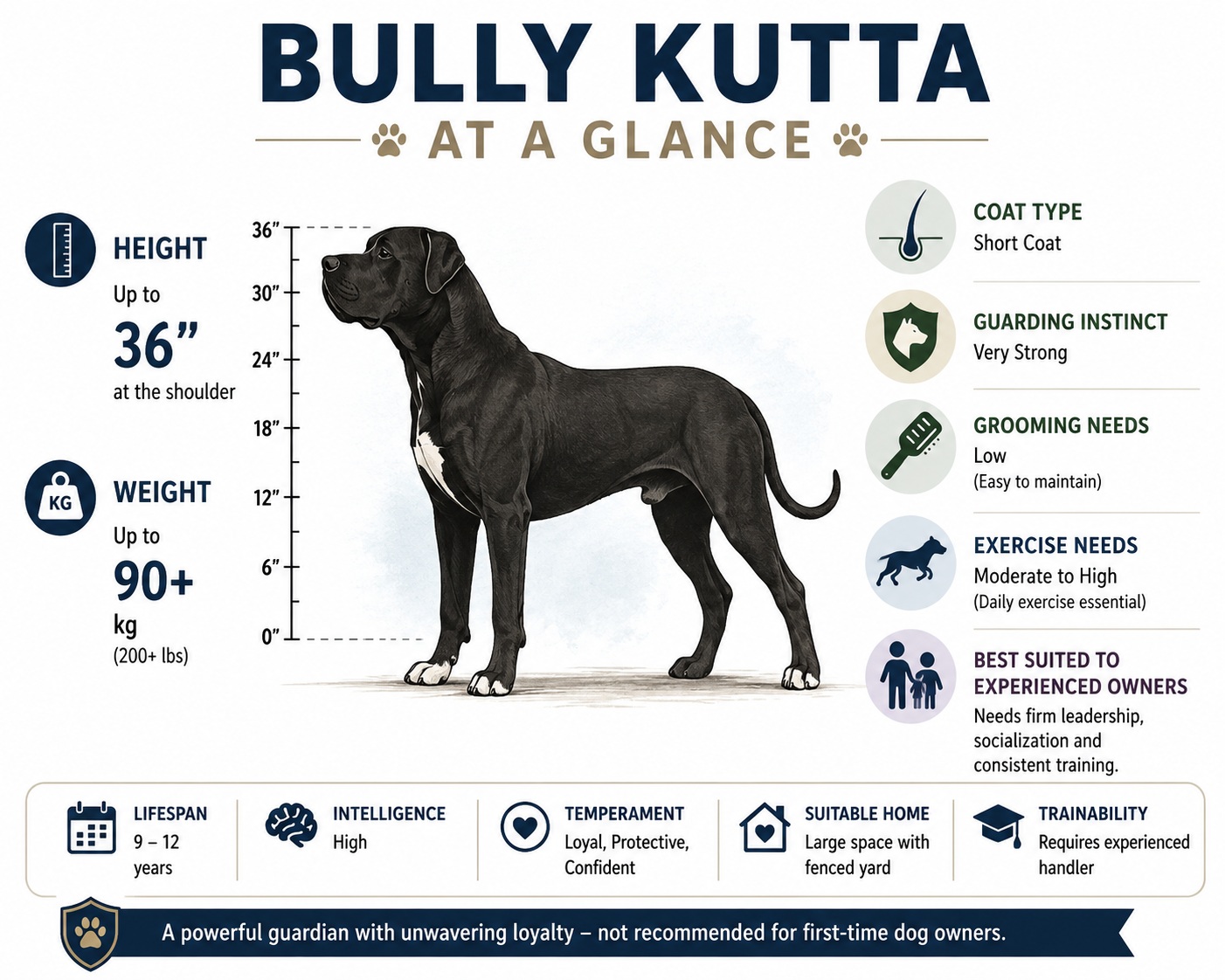
| Height | Approximately 30–36 inches (76–91 cm) |
| Weight | Approximately 70–90+ kg (155–200+ lb), depending on sex and bloodline |
| Life Expectancy | Around 8–12 years |
| Coat | Short, smooth, single coat |
| Colours | White most commonly reported; also black, brindle, fawn, brown, pied, and other variations |
| Exercise Needs | Moderate to high |
| Trainability | Best suited to experienced handlers using consistent, reward-based training |
| Shedding | Low to moderate |
| Good With Children | Depends on the individual dog, socialisation, supervision, and household circumstances |
| Good With Other Pets | Varies considerably; early socialisation and careful introductions are important |
| Suitable for First-Time Owners | Generally not recommended |
| Kennel Club Recognition | Recognised by kennel organisations in Pakistan; not recognised by the AKC or FCI |
What Is a Bully Kutta?
The Bully Kutta is a powerful working and guardian dog that has been developed over many years in South Asia. Rather than being a modern designer breed created through planned crossbreeding, it is generally regarded as a regional mastiff-type breed that evolved through selective breeding for strength, endurance, and guarding ability.
Although the breed is most closely associated with Pakistan today, Bully Kuttas are also found in parts of India, particularly in Punjab and neighbouring regions. As a result, both countries have historical and cultural connections with the breed, and discussions about its exact origin often reflect differing regional perspectives.
The name “Bully Kutta” is widely believed to derive from words used in local languages. “Kutta” simply means “dog” in Urdu and Hindi, while “Bully” is commonly explained as referring to the dog’s heavily wrinkled appearance or large, powerful build. However, the precise linguistic origin is not universally agreed upon, and several explanations exist.
Modern Bully Kuttas are primarily kept as:
- Family guardians
- Property guardians
- Farm or rural working dogs
- Companion animals for experienced owners
Historically, they have also been associated with other roles, including hunting large game and, in some areas, illegal dog fighting. These historical uses should not be viewed as defining the temperament of every modern Bully Kutta, nor do they reflect responsible dog ownership today.
Origin and History
The exact history of the Bully Kutta is not fully documented, and several competing theories exist regarding its development. While the breed is widely recognised as originating in the Indian subcontinent, historians and canine researchers do not universally agree on its precise ancestry.
One widely accepted view is that the Bully Kutta developed in the Punjab region, which today spans parts of both Pakistan and India. Before the partition of British India in 1947, this region shared centuries of cultural, agricultural, and breeding traditions, making it difficult to attribute many historic livestock and dog breeds exclusively to one modern country.
Some historical accounts suggest that local mastiff-type dogs were selectively bred over generations to produce large, powerful guardians capable of protecting homes, livestock, and estates. Other writers have proposed that imported mastiffs or similar European dogs may have influenced the breed during the colonial period, although the extent of this influence remains uncertain.
Claims that the Bully Kutta directly descends from specific ancient war dogs, Persian mastiffs, or dogs kept by Mughal rulers frequently appear online. However, these stories are generally based on tradition or repeated historical accounts rather than well-documented evidence. At present, there is insufficient reliable historical documentation to confirm many of these specific origin stories with certainty.
Today, the Bully Kutta is most strongly associated with Pakistan, where it is recognised by national kennel organisations and regarded by many as one of the country’s native breeds. It also continues to be bred in neighbouring parts of India, particularly in regions with long-standing historical connections to the breed.
Regardless of the precise details of its development, the Bully Kutta has earned a reputation as one of South Asia’s largest and most powerful mastiff-type dogs. Modern responsible breeders increasingly emphasise stable temperaments, sound structure, and health alongside the breed’s traditional guarding instincts.
Appearance
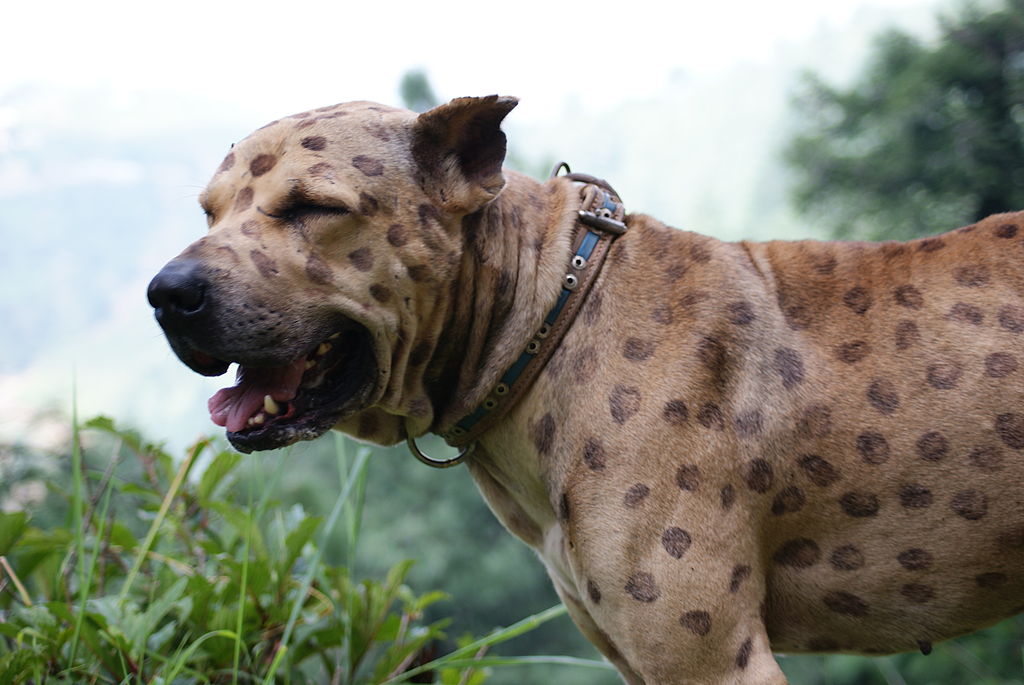
The Bully Kutta is one of the largest mastiff-type dogs associated with South Asia. It is characterised by a powerful frame, substantial bone, broad chest, and well-developed musculature. Although many people picture a massive white guardian dog when they hear the name “Bully Kutta,” the breed does not have a universally accepted international breed standard. As a result, appearance can vary noticeably between bloodlines, regions, and individual breeders.
Overall, a well-conditioned Bully Kutta should present a balanced, athletic appearance rather than simply carrying excessive weight. While the breed is undeniably powerful, responsible breeders generally aim for dogs with sound movement, good structure, and functional athleticism rather than exaggerated size alone.
Size
Adult Bully Kuttas are considerably larger than many other mastiff-type breeds.
Although measurements vary, most adult dogs fall within the following ranges:
| Sex | Height | Weight |
|---|---|---|
| Male | Approximately 30–36 inches (76–91 cm) | Approximately 70–90+ kg (155–200+ lb) |
| Female | Approximately 28–34 inches (71–86 cm) | Approximately 60–80+ kg (132–176+ lb) |
Individual dogs may fall outside these ranges depending on genetics, nutrition, overall condition, and breeding objectives.
Because no single international breed standard governs the Bully Kutta, prospective owners should be cautious of advertisements promoting exceptionally large dogs solely as a sign of superior quality. Extreme size alone does not indicate better health, temperament, or breeding practices.
Head and Expression
The Bully Kutta has a large, broad head that is generally proportional to its body. The skull is typically wide, with a strong muzzle and powerful jaws developed for gripping and holding.
The stop—the transition between the forehead and muzzle—is usually moderate rather than abrupt. The muzzle itself should appear deep and well developed, allowing for good airflow and a balanced facial structure.
The breed’s expression is often described as alert, confident, and self-assured. A well-socialised Bully Kutta should appear attentive without displaying unnecessary nervousness or instability.
Eyes
Most Bully Kuttas have medium-sized eyes set well apart on the head.
Eye colour commonly ranges from shades of brown to amber, although variation exists between bloodlines.
The eyes should appear clear and healthy without excessive tearing, redness, or discharge.
Ears
Ear shape varies considerably.
Some dogs naturally carry medium-sized drop ears that hang close to the head.
In certain regions, cropped ears have historically been associated with working or fighting dogs. Ear cropping remains a controversial cosmetic procedure and is prohibited or restricted in many countries. Prospective owners should familiarise themselves with the laws and welfare standards that apply where they live.
Nose
The nose is typically large with well-opened nostrils.
Black noses are most common, although pigmentation may vary depending on coat colour and genetics.
Neck
The neck is thick, muscular, and supports the breed’s large head.
Some dogs display loose skin around the neck, although the amount of wrinkling varies between bloodlines.
Body
The Bully Kutta has a deep chest, broad shoulders, and a strong, level back.
The rib cage is well developed, providing room for good heart and lung capacity, while the body should appear balanced rather than excessively long or short.
Strong hindquarters contribute to the breed’s power and endurance.
Legs and Feet
The legs should be straight, heavily boned, and capable of supporting the dog’s substantial weight.
Feet are generally large, compact, and well cushioned, providing stability on different surfaces.
Because of the breed’s size, maintaining a healthy body condition is important to reduce unnecessary stress on the joints.
Tail
The tail is typically long, thick at the base, and gradually tapers toward the tip.
When relaxed, it usually hangs naturally. During movement or alertness, it may be carried higher, but it should not curl tightly over the back.
Coat
The Bully Kutta has a short, smooth coat that lies close to the body.
The coat is relatively easy to maintain and generally requires only routine brushing to remove loose hair and dirt.
Unlike many long-coated guardian breeds, the Bully Kutta does not require regular trimming or professional grooming.
Coat Colours
Although the white Bully Kutta is probably the best-known variety, the breed occurs in several colours.
Commonly reported colours include:
- White
- Black
- Brindle
- Fawn
- Brown
- Red
- Pied
- White with coloured patches
Colour preferences often vary between breeders and regions.
Coat colour should never take priority over health, temperament, structural soundness, or responsible breeding practices.
Movement
Despite its size, a healthy Bully Kutta should move with confidence and purpose.
Its gait should appear smooth, balanced, and efficient rather than heavy or clumsy.
Poor movement, obvious stiffness, or difficulty supporting the dog’s weight may indicate structural or health concerns that should be evaluated by a veterinarian.
How Does the Bully Kutta Compare to Other Mastiff Breeds?
The Bully Kutta shares certain physical characteristics with several other mastiff-type dogs, but it also has features that distinguish it from these breeds.
| Breed | Country/Region of Origin | General Build | Traditional Role | Kennel Club Recognition |
|---|---|---|---|---|
| Bully Kutta | Pakistan & India | Very large, muscular, athletic | Guarding, property protection, rural working dog | Recognised by Pakistani kennel organisations; not recognised by the AKC or FCI |
| English Mastiff | England | Massive, heavily built | Estate guardian, companion | AKC & FCI |
| Cane Corso | Italy | Athletic, muscular | Farm guardian, protection, hunting | AKC & FCI |
| Boerboel | South Africa | Large, powerful | Farm and family guardian | AKC |
| Dogo Argentino | Argentina | Athletic, muscular | Big-game hunting | AKC & FCI |
| Pyrenean Mastiff | Spain | Giant, heavily boned | Livestock guardian | FCI (not AKC) |
| North American Mastiff | United States | Large, balanced, mastiff-type | Family companion and guardian | Not recognised by the AKC or FCI |
Although these breeds may appear similar at first glance, they were developed for different historical purposes and have distinct breed standards, temperaments, and health considerations.
Bully Kutta Trait Ratings
| Trait | Rating |
|---|---|
| Family Companion | ⭐⭐⭐☆☆ |
| Affection with Family | ⭐⭐⭐⭐☆ |
| Intelligence | ⭐⭐⭐⭐☆ |
| Trainability | ⭐⭐⭐☆☆ |
| Protective Instinct | ⭐⭐⭐⭐⭐ |
| Watchdog Ability | ⭐⭐⭐⭐⭐ |
| Energy Level | ⭐⭐⭐⭐☆ |
| Exercise Needs | ⭐⭐⭐⭐☆ |
| Grooming Needs | ⭐⭐☆☆☆ |
| Shedding | ⭐⭐☆☆☆ |
| Adaptability | ⭐⭐⭐☆☆ |
| Apartment Living | ⭐☆☆☆☆ |
| Good with Children* | ⭐⭐⭐☆☆ |
| Good with Other Dogs* | ⭐⭐☆☆☆ |
| Good with Other Pets* | ⭐⭐☆☆☆ |
| Suitable for First-Time Owners | ⭐☆☆☆☆ |
*These ratings assume responsible breeding, early socialisation, appropriate training, and careful supervision. Individual temperament can vary considerably.
Temperament and Personality
The Bully Kutta is often described as a confident, courageous, and highly protective dog. However, like many large guardian breeds, its temperament cannot be accurately summarised with a single word such as “aggressive” or “gentle.” Individual behaviour is influenced by genetics, early socialisation, training, environment, health, and the owner’s ability to manage a powerful working-type dog.
A well-bred and properly socialised Bully Kutta may develop into a calm, loyal, and dependable companion that forms strong bonds with its family. Conversely, poor breeding, inadequate socialisation, neglect, or irresponsible ownership can contribute to behavioural problems in any large breed, including the Bully Kutta.
Understanding the breed’s natural tendencies can help prospective owners decide whether it is a suitable match for their lifestyle.
Are Bully Kuttas Aggressive?
This is one of the most common questions asked about the breed.
The answer is more nuanced than a simple yes or no.
The Bully Kutta has historically been developed as a guardian dog. Many individuals naturally display confidence, territorial awareness, and a willingness to protect their home or family. These traits should not automatically be confused with uncontrolled aggression.
Aggressive behaviour can arise for many reasons, including:
- poor breeding practices;
- inadequate socialisation;
- harsh or inconsistent training;
- fear or anxiety;
- pain or illness; and
- irresponsible ownership.
A well-socialised Bully Kutta should be stable and manageable under appropriate supervision, but its size and strength mean that behavioural issues can have more serious consequences than they would in smaller breeds. For this reason, early socialisation, consistent training, and responsible handling are especially important.
Prospective owners should also remember that individual temperament varies. Two Bully Kuttas from different breeding programmes may display very different personalities despite belonging to the same breed.
Loyalty to Family
One characteristic frequently reported by owners is the breed’s strong attachment to its family.
Many Bully Kuttas are deeply loyal and enjoy spending time with the people they know and trust. They often prefer remaining close to their household and may naturally position themselves where they can observe activity around the home.
This loyalty should not be mistaken for a desire to interact with every unfamiliar person or dog. Many guardian breeds, including the Bully Kutta, tend to be naturally reserved with strangers until they determine that a situation is safe.
Protective Instincts
The Bully Kutta has long been associated with guarding homes, farms, and livestock in parts of South Asia.
As a result, many individuals possess strong protective instincts.
This does not mean that every Bully Kutta will automatically make an effective guard dog. Appropriate temperament, responsible ownership, and training all play important roles.
Owners should avoid encouraging unnecessary territorial or defensive behaviour. Instead, the goal should be to raise a confident dog that can distinguish between normal everyday situations and genuine threats.
Behaviour Around Strangers
Many Bully Kuttas are naturally cautious around unfamiliar people.
Some may remain reserved until properly introduced, while others may show greater curiosity or sociability depending on their individual temperament and early experiences.
Responsible owners should focus on positive socialisation from puppyhood, exposing their dog to a wide variety of people, environments, sounds, and situations in a controlled manner. This helps build confidence without encouraging fear or unnecessary reactivity.
Are Bully Kuttas Good With Children?
A well-socialised Bully Kutta that has been raised with children may develop close bonds with members of its household.
However, because of the breed’s substantial size and strength, interactions between dogs and young children should always be supervised.
Accidental knocks, bumps, or rough play can occur even with friendly dogs simply because of their physical power.
Families should also teach children how to interact respectfully with dogs by avoiding behaviours such as disturbing them while eating, sleeping, or resting.
No dog should ever be left unsupervised with young children, regardless of breed.
Do They Get Along With Other Dogs?
Compatibility with other dogs varies considerably.
Some Bully Kuttas coexist peacefully with dogs they have been raised alongside, while others may be less accepting of unfamiliar dogs, particularly those of the same sex.
Early socialisation, careful introductions, and responsible management can improve the likelihood of successful relationships with other dogs.
Owners should never assume that two large guardian breeds will automatically get along simply because they have previously lived with other dogs.
Are They Suitable for Homes With Other Pets?
The Bully Kutta’s behaviour around cats and smaller animals depends largely on the individual dog’s temperament, early experiences, and training.
Dogs introduced to household pets from an early age may learn to live peacefully alongside them.
However, introductions should always be gradual and carefully supervised, particularly given the Bully Kutta’s size and strength.
Intelligence
The Bully Kutta is generally considered an intelligent breed capable of learning a wide variety of commands and routines.
Rather than displaying the constant eagerness to please seen in some sporting or herding breeds, many Bully Kuttas are independent thinkers. This independence can sometimes be mistaken for stubbornness.
Successful training relies on patience, consistency, and clear communication rather than force or intimidation.
Trainability
Training should begin as early as possible.
Puppyhood provides an excellent opportunity to establish good manners before the dog reaches its full adult size.
Important early lessons include:
- walking politely on a lead;
- reliable recall where appropriate;
- basic obedience;
- impulse control;
- greeting visitors calmly;
- appropriate behaviour around other animals; and
- confidence in different environments.
Reward-based training methods that use praise, toys, or food rewards are generally recommended. Harsh punishment or intimidation may damage trust and increase the risk of fear-based behavioural problems.
Do Bully Kuttas Bark a Lot?
The breed is not generally regarded as an excessive barker.
Many individuals vocalise primarily when alerting their owners to unfamiliar people or unusual activity.
However, excessive barking may occur if a dog becomes bored, frustrated, under-exercised, or lacks sufficient mental stimulation.
Can They Be Left Alone?
Bully Kuttas often develop strong bonds with their families.
While many adults can learn to spend reasonable periods alone, they should not routinely be left for long hours without companionship, exercise, or mental enrichment.
Puppies should be introduced gradually to short periods of alone time to help build confidence and reduce the risk of separation-related behaviours.
Is a Bully Kutta Right for You?
The Bully Kutta can be a rewarding companion for experienced owners who understand the responsibilities of living with a large guardian breed.
However, it is generally not recommended for first-time dog owners.
Prospective owners should carefully consider whether they can provide:
- sufficient space;
- daily exercise;
- early and ongoing socialisation;
- consistent reward-based training;
- secure fencing;
- financial resources for a giant breed; and
- lifelong commitment to responsible ownership.
Choosing this breed simply because of its impressive appearance or reputation is unlikely to result in a successful outcome. Instead, prospective owners should focus on whether the Bully Kutta’s temperament, management needs, and lifestyle requirements genuinely match their own.
Quick Temperament Summary
Best Suited For
- Experienced dog owners
- Homes with secure outdoor space
- Owners committed to ongoing training and socialisation
- People seeking a confident guardian-type companion
May Not Be Ideal For
- First-time dog owners
- Small apartments with limited exercise opportunities
- Owners frequently away from home
- Families unable to safely manage a very large and powerful dog
Care, Exercise, Training, and Living Requirements
Owning a Bully Kutta involves far more than managing a large dog. This powerful breed requires consistent training, regular exercise, mental stimulation, appropriate nutrition, and responsible day-to-day management throughout its life.
While the Bully Kutta is not generally considered a high-energy working breed in the same way as a Belgian Malinois or Border Collie, it still benefits from regular physical activity and structured routines. A lack of exercise or mental stimulation may contribute to boredom and unwanted behaviours, regardless of breed.
Exercise Requirements
Most healthy adult Bully Kuttas benefit from 60 to 90 minutes of daily exercise, although individual needs vary depending on age, health, and temperament.
Exercise should include more than simply allowing the dog to roam in a garden. A secure outdoor area is valuable, but it does not replace structured walks and opportunities to explore different environments.
Suitable activities may include:
- Daily walks
- Supervised play sessions
- Scent-based enrichment games
- Basic obedience training
- Controlled hiking on suitable terrain
- Puzzle feeders and interactive toys
Exercise should be increased gradually in growing puppies. Excessive running, repetitive jumping, or forced exercise while joints are still developing may increase the risk of orthopedic problems in giant breeds.
Older dogs or those with health conditions may require a modified exercise routine based on veterinary advice.
Mental Stimulation
Mental enrichment is just as important as physical exercise.
Because the Bully Kutta is an intelligent breed capable of learning routines and problem-solving, providing opportunities to engage its mind can help reduce boredom.
Ideas include:
- Food-dispensing toys
- Hide-and-seek games
- Basic scent work
- Training new commands
- Rotating toys regularly
- Supervised exploration of new environments
Keeping training sessions short, positive, and varied is often more effective than long repetitive sessions.
Training
Training should begin as early as possible, ideally as soon as a puppy arrives home.
Although Bully Kuttas are intelligent, they may also display an independent nature. Consistency, patience, and positive reinforcement are generally more effective than harsh corrections or punishment.
Key skills to prioritize include:
- Name recognition
- Reliable recall where safe and appropriate
- Loose-lead walking
- Sit, stay, and down
- Calm greetings
- Settling on command
- Confidence around new people and environments
Because adult Bully Kuttas are extremely powerful, teaching good manners while they are still manageable puppies is much easier than attempting to correct unwanted behaviours later.
If behavioural concerns arise, seeking advice from a qualified, reward-based trainer or veterinary behavior professional is often beneficial.
Socialization
Early socialization helps puppies develop into confident adults.
During the first few months of life, puppies should gradually experience a variety of people, places, sounds, surfaces, and everyday situations in a safe and positive manner.
Examples include:
- Adults of different ages
- Calm children where appropriate
- Friendly vaccinated dogs
- Car journeys
- Veterinary clinics
- Grooming equipment
- Household appliances
- Busy and quiet environments
The goal is not to overwhelm the puppy but to help it build positive experiences and confidence.
Grooming
The Bully Kutta’s short coat is relatively easy to maintain.
Most owners find that brushing once or twice a week helps remove loose hair, distribute natural skin oils, and keep the coat looking clean.
Additional grooming includes:
- Checking and cleaning the ears when necessary
- Trimming nails as needed
- Brushing teeth several times each week
- Inspecting the skin for irritation, parasites, or injuries
Bathing is generally only required when the dog becomes particularly dirty or develops an odour.
Shedding
The breed typically sheds low to moderately throughout the year.
Seasonal shedding may increase during certain times of the year, particularly in climates with more pronounced seasonal changes.
Regular brushing usually helps control loose hair.
Feeding
A Bully Kutta requires a complete and balanced diet appropriate for its age, size, and activity level.
Because nutritional needs vary between individual dogs, there is no single feeding plan suitable for every Bully Kutta.
Factors influencing dietary requirements include:
- Age
- Body condition
- Activity level
- Reproductive status
- Overall health
- Veterinary recommendations
Puppies should be fed a diet formulated for large- or giant-breed growth to support steady development. Rapid growth associated with excessive calorie intake may place additional stress on developing bones and joints.
Fresh drinking water should always be available.
Weight Management
Maintaining a healthy body condition is particularly important in giant breeds.
Excess weight places additional strain on the joints, heart, and other body systems and may contribute to reduced mobility over time.
Owners should monitor:
- Body condition score
- Waist definition
- Rib coverage
- Changes in appetite
- Overall activity levels
If you are unsure whether your dog is at an appropriate weight, consult your veterinarian for guidance.
Living Space
The Bully Kutta is generally best suited to homes with adequate indoor and outdoor space.
Because of its size and strength, the breed is not usually considered well suited to apartment living, particularly if opportunities for exercise are limited.
A securely fenced garden or yard can provide valuable space for supervised activity, but dogs should not be expected to live outdoors full-time or rely solely on a garden for exercise.
Companionship and regular interaction with their family remain important.
Climate Tolerance
The Bully Kutta’s short coat generally allows it to tolerate warm weather better than many long-coated breeds.
However, like all dogs, it can still be affected by excessive heat.
During hot weather:
- Provide constant access to fresh water.
- Exercise during cooler parts of the day.
- Offer shade and well-ventilated resting areas.
- Never leave the dog unattended in a parked vehicle.
Although the breed may cope reasonably well with mild winters, dogs living in colder climates may require additional protection during prolonged exposure to low temperatures.
Secure Containment
Because of the breed’s size and physical strength, secure fencing is essential.
Owners should ensure that:
- fencing is appropriate for a large, powerful dog;
- gates close securely;
- the property is regularly inspected for escape points; and
- the dog is supervised when appropriate.
Responsible containment protects both the dog and the wider community.
Veterinary Care
Routine preventive healthcare remains important throughout the dog’s life.
This includes:
- Regular health examinations
- Vaccinations as recommended by your veterinarian
- Parasite prevention
- Dental care
- Weight monitoring
- Orthopedic assessments where appropriate
- Prompt evaluation of any changes in mobility, appetite, or behaviour
Early detection of health problems often improves long-term outcomes.
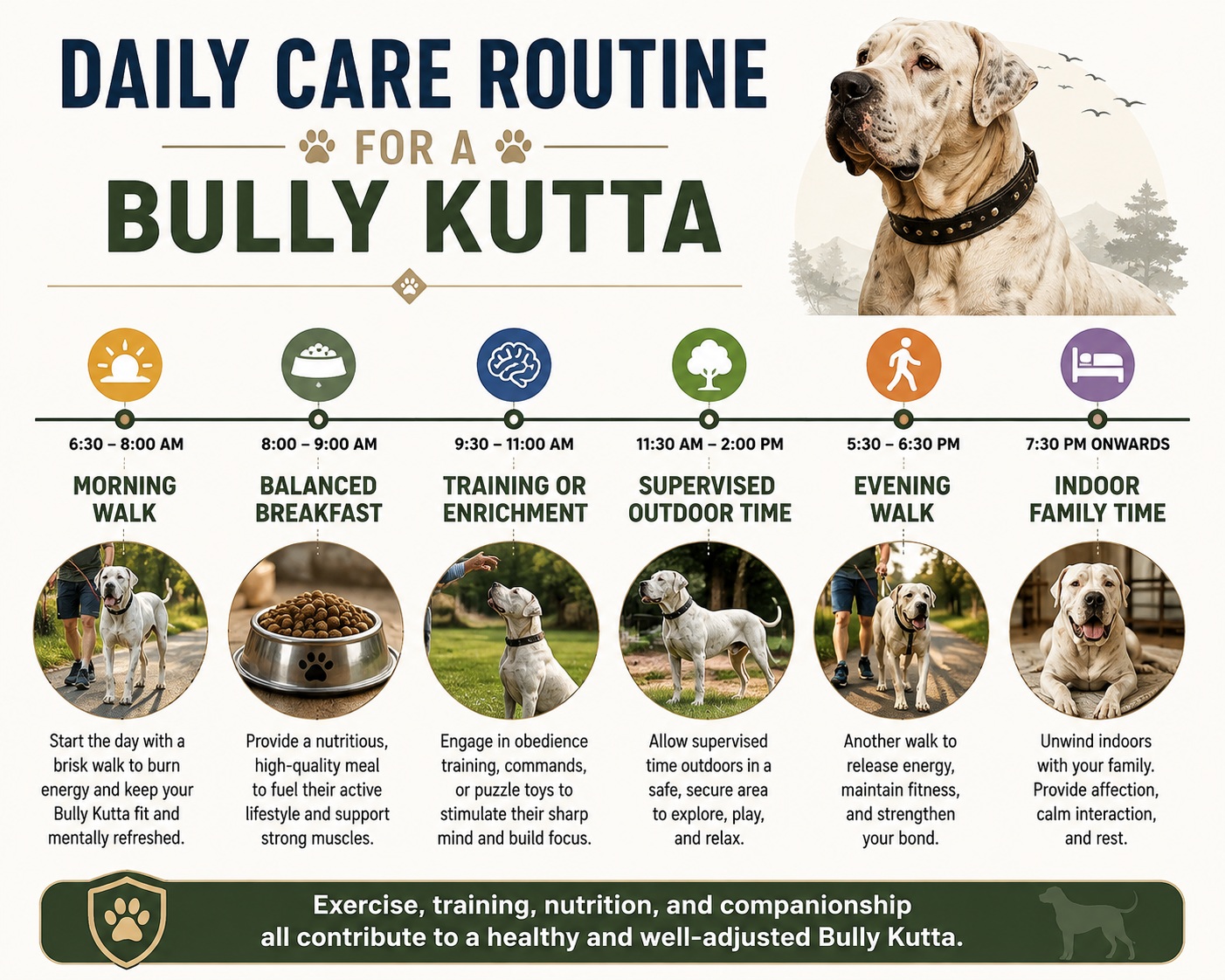
Daily Care Checklist
A typical day with a healthy adult Bully Kutta may include:
✅ Morning walk or exercise
✅ Fresh food and clean water
✅ Short training or enrichment session
✅ Supervised outdoor time
✅ Social interaction with family
✅ Coat and body check
✅ Evening walk or play session
✅ Quiet time indoors with the household
Providing a consistent routine helps many dogs feel more secure and can support both physical and emotional wellbeing.
Health and Lifespan
Like all dogs, the Bully Kutta can develop a variety of health conditions throughout its life. However, unlike many internationally recognised breeds, there is relatively little published scientific research specifically examining the long-term health of Bully Kuttas as a population.
For that reason, owners should be cautious of articles claiming the breed is either exceptionally healthy or especially prone to particular diseases without supporting evidence.
Instead, it is more appropriate to consider the health challenges commonly associated with large and giant mastiff-type dogs, while recognising that individual risk varies depending on genetics, breeding practices, nutrition, body condition, exercise, and veterinary care.
Choosing a responsible breeder who prioritises sound temperament, structural health, and appropriate health screening may help reduce the risk of some inherited conditions, although no breeder can guarantee that a puppy will remain free from disease throughout its lifetime.
Average Lifespan
Most sources estimate that Bully Kuttas live approximately 8 to 12 years.
As with any breed, lifespan is influenced by several factors, including:
- Genetics
- Nutrition
- Body weight
- Exercise
- Preventive veterinary care
- Environment
- Overall health
Some dogs may live longer, while others may develop medical conditions that shorten their lifespan.
Common Health Concerns
Because comprehensive breed-specific studies are limited, the following conditions should be viewed as potential health concerns rather than diseases known to affect every Bully Kutta.
Hip Dysplasia
Large and giant breeds may be at increased risk of hip dysplasia, a developmental condition in which the hip joint does not form normally.
Signs may include:
- Difficulty standing
- Reluctance to exercise
- Stiffness after resting
- Reduced activity
- Limping
Responsible breeding and maintaining a healthy body weight may help reduce the overall impact of joint disease.
Elbow Dysplasia
Some large breeds also experience elbow dysplasia, which affects the development of the elbow joint.
Affected dogs may show:
- Front-leg lameness
- Stiffness
- Pain after exercise
- Reduced willingness to run or play
Early veterinary assessment may improve long-term management.
Gastric Dilatation-Volvulus (Bloat)
Deep-chested dogs can be at risk of gastric dilatation-volvulus (GDV), commonly known as bloat.
This is a medical emergency that requires immediate veterinary attention.
Possible signs include:
- Swollen abdomen
- Repeated unsuccessful attempts to vomit
- Restlessness
- Excessive drooling
- Collapse
Owners of large breeds should familiarise themselves with the signs of GDV and know the location of their nearest emergency veterinary clinic.
Arthritis
As Bully Kuttas age, some may develop osteoarthritis, particularly if they have previous joint injuries or developmental orthopedic disease.
Maintaining an appropriate body weight, regular low-impact exercise, and veterinary guidance may help support mobility.
Obesity
Because of the breed’s size, even modest weight gain can place additional strain on the joints and cardiovascular system.
Preventing obesity through:
- appropriate portion control,
- regular exercise, and
- routine body condition assessments
is one of the simplest ways to support long-term health.
Skin Problems
Most Bully Kuttas have relatively low-maintenance coats, but some dogs may experience:
- allergies;
- bacterial skin infections;
- parasites;
- irritation within skin folds where present; or
- environmental skin conditions.
Owners should monitor their dog’s skin regularly and seek veterinary advice if persistent itching, redness, or hair loss develops.
Ear Problems
Dogs with heavier drop ears may occasionally develop ear infections, particularly if moisture becomes trapped.
Routine ear checks and cleaning when recommended by a veterinarian can help reduce this risk.
Preventive Healthcare
Preventive care is one of the most effective ways to support a Bully Kutta’s long-term wellbeing.
Routine care includes:
- Annual or more frequent veterinary examinations
- Vaccinations as recommended
- Parasite prevention
- Dental care
- Nail trimming
- Weight monitoring
- Regular exercise
- Appropriate nutrition
Owners should also monitor for changes in appetite, mobility, behaviour, breathing, or drinking habits, as these may indicate an underlying medical condition.
Should Breeding Dogs Be Health Tested?
Where suitable health screening is available, responsible Bully Kutta breeders should consider testing breeding dogs before producing a litter.
The specific tests may vary depending on the individual breeding programme and veterinary recommendations, but discussions may include:
- Hip evaluation
- Elbow evaluation
- Cardiac assessment
- Eye examination
- General orthopedic health
- DNA testing where appropriate and available
Prospective puppy buyers should ask breeders:
- What health tests have the sire and dam completed?
- Can I see copies of the results?
- Have previous litters experienced any inherited health concerns?
Transparency is often a good indicator of a responsible breeding programme.
Signs Your Bully Kutta Should See a Veterinarian
Seek veterinary advice if your dog develops:
- Persistent lameness
- Difficulty standing or walking
- Sudden abdominal swelling
- Difficulty breathing
- Collapse
- Loss of appetite lasting more than 24 hours
- Unexplained weight loss
- Persistent vomiting or diarrhoea
- Seizures
- Changes in behaviour or temperament
- Skin lesions that do not heal
Prompt veterinary assessment can improve outcomes for many conditions.
Can You Help Your Bully Kutta Live Longer?
While lifespan cannot be guaranteed, several everyday practices may contribute to a healthier life:
- Feed a complete, balanced diet.
- Maintain a healthy body condition.
- Provide regular exercise appropriate for age and health.
- Attend routine veterinary check-ups.
- Keep vaccinations and parasite prevention up to date.
- Brush teeth regularly.
- Avoid excessive weight gain.
- Provide mental enrichment and social interaction.
- Seek veterinary attention promptly when health concerns arise.
These measures support overall wellbeing regardless of breed.
Health Summary
| Category | Overview |
|---|---|
| Average Lifespan | Approximately 8–12 years |
| Overall Health | Limited breed-specific research available |
| Joint Health | Monitor hips, elbows, and mobility |
| Weight Management | Important because of large body size |
| Grooming | Low maintenance |
| Preventive Care | Regular veterinary examinations recommended |
| Health Testing | Discuss available screening with breeders |
Buying a Bully Kutta Puppy
Choosing a Bully Kutta puppy involves more than selecting a dog based on appearance or size. Because this is a large, powerful breed that requires experienced handling, prospective owners should take time to evaluate both the breeder and whether the breed is suitable for their lifestyle.
A responsible breeder should be willing to discuss their breeding programme, explain the health history of the puppy’s parents, answer questions openly, and remain available for support after the puppy goes home.
Prospective owners should avoid making decisions based solely on social media posts or online advertisements. Whenever possible, arrange to meet the breeder, observe where the puppies are raised, and ask to meet the puppy’s mother.
How to Choose a Responsible Breeder
Responsible breeders focus on improving the overall quality of the dogs they produce rather than simply selling puppies.
While breeding practices vary, prospective buyers should look for breeders who:
- are transparent about their breeding programme;
- discuss the health history of their dogs;
- provide veterinary records where appropriate;
- encourage prospective owners to ask questions;
- raise puppies in a clean and enriching environment;
- socialize puppies from an early age; and
- provide guidance after the puppy has been collected.
If a breeder is unwilling to answer questions or pressures you into making an immediate decision, it may be best to continue your search.
Questions to Ask Before Reserving a Puppy
Before paying a deposit, consider asking:
- Can I meet the puppy’s mother?
- What health screening has been completed on the parents?
- How are the puppies raised and socialized?
- What veterinary care has the puppy received?
- What food is the puppy currently eating?
- What support do you offer after the puppy goes home?
- Have previous litters experienced any inherited health problems?
- Why was this breeding pair selected?
Responsible breeders are generally happy to discuss these topics and provide supporting documentation where appropriate.
How Much Does a Bully Kutta Cost?
The price of a Bully Kutta can vary significantly depending on the country, breeder, bloodline, age, health testing, pedigree, and overall quality of the dog. Puppies from established breeders that invest in health screening, veterinary care, and responsible breeding practices generally command higher prices than those sold through classified advertisements or informal sellers.
While price is an important consideration, it should never be the only factor when choosing a puppy. A lower purchase price may be offset by higher veterinary or behavioural costs later if the puppy comes from poor breeding conditions.
- Average puppy price in India: between ₹30,000 and ₹200,000
- Average puppy price in Pakistan: between PKR 50,000 and PKR 250,000
Frequently Asked Questions
Are Bully Kuttas recognized in India?
Yes. The Bully Kutta is recognized by the Kennel Club of India (KCI) and is bred in several parts of northern India, particularly Punjab.
Is the Bully Kutta recognized in Pakistan?
Yes. The breed is recognized by kennel organizations in Pakistan, such as the Pakistan Kennel Club, and is widely regarded as one of the country’s native dog breeds.
Is the Bully Kutta a good family dog?
Some well-bred, properly socialised Bully Kuttas develop into loyal companions for experienced owners.
However, because of the breed’s size, strength, and protective instincts, it is generally better suited to experienced handlers than first-time dog owners.
Are Bully Kuttas aggressive?
Not necessarily.
Temperament varies between individual dogs and is influenced by genetics, early socialisation, training, health, and environment.
Like many guardian breeds, they may naturally be protective, but responsible ownership plays a major role in shaping behaviour.
How much exercise does a Bully Kutta need?
Most healthy adults benefit from around 60 to 90 minutes of daily exercise, together with opportunities for mental enrichment and training.
Individual requirements vary according to age, health, and activity level.
Are Bully Kuttas easy to train?
They are intelligent dogs but may display an independent nature.
Positive, reward-based training combined with early socialisation is generally recommended.
Final Thoughts
The Bully Kutta is a distinctive mastiff-type breed with a long history in South Asia and a reputation for strength, confidence, and protective instincts. Although the breed is admired by many enthusiasts, it is not a suitable choice for every household.
Prospective owners should take time to understand the responsibilities involved in caring for such a large and powerful dog. Early socialisation, consistent reward-based training, regular veterinary care, and responsible day-to-day management all contribute to raising a well-adjusted companion.
Because aspects of the breed’s history and development remain the subject of differing accounts, it is also important to approach historical claims with care and rely on well-supported information wherever possible. Similarly, individual temperament should never be judged solely by breed. Genetics, environment, training, and responsible ownership all play important roles in shaping behaviour.
Ultimately, choosing a Bully Kutta should be based not on appearance or reputation, but on whether you can provide the environment, experience, and lifelong commitment needed to care for this remarkable breed responsibly.
Editorial Disclaimer
Editorial Note: This article is intended for educational purposes and reflects publicly available information at the time of publication. Historical accounts of the Bully Kutta’s development vary, and some commonly repeated claims are not supported by strong historical evidence. Readers should independently verify breeder information, health testing, and local ownership regulations before acquiring any dog. Individual temperament and health can vary considerably regardless of breed.