

Thinking About Getting a Labradoodle? Here’s What Every Owner Wants to Know
Labradoodles have earned a reputation as friendly, intelligent, and affectionate family dogs, but living with one also comes with plenty of questions. From grooming and behaviour to travel, weather, and everyday care, both new and experienced owners often wonder what’s normal and what’s not.
While we’ve covered topics like breed characteristics, sizes, breeders, and names in our other Labradoodle guides, this article focuses on the practical questions that arise once a Labradoodle becomes part of your family. Whether you’re preparing for your first puppy or already sharing your home with an energetic adult Labradoodle, you’ll find straightforward answers to many of the most common concerns owners have.
Keep in mind that every Labradoodle is unique. Factors such as genetics, training, early socialisation, health, and environment all influence a dog’s behaviour and development. The answers below are intended as general guidance and should not replace advice from your veterinarian or professional dog trainer when health or behavioural issues arise.
Let’s dive into the questions every Labradoodle owner should know the answers to.
Table of Contents
Living With a Labradoodle
Do Labradoodles smell?
One of the reasons many people choose a Labradoodle is that they’re generally considered a relatively low-odour breed. A healthy Labradoodle with a clean coat shouldn’t have a strong “doggy smell.” Regular brushing, routine bathing, and proper coat maintenance all help keep them fresh.
If your Labradoodle develops an unpleasant odour, it’s often a sign that something else needs attention. Common causes include dirty ears, dental disease, skin infections, yeast overgrowth, wet coats that haven’t dried properly, or matted fur trapping moisture and debris. Dogs that swim frequently may also need more regular grooming.
If the smell persists despite good hygiene, it’s worth scheduling a veterinary check-up to rule out underlying skin, ear, or dental problems.
Do Labradoodles drool?
Compared with many larger breeds, Labradoodles are generally light droolers. Most owners rarely notice excessive saliva, making them a popular choice for people who prefer a cleaner home.
However, it’s perfectly normal for a Labradoodle to drool occasionally when excited, anticipating food, after vigorous exercise, or during hot weather. Some individuals also drool slightly after drinking water.
Sudden or excessive drooling, particularly when accompanied by vomiting, difficulty swallowing, pawing at the mouth, or lethargy, should always be investigated by a veterinarian, as it could indicate dental problems, poisoning, or another medical condition.
Can Labradoodles swim?
Yes. Most Labradoodles naturally enjoy swimming thanks to the Labrador Retriever heritage in their bloodlines. Many happily retrieve toys from lakes, rivers, pools, or the beach and often become confident swimmers with gentle introductions.
That said, not every Labradoodle loves the water. Some puppies need time to build confidence, while others simply prefer staying dry. Never force a dog into water, and always supervise them around pools, rivers, and the ocean.
If you’re introducing your Labradoodle to swimming for the first time, choose calm, shallow water and use plenty of praise and encouragement. A well-fitted canine life jacket is also a good idea, especially for young puppies or inexperienced swimmers.
Can Labradoodles climb stairs?
Healthy Labradoodles have no problem using stairs as adults. However, young puppies shouldn’t repeatedly run up and down long flights of stairs while their joints and growth plates are still developing.
Occasional use is generally fine, but repeated jumping or racing on stairs may place unnecessary stress on growing joints, particularly in medium and standard Labradoodles. If possible, carry very young puppies or limit stair use until they’re older.
Senior Labradoodles with arthritis or mobility issues may also struggle with stairs and may benefit from ramps or non-slip flooring to reduce the risk of slipping.
Do Labradoodles like hot weather?
Labradoodles can tolerate warm weather reasonably well, but they aren’t built to cope with extreme heat for long periods. Their thick fleece or wool coats provide some insulation, but they can also trap heat, increasing the risk of overheating during hot summer days.
On warm days, exercise your Labradoodle early in the morning or later in the evening when temperatures are cooler. Always provide access to fresh drinking water, plenty of shade, and avoid walking on hot pavement, which can burn sensitive paw pads.
Signs of heat stress include excessive panting, drooling, lethargy, weakness, vomiting, and collapse. If you suspect your Labradoodle is overheating, move them to a cool area immediately, offer cool (not ice-cold) water, and contact your veterinarian if symptoms don’t improve quickly.
Do Labradoodles like cold weather?
Thanks to their dense coats, many Labradoodles handle cool weather quite well. Medium and Standard Labradoodles, in particular, often enjoy winter walks and outdoor play.
However, tolerance varies depending on coat type, age, health, and climate. Puppies, senior dogs, and Labradoodles with shorter coats may become cold more quickly and benefit from a dog coat during chilly weather.
Even if your Labradoodle enjoys the cold, avoid leaving them outdoors for extended periods during freezing temperatures. After walks in wet or snowy conditions, dry their coat thoroughly to prevent discomfort and skin irritation.
Can Labradoodles travel in the car?
Yes. Labradoodles generally make excellent travel companions and adapt well to car journeys when introduced gradually. Many enjoy road trips because they naturally like spending time with their families.
For safety, always secure your Labradoodle using a crash-tested harness, travel crate, or dog seatbelt. Avoid allowing them to roam freely inside the vehicle, as this can distract the driver and increase the risk of injury during sudden stops.
On longer trips, stop every two to three hours for toilet breaks, water, and a short walk. If your puppy experiences car sickness, speak with your veterinarian, as most dogs become more comfortable with regular positive travel experiences.
Can Labradoodles fly on airplanes?
Yes, many Labradoodles travel successfully by air, although the experience depends largely on their size and the airline’s policies.
Mini Labradoodles may occasionally meet cabin size and weight requirements, while Medium and Standard Labradoodles usually travel in the aircraft’s climate-controlled cargo area when permitted. Some airlines have restrictions on pet travel during periods of extreme heat or cold.
If you’re planning to fly with your Labradoodle, research airline requirements well in advance. You’ll usually need an airline-approved travel crate, current vaccinations, and in some cases, a veterinary health certificate. For international travel, additional import regulations may apply.
Labradoodle Behaviour
Why does my Labradoodle follow me everywhere?
If it feels like your Labradoodle is your shadow, you’re not imagining it. Labradoodles are companion dogs that form strong bonds with their families and naturally enjoy being close to the people they trust.
Following you from room to room is usually a sign of affection rather than a behavioural problem. They may simply want to know what you’re doing or hope you’ll invite them to join the next activity.
However, if your Labradoodle becomes distressed whenever you leave the room or struggles to cope when left home alone, they may be developing separation anxiety. Encouraging short periods of independence, providing enrichment toys, and avoiding making a fuss when leaving or returning home can help build confidence.
Why does my Labradoodle lick me so much?
Licking is a normal canine behaviour and can mean several different things. Your Labradoodle may lick you to show affection, seek attention, explore different scents and tastes, or simply because they enjoy the interaction.
Many Labradoodles also lick their owners when they’re feeling relaxed or trying to comfort them. Puppies often use licking as a way to explore their surroundings.
Excessive licking, particularly if it becomes obsessive or is directed at themselves, may indicate boredom, anxiety, allergies, pain, or skin irritation. If the behaviour suddenly changes or becomes compulsive, consult your veterinarian to rule out any underlying medical causes.
Why does my Labradoodle chew everything?
Chewing is completely normal, especially during puppyhood. Labradoodle puppies explore the world with their mouths, and chewing also helps relieve discomfort while they’re teething.
Adult Labradoodles may chew because they’re bored, have excess energy, are anxious, or simply don’t have enough appropriate chew toys available.
To reduce destructive chewing:
- Provide durable chew toys.
- Rotate toys regularly to keep them interesting.
- Ensure your Labradoodle receives enough daily exercise.
- Offer puzzle feeders and enrichment activities.
- Puppy-proof your home by keeping valuable items out of reach.
If your dog suddenly starts chewing inappropriate objects after previously behaving well, consider whether stress, boredom, or a change in routine could be contributing.
Why does my Labradoodle dig holes?
Digging is another natural behaviour inherited from your dog’s instincts. Some Labradoodles dig because they’re bored, while others dig to bury toys, search for interesting scents, or cool themselves on hot days by lying in cooler soil.
Providing enough physical exercise and mental stimulation often reduces excessive digging. You can also redirect the behaviour by creating a designated digging area, such as a sandpit, where your dog is allowed to dig freely.
If digging begins suddenly or becomes excessive, consider whether your Labradoodle is receiving enough daily activity or whether environmental changes may be causing stress.
Why does my Labradoodle jump on visitors?
Labradoodles are naturally social dogs and often greet people with great enthusiasm. Jumping is usually their way of saying hello, seeking attention, or expressing excitement rather than displaying bad intentions.
While this behaviour may seem harmless when your Labradoodle is a puppy, it can become problematic as they grow, especially in Medium and Standard Labradoodles. Teaching polite greetings from an early age is the best approach.
When guests arrive, ask your Labradoodle to sit before receiving attention. Reward calm behaviour with praise or treats, and ask visitors to ignore jumping until all four paws are on the ground. Consistency from everyone in the household is essential for success.
Why does my Labradoodle get the zoomies?
If your Labradoodle suddenly sprints around the house or garden at full speed, you’ve witnessed what many owners call the “zoomies.” These sudden bursts of energy, technically known as Frenetic Random Activity Periods (FRAPs), are completely normal.
Zoomies often happen after a bath, during playtime, in the evening, or after your dog has been resting for a while. Puppies and young Labradoodles experience them more frequently than adults.
As long as your dog has a safe space to run without obstacles, zoomies are usually nothing to worry about. However, if your Labradoodle appears disoriented, loses balance, or shows signs of pain during these episodes, consult your veterinarian.
Why does my Labradoodle carry toys around?
Many Labradoodles enjoy carrying toys simply because it’s part of their Labrador Retriever heritage. Retrievers were originally bred to carry game gently in their mouths, and that instinct remains strong in many Labradoodles today.
Some dogs proudly carry their favourite toy when greeting family members, while others use toys as a source of comfort when they’re excited or feeling uncertain.
This behaviour is generally a positive sign and often indicates a confident, content dog. Providing a variety of safe toys can help satisfy this natural instinct while reducing the temptation to carry household items instead.
Why does my Labradoodle stare at me?
It can feel as though your Labradoodle is constantly watching your every move. In most cases, this is completely normal.
Labradoodles are highly people-oriented dogs that naturally look to their owners for guidance, attention, or the next exciting activity. Your dog may be waiting for a walk, hoping for a treat, or simply enjoying your company.
Soft, relaxed eye contact is often a sign of affection and trust. However, if staring is accompanied by whining, pacing, or other unusual behaviours, your Labradoodle may be trying to communicate discomfort, hunger, boredom, or the need to go outside.
Why does my Labradoodle sleep on me?
Many Labradoodles love sleeping close to their owners because it provides warmth, security, and companionship. As highly social dogs, they often seek physical closeness with the people they trust most.
Sleeping beside or on you can also be a sign that your Labradoodle feels safe and relaxed in your presence. Puppies, in particular, may enjoy cuddling because it reminds them of sleeping alongside their littermates.
If you don’t mind sharing the sofa or bed, there’s generally no harm in this behaviour. However, if you’d prefer your dog to sleep elsewhere, gentle consistency and providing a comfortable bed of their own can help establish new routines.
Grooming & Coat Care
Why does my Labradoodle get matted?
Matted coats are one of the most common grooming problems Labradoodle owners face. Their curly or wavy coats can easily trap loose hair, dirt, moisture, and debris, leading to tangles that gradually tighten into painful mats.
Areas behind the ears, under the collar, around the legs, and beneath the armpits are particularly prone to matting.
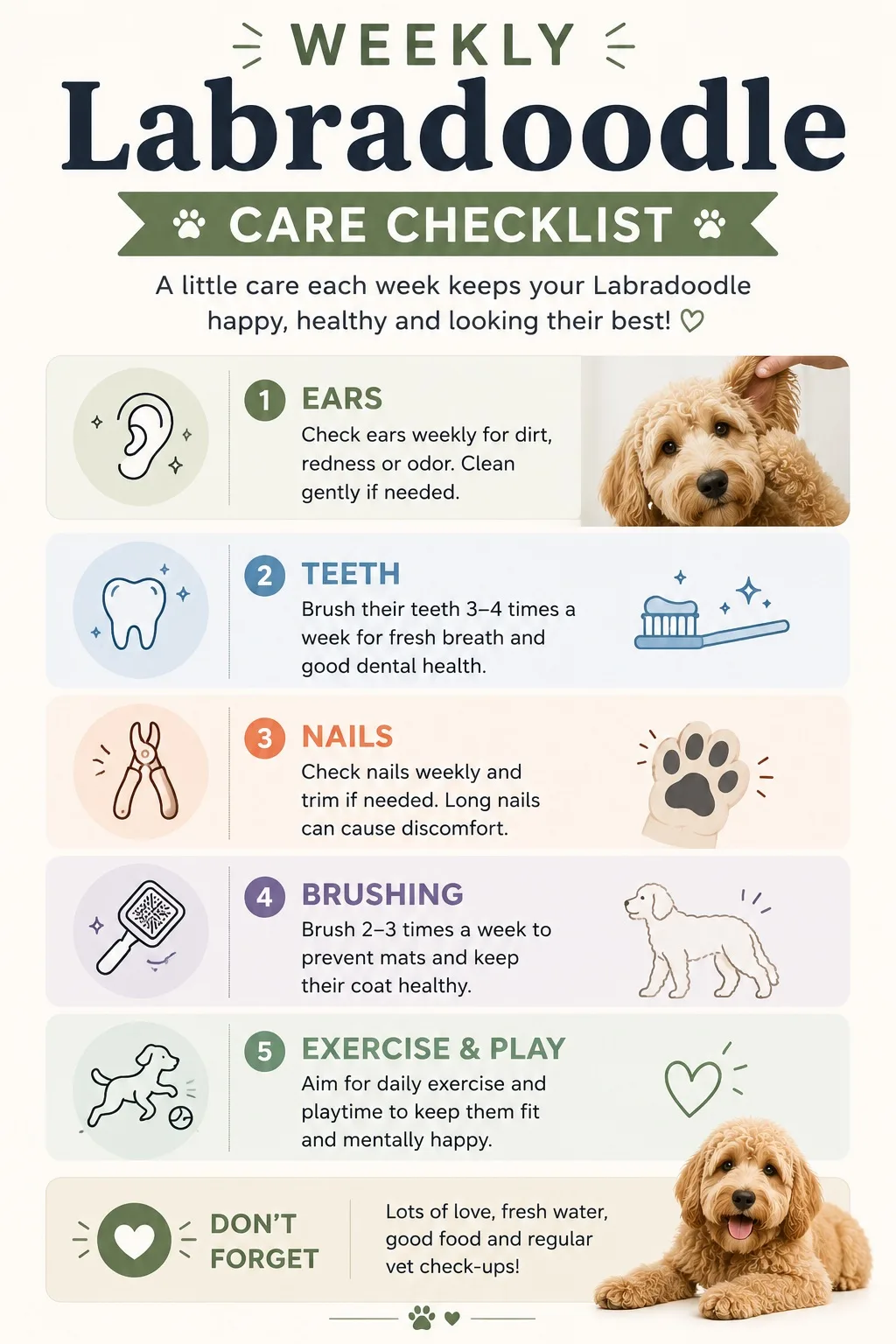
Regular brushing several times each week helps prevent mats from forming. Many owners also schedule professional grooming every six to eight weeks to keep the coat manageable. If mats become severe, attempting to cut them out yourself can accidentally injure your dog, so professional grooming is often the safest option.
Why is my Labradoodle itchy?
Occasional scratching is perfectly normal, but persistent itching can indicate an underlying problem.
Common causes include:
- Environmental allergies
- Food sensitivities
- Fleas or mites
- Dry skin
- Ear infections
- Poor grooming
- Skin infections
If your Labradoodle is scratching constantly, chewing at their paws, or developing red or irritated skin, it’s best to consult your veterinarian. Identifying the underlying cause early can prevent more serious skin problems from developing.
How often should I clean my Labradoodle’s ears?
Because Labradoodles often have floppy, hairy ears, they can be more prone to wax buildup and ear infections than some other breeds.
As a general guideline, check your Labradoodle’s ears once a week. If they appear dirty or have excess wax, gently clean them using a veterinarian-approved ear cleaner and cotton pads. Avoid inserting cotton swabs deep into the ear canal.
If you notice redness, swelling, a strong odour, or your dog frequently shakes their head or scratches their ears, schedule a veterinary examination, as these may be signs of an ear infection.
How often should I trim my Labradoodle’s nails?
Most Labradoodles benefit from having their nails trimmed every three to four weeks, although this varies depending on activity levels and the surfaces they walk on.
Dogs that regularly walk on concrete may naturally wear down their nails, while those spending most of their time on grass or indoors often need more frequent trimming.
If you hear your Labradoodle’s nails clicking loudly on hard floors, it’s usually a sign they’re becoming too long. Keeping nails properly trimmed improves comfort, supports healthy posture, and reduces the risk of painful splits or injuries.
How often should I brush my Labradoodle’s teeth?
Dental care is an important but often overlooked part of Labradoodle ownership. Ideally, you should brush your dog’s teeth every day using a dog-specific toothbrush and toothpaste. If daily brushing isn’t possible, aim for at least three to four times per week.
Regular brushing helps prevent plaque buildup, bad breath, and gum disease, all of which can affect your Labradoodle’s overall health. Dental chews and professional veterinary cleanings can also support good oral hygiene, but they shouldn’t replace routine brushing at home.
Puppy Questions
How much sleep does a Labradoodle puppy need?
If you’ve recently brought home a Labradoodle puppy, don’t be surprised if they seem to sleep most of the day. Growing puppies need plenty of rest to support healthy physical and mental development.
Most Labradoodle puppies sleep 16 to 20 hours a day, especially during their first few months. Their sleep is usually broken into short naps between periods of eating, playing, training, and exploring their surroundings.
Providing a quiet, comfortable sleeping area helps your puppy settle more easily. It’s also important not to wake a sleeping puppy unnecessarily, as adequate rest plays a vital role in healthy growth and learning.
When do Labradoodles lose their puppy teeth?
Like all dogs, Labradoodles are born without teeth. Their baby teeth begin appearing at around three to four weeks of age, and these are gradually replaced by permanent adult teeth.
Most Labradoodle puppies start losing their baby teeth between three and six months of age. During this time, you may notice increased chewing as teething causes discomfort.
Providing safe chew toys can help relieve sore gums while protecting your furniture and household items. By around six to seven months, most Labradoodles have their full set of adult teeth.
When do Labradoodles calm down?
Labradoodles are known for their playful, energetic personalities, so don’t expect them to become calm overnight. Most puppies remain highly active throughout their first year, with many continuing their “adolescent” phase well into their second year.
Generally:
- Puppies: Very energetic
- 6–18 months: Teenage stage with lots of enthusiasm
- 2–3 years: Begin to mature mentally and physically
- 3+ years: Usually become noticeably calmer
Regular exercise, mental stimulation, and consistent training all help channel their energy into positive behaviours. Remember that every dog develops at its own pace.
When should I start training my Labradoodle?
Training should begin the day your Labradoodle comes home. Young puppies are constantly learning, even during everyday interactions.
Start with simple skills such as:
- Responding to their name
- Toilet training
- Sit
- Come
- Walking on a lead
- Gentle handling
Keep sessions short, fun, and reward-based. Labradoodles are highly intelligent and usually respond exceptionally well to positive reinforcement methods. Early socialisation with different people, environments, sounds, and friendly dogs is just as important as obedience training.
How long can a Labradoodle puppy hold its bladder?
Young puppies have limited bladder control, so frequent toilet breaks are essential.
A general guideline is:
- 2 months: Around 2–3 hours
- 3 months: Around 3–4 hours
- 4 months: Around 4–5 hours
- 6 months: Around 6 hours
Many adult Labradoodles can comfortably wait 6 to 8 hours, although they should still have regular opportunities to go outside.
During toilet training, take your puppy outside after waking up, after meals, after play sessions, and before bedtime. Consistency is the key to success.
Adult Labradoodles
At what age is a Labradoodle considered an adult?
Although Labradoodles reach much of their adult height during their first year, they continue maturing physically and mentally beyond that.
Mini Labradoodles generally reach adulthood sooner than larger varieties, while Standard Labradoodles may continue filling out until they’re nearly two years old.
As a general guide:
- Mini Labradoodle: 10–12 months
- Medium Labradoodle: 12–15 months
- Standard Labradoodle: 18–24 months
Even after reaching adulthood, many Labradoodles retain their playful and affectionate personalities throughout their lives.
How can I keep my Labradoodle mentally stimulated?
Labradoodles are highly intelligent dogs that thrive when their minds are kept busy. Without enough mental stimulation, they may become bored and develop behaviours such as excessive barking, chewing, or digging.
Simple ways to challenge your Labradoodle include:
- Puzzle feeders
- Interactive toys
- Hide-and-seek games
- Scent work
- Short training sessions
- Learning new tricks
- Agility exercises
- Rotating toys regularly
Combining physical exercise with mental enrichment helps create a happier, calmer, and more well-balanced companion.
Is a Labradoodle the right dog for my lifestyle?
Labradoodles are wonderful companions, but they aren’t the right fit for everyone. They thrive in homes where they receive plenty of attention, daily exercise, regular grooming, and ongoing training.
You may be a good match for a Labradoodle if you:
- Enjoy spending time outdoors.
- Have time for daily walks and play.
- Don’t mind regular grooming.
- Want an affectionate family companion.
- Are committed to training and socialisation.
On the other hand, if you’re away from home for long hours every day or want a low-maintenance breed that requires minimal grooming and exercise, another breed may be a better fit.
Choosing the right dog isn’t just about falling in love with a cute puppy—it’s about finding a companion whose needs match your lifestyle.
Final Thoughts
Owning a Labradoodle is a rewarding experience, but like any dog, they come with their own unique needs and quirks. From understanding why they follow you everywhere to knowing when they’ll calm down or how often their ears should be cleaned, small pieces of knowledge can make a big difference in raising a happy, healthy companion.
We hope these answers have helped you better understand life with a Labradoodle. Whether you’re preparing for your first puppy or already sharing your home with one, continuing to learn about the breed will help you build a stronger relationship and provide the care they deserve.
If you’re looking for more in-depth information, be sure to explore our other Labradoodle resources, including Labradoodle Size Guide, Australian Labradoodle vs. Labradoodle, Best Labradoodle Breeders in Australia, and 350+ Labradoodle Names. Together, these guides cover everything from choosing the right puppy to caring for your Labradoodle throughout every stage of life.