
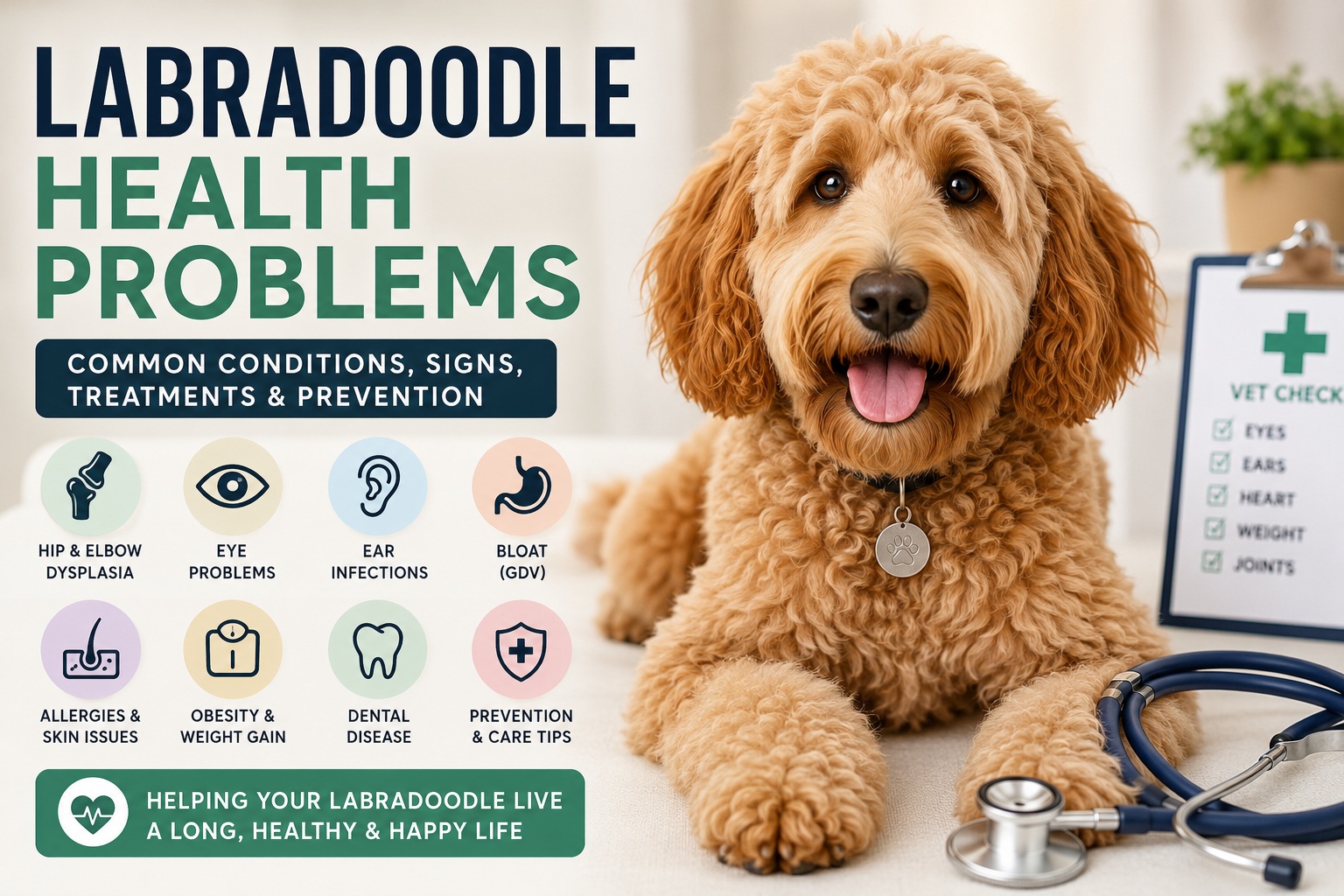
Labradoodles are generally active, intelligent dogs that can enjoy long and healthy lives when they come from carefully planned breeding programs and receive appropriate lifelong care. However, crossing a Labrador Retriever with a Poodle does not automatically protect puppies from inherited disease.
A Labradoodle may inherit health risks associated with either parent breed. The exact risks can vary according to the dog’s size, generation, family history and whether a Standard, Miniature or Toy Poodle was used in the breeding program.
This does not mean every Labradoodle will develop a serious condition. Many remain healthy throughout their lives. It does mean prospective owners should understand the breed’s potential vulnerabilities, choose breeders that perform relevant health screening and learn the warning signs that warrant veterinary attention.
In this guide, we will cover:
- Orthopaedic problems
- Inherited eye diseases
- Hormonal conditions
- Ear and skin problems
- Allergies
- Obesity
- Gastric dilatation-volvulus
- Dental disease
- Preventive care
- Recommended breeder health testing
- Symptoms that should never be ignored
Veterinary note: This article provides general educational information and is not a substitute for an examination, diagnosis or treatment plan from a qualified veterinarian.
Table of Contents
Are Labradoodles Healthy Dogs?
Labradoodles are not inherently unhealthy, but their health depends heavily on genetics, breeding decisions, body condition and routine care.
Responsible crossbreeding may increase genetic diversity, but it does not eliminate hereditary disease. A puppy can still inherit a harmful gene from one or both parents or develop a condition influenced by several genes and environmental factors.
Health screening therefore matters just as much for Labradoodles as it does for recognised purebred dogs. The Orthopedic Foundation for Animals explains that screening cannot guarantee a dog will remain disease-free, but using tested breeding stock can reduce the probability of inherited disease appearing in future generations.
Factors influencing a Labradoodle’s long-term health include:
- Health and genetic history of both parents
- Quality of breeder health screening
- Adult size
- Growth rate during puppyhood
- Nutrition and body condition
- Exercise type and intensity
- Dental and grooming care
- Routine veterinary examinations
- Early investigation of unusual symptoms
Labradoodle Health Problems at a Glance
| Condition | Main Area Affected | Possible Warning Signs |
|---|---|---|
| Hip dysplasia | Hips and mobility | Limping, stiffness, difficulty rising |
| Elbow dysplasia | Front legs and elbows | Forelimb lameness, reduced activity |
| Progressive retinal atrophy | Eyes | Poor night vision, gradual blindness |
| Addison’s disease | Adrenal glands | Vomiting, weakness, appetite loss |
| Ear infections | Ears | Head shaking, odour, redness |
| Allergies | Skin, ears or digestion | Itching, licking, recurring ear problems |
| Obesity | Whole body | Weight gain, reduced stamina |
| Gastric dilatation-volvulus | Stomach | Swollen abdomen, retching, distress |
| Sebaceous adenitis | Skin and coat | Scaling, hair loss, coat changes |
| Dental disease | Teeth and gums | Bad breath, tartar, painful eating |
Not every Labradoodle faces the same level of risk. Standard Labradoodles may have different orthopaedic and bloat considerations than Mini Labradoodles, while some inherited conditions depend on the particular Poodle and Labrador bloodlines used.
Hip Dysplasia
Hip dysplasia is a developmental condition in which the hip joint does not form or remain stable as it should. The abnormal movement within the joint can damage cartilage and contribute to painful osteoarthritis over time.
Cornell University describes canine hip dysplasia as a condition involving hip laxity or instability. Diagnosis may involve physical examination and specialised imaging methods.
Labradoodles may be at risk because hip dysplasia can occur in both Labrador Retrievers and Poodles, particularly larger dogs.
Signs of Hip Dysplasia
Possible signs include:
- Stiffness after rest
- Difficulty standing up
- Reluctance to climb stairs
- Reduced interest in running or jumping
- Limping in one or both hind legs
- A “bunny-hopping” gait
- Loss of muscle around the hindquarters
- Pain when the hips are handled
Some dogs show symptoms while young, while others appear healthy until arthritis develops later.
How Hip Dysplasia Is Diagnosed
A veterinarian may use:
- Physical and gait examination
- Hip manipulation
- Standard radiographs
- PennHIP or another specialised assessment
- Evaluation for secondary arthritis
Treatment
Management depends on the dog’s age, symptoms and joint damage. Options may include:
- Weight management
- Controlled exercise
- Physical rehabilitation
- Veterinary-prescribed pain relief
- Joint-support strategies
- Surgery in more severe cases
Hip dysplasia can contribute to osteoarthritis, and excess weight may place additional stress on already unstable joints.
Can It Be Prevented?
It cannot always be prevented, but risk may be reduced through:
- Selecting puppies from hip-screened parents
- Maintaining a lean body condition
- Feeding an appropriate growth diet
- Avoiding excessive high-impact exercise during puppyhood
- Investigating early stiffness or lameness
A breeder saying that the parents “have never had hip problems” is not equivalent to a documented hip evaluation.
Elbow Dysplasia
Elbow dysplasia refers to several developmental abnormalities affecting the elbow joint. These abnormalities may result in uneven joint surfaces, cartilage damage, pain and eventual arthritis.
Cornell notes that elbow dysplasia can be debilitating and is an important cause of forelimb lameness in dogs.
It is particularly relevant for Medium and Standard Labradoodles because larger, rapidly growing dogs can be more vulnerable to developmental joint disease.
Signs of Elbow Dysplasia
Watch for:
- Limping on a front leg
- Stiffness after exercise
- Reluctance to extend the elbow
- Reduced enthusiasm for walks
- An abnormal or shortened stride
- Swelling around the joint
- Pain after vigorous activity
Symptoms may affect one or both front legs.
Diagnosis and Treatment
Diagnosis commonly involves a veterinary orthopaedic examination and imaging such as X-rays or CT scans. Treatment may include weight control, activity modification, pain management, rehabilitation or surgery, depending on the underlying abnormality and severity.
Reducing the Risk
Ask breeders for documented elbow screening results for relevant parent dogs. Hip testing alone does not provide information about elbow health.
Why Health Testing Matters Before Buying a Labradoodle
A responsible breeder should choose tests according to the size and ancestry of the dogs in the breeding program. There is no single “Labradoodle test” that covers every possible problem.
Testing may include a combination of:
- Hip evaluations
- Elbow evaluations
- Eye examinations
- DNA tests for inherited diseases
- Cardiac evaluation
- Patella assessment for smaller lines
- Thyroid testing
- Sebaceous adenitis screening where appropriate
The OFA maintains databases for orthopaedic, eye, cardiac, thyroid, DNA and other health evaluations. Buyers can use publicly recorded results to verify testing rather than relying only on a breeder’s statement that a dog is “health checked.”
A basic veterinary check before breeding is valuable, but it is not the same as completing condition-specific hereditary screening.
Progressive Retinal Atrophy (PRA)
Progressive Retinal Atrophy (PRA) is an inherited eye disease that gradually damages the retina, eventually leading to vision loss and, in many cases, complete blindness. The condition is painless, but because it progresses slowly, many owners don’t notice the early signs until their dog begins struggling in dim lighting.
Since PRA can occur in Poodles, Labradoodles may inherit the condition if breeding dogs are not genetically screened. Responsible breeders often perform DNA testing to reduce the risk of producing affected puppies.
Symptoms of Progressive Retinal Atrophy
Watch for:
- Difficulty seeing at night
- Hesitation in dark rooms
- Bumping into furniture
- Reluctance to use stairs in low light
- Dilated pupils
- Increased eye shine when light reflects off the eyes
Although there is currently no cure, many dogs adapt remarkably well to gradual vision loss with support from their owners.
Can PRA Be Prevented?
While PRA cannot be prevented in an affected dog, responsible breeding can significantly reduce its occurrence. Ask breeders whether their breeding dogs have undergone DNA testing for inherited eye diseases.
Cataracts
Although cataracts are often associated with ageing, they may also develop due to genetics, diabetes, eye injuries, or other medical conditions. Cataracts occur when the normally clear lens of the eye becomes cloudy, interfering with vision.
Early diagnosis is important because untreated cataracts can sometimes lead to additional eye problems.
Signs of Cataracts
Symptoms may include:
- Cloudy or bluish appearance of the eye
- Difficulty navigating unfamiliar areas
- Bumping into objects
- Reduced confidence during walks
- Vision loss in one or both eyes
Treatment
Treatment depends on the severity of the cataract. Mild cases may simply require monitoring, while advanced cataracts can sometimes be treated surgically by a veterinary ophthalmologist.
Addison’s Disease (Hypoadrenocorticism)
Addison’s disease is a hormonal disorder in which the adrenal glands fail to produce sufficient amounts of essential hormones, particularly cortisol and aldosterone. Standard Poodles are known to have an increased genetic predisposition to this condition, making it a potential concern in some Labradoodle bloodlines.
Because the symptoms often resemble those of many other illnesses, Addison’s disease is sometimes called “The Great Pretender.”
Symptoms of Addison’s Disease
Common signs include:
- Lethargy
- Weakness
- Loss of appetite
- Vomiting
- Diarrhoea
- Weight loss
- Increased thirst
- Shaking
- Collapse in severe cases
Symptoms often come and go, making diagnosis more challenging.
Diagnosis and Treatment
Veterinarians typically diagnose Addison’s disease using blood tests and an ACTH stimulation test.
Although there is no cure, most affected dogs live normal, happy lives with lifelong hormone replacement therapy and regular veterinary monitoring.
Sebaceous Adenitis
Sebaceous adenitis is an inflammatory skin condition that primarily affects the sebaceous (oil-producing) glands. Because Standard Poodles have an increased risk of developing this disease, some Labradoodles may also be susceptible.
The condition affects skin and coat quality rather than internal organs.
Symptoms
Signs may include:
- Dry, flaky skin
- Hair loss
- Dull coat
- Thick scaling
- Matted hair
- Recurrent skin infections
Treatment
Management often involves:
- Medicated shampoos
- Moisturising treatments
- Omega-3 fatty acids
- Prescription medications where necessary
- Regular grooming to improve coat condition
Early diagnosis usually results in better long-term management.
Allergies
Allergies are among the most common reasons Labradoodles visit the veterinarian. They may develop allergies to environmental triggers, food ingredients, parasites such as fleas, or contact irritants.
While allergies cannot always be cured, identifying the underlying trigger can greatly improve your dog’s comfort.
Common Allergy Symptoms
Watch for:
- Constant scratching
- Paw licking
- Ear infections
- Red skin
- Hair loss
- Face rubbing
- Skin odour
- Recurrent hot spots
Managing Allergies
Treatment depends on the cause and may include:
- Identifying allergens
- Dietary changes
- Flea prevention
- Medicated shampoos
- Anti-inflammatory medications
- Allergy immunotherapy for selected dogs
Because several conditions can mimic allergies, persistent itching should always be investigated by a veterinarian.
Ear Infections
Labradoodles are particularly prone to ear infections because of their floppy ears and often dense hair around the ear canal. Moisture, trapped debris, and reduced airflow create an ideal environment for bacteria and yeast to multiply.
Dogs that swim frequently may be at even greater risk.
Signs of an Ear Infection
Symptoms include:
- Head shaking
- Scratching at the ears
- Redness
- Unpleasant odour
- Brown or yellow discharge
- Pain when touching the ears
- Tilting the head
Prevention
You can reduce the risk of ear infections by:
- Checking the ears weekly
- Cleaning them with a veterinarian-approved ear cleaner when needed
- Drying the ears thoroughly after swimming or bathing
- Keeping hair around the ear opening neatly trimmed if recommended by your groomer or veterinarian
Repeated ear infections should always be investigated, as they may indicate allergies or another underlying medical condition.
Gastric Dilatation-Volvulus (Bloat)
Gastric Dilatation-Volvulus (GDV), commonly called bloat, is one of the most serious medical emergencies that can affect dogs. It occurs when the stomach fills with gas and, in severe cases, twists on itself. This twisting cuts off blood supply to the stomach and other vital organs, making immediate veterinary treatment essential.
While GDV is more common in large, deep-chested breeds, Standard Labradoodles may also be at risk due to their body shape and size.
Symptoms of Bloat
Seek emergency veterinary care immediately if your Labradoodle shows:
- Swollen or bloated abdomen
- Repeated unsuccessful attempts to vomit
- Excessive drooling
- Restlessness or pacing
- Signs of pain
- Rapid breathing
- Pale gums
- Weakness or collapse
Bloat is a life-threatening emergency. Do not wait to see if symptoms improve.
Can Bloat Be Prevented?
Although there is no guaranteed way to prevent GDV, you can help reduce the risk by:
- Feeding two or three smaller meals instead of one large meal.
- Avoiding vigorous exercise immediately before or after eating.
- Discouraging rapid eating by using a slow-feeder bowl if necessary.
- Providing fresh water throughout the day rather than allowing excessive drinking immediately after intense exercise.
If you own a Standard Labradoodle with a family history of GDV, discuss preventive options with your veterinarian.
Obesity
Obesity is one of the most common—and preventable—health problems affecting Labradoodles. Because these dogs are highly food-motivated and often enjoy treats, it’s easy for them to gain excess weight if calorie intake exceeds daily energy needs.
Even a small amount of extra weight can place additional stress on the joints, heart, lungs, and other organs.
Signs Your Labradoodle May Be Overweight
Watch for:
- Difficulty feeling the ribs
- Loss of a visible waistline
- Reduced stamina during walks
- Slower movement
- Heavy panting after mild exercise
- Reluctance to run or jump
Maintaining a Healthy Weight
Help your Labradoodle stay fit by:
- Feeding measured portions rather than free-feeding.
- Limiting high-calorie treats.
- Providing daily exercise.
- Monitoring body condition regularly.
- Scheduling routine veterinary weight checks.
Keeping your Labradoodle lean is one of the simplest ways to support lifelong health and reduce the risk of arthritis, diabetes, and heart disease.
Dental Disease
Many owners focus on grooming their Labradoodle’s coat but overlook dental care. Unfortunately, dental disease is one of the most common health problems seen in adult dogs.
Plaque builds up on the teeth, eventually hardening into tartar. If left untreated, it can lead to gum disease, tooth loss, chronic pain, and bacterial infections.
Signs of Dental Disease
Common symptoms include:
- Bad breath
- Yellow or brown tartar
- Red or swollen gums
- Difficulty chewing
- Dropping food
- Loose teeth
- Excessive drooling
Prevention
Good dental care includes:
- Daily tooth brushing using dog-specific toothpaste.
- Dental chews approved by your veterinarian.
- Regular oral examinations.
- Professional dental cleaning when recommended.
Hypothyroidism
Hypothyroidism occurs when the thyroid gland fails to produce enough thyroid hormone, slowing the body’s metabolism.
Although more common in middle-aged and older dogs, Labradoodles may develop this condition through inherited predisposition from either parent breed.
Symptoms
Signs often develop gradually and include:
- Weight gain
- Lethargy
- Hair thinning
- Dry coat
- Skin infections
- Cold intolerance
- Slow heart rate
Treatment
Hypothyroidism is usually managed successfully with lifelong thyroid hormone replacement medication and routine blood monitoring.
Most dogs respond very well once treatment begins.
Arthritis
As Labradoodles age, especially larger individuals, arthritis becomes increasingly common. It may develop naturally with age or occur secondary to joint conditions such as hip or elbow dysplasia.
Early management helps maintain mobility and quality of life.
Symptoms
Watch for:
- Stiffness after resting
- Difficulty climbing stairs
- Reluctance to jump into the car
- Slower walks
- Limping
- Reduced willingness to exercise
Managing Arthritis
Treatment may include:
- Weight management
- Controlled exercise
- Physiotherapy
- Joint supplements (when recommended by your veterinarian)
- Prescription pain relief
- Comfortable bedding
Cancer
Like many medium and large breeds, Labradoodles may develop cancer later in life. While cancer isn’t unique to the breed, early detection significantly improves treatment options in many cases.
Routine veterinary examinations play an important role in identifying abnormalities early.
Warning Signs
Contact your veterinarian if you notice:
- Unexplained lumps or bumps
- Rapidly growing masses
- Weight loss
- Loss of appetite
- Persistent lethargy
- Non-healing wounds
- Ongoing coughing
- Difficulty breathing
Not every lump is cancerous, but every new lump deserves veterinary evaluation.
Health Testing Every Responsible Labradoodle Breeder Should Perform
Choosing a breeder who performs comprehensive health screening is one of the best ways to reduce the risk of inherited disease. Getting a puppy from a backyard breeder will not be a fair decision at all.
Depending on the breeding dogs and their ancestry, appropriate health testing may include:
- Hip evaluations
- Elbow evaluations
- DNA testing for inherited diseases
- Annual eye examinations
- Cardiac evaluations where appropriate
- Patella evaluations for smaller breeding lines
- Thyroid testing
- Additional breed-specific genetic screening
Always ask to see documentation rather than relying solely on verbal assurances.
How to Help Your Labradoodle Live a Long, Healthy Life
While genetics play an important role, daily care also has a major impact on your Labradoodle’s overall health.
Healthy habits include:
- Feeding a balanced, high-quality diet.
- Maintaining an ideal body weight.
- Providing regular physical exercise.
- Offering mental enrichment through training and interactive toys.
- Scheduling routine veterinary check-ups.
- Keeping vaccinations and parasite prevention up to date.
- Brushing teeth regularly.
- Grooming consistently to maintain healthy skin and ears.
Small, consistent efforts often make the biggest difference over your dog’s lifetime.
When Should You See a Veterinarian?
Some health issues develop gradually, while others require immediate medical attention. As a Labradoodle owner, it’s important to recognise the difference between routine concerns and true emergencies.
If your dog seems unwell for more than a day or two, or if symptoms worsen, schedule a veterinary appointment. Early diagnosis often leads to better outcomes.
Seek Immediate Veterinary Care If Your Labradoodle Has:
- Difficulty breathing
- A swollen or hard abdomen
- Repeated unsuccessful attempts to vomit
- Collapse or loss of consciousness
- Seizures lasting more than a few minutes
- Severe bleeding
- Sudden paralysis
- Inability to urinate
- Pale, blue, or grey gums
- Suspected poisoning
- Heatstroke symptoms
- Eye injuries
- Severe allergic reactions with facial swelling
These situations should always be treated as emergencies.
Schedule a Veterinary Appointment If You Notice:
- Limping that lasts more than 24–48 hours
- Persistent itching
- Recurring ear infections
- Weight gain or unexplained weight loss
- Bad breath or difficulty eating
- Changes in drinking or urination
- New lumps or bumps
- Ongoing vomiting or diarrhoea
- Behaviour changes
- Reduced activity levels
Many serious conditions begin with subtle signs that are easy to overlook.
Preventive Healthcare Checklist
Preventive care is one of the best investments you can make in your Labradoodle’s health. A consistent routine can help identify problems early and may reduce the risk of certain diseases.
Daily
- Feed a balanced diet
- Provide fresh water
- Exercise appropriately for your dog’s age
- Check for any changes in appetite or behaviour
- Inspect paws and coat after walks
Weekly
- Brush the coat thoroughly
- Check the ears for redness or odour
- Brush the teeth several times a week (daily is ideal)
- Feel your dog’s body for new lumps or swelling
Monthly
- Trim nails if needed
- Apply flea, tick, and worm prevention as recommended
- Monitor body weight and body condition
Every 6–12 Months
- Routine veterinary examination
- Vaccinations, where appropriate
- Professional dental assessment
- Senior wellness screening for older Labradoodles
Frequently Asked Questions
Are Labradoodles generally healthy dogs?
Yes. Most Labradoodles are healthy, active dogs that live long, fulfilling lives. However, they can inherit health conditions from both Labrador Retrievers and Poodles, making responsible breeding and routine veterinary care important.
What is the average lifespan of a Labradoodle?
Most Labradoodles live 12 to 15 years, although some may live even longer with excellent genetics, proper nutrition, regular exercise, and preventive healthcare.
What is the most common health problem in Labradoodles?
Some of the more commonly reported issues include:
- Hip dysplasia
- Ear infections
- Allergies
- Obesity
- Dental disease
Not every Labradoodle will develop these conditions, but owners should be aware of the risks.
Are Mini Labradoodles healthier than Standard Labradoodles?
Neither size is automatically healthier. Standard Labradoodles may have a higher risk of certain joint conditions and bloat due to their size, while Mini Labradoodles may be predisposed to some different inherited conditions depending on their breeding lines.
Overall health depends more on genetics and responsible breeding than size alone.
Can health testing guarantee a healthy puppy?
No. Health testing cannot guarantee that a puppy will never develop disease, but it significantly reduces the risk of many inherited conditions and demonstrates that a breeder is making informed breeding decisions.
Should I get pet insurance for my Labradoodle?
Many owners choose pet insurance to help cover unexpected veterinary expenses. Policies vary, so compare coverage, exclusions, waiting periods, and reimbursement options before purchasing.
Related Labradoodle Articles
Continue learning about Labradoodle care with these guides:
- Labradoodle Grooming Guide
- Labradoodle Size Guide
- Australian Labradoodle vs Labradoodle
- Best Labradoodle Breeders in the USA
- Best Labradoodle Breeders in Australia
- 350 Best Labradoodle Names
- Labradoodle FAQs
These resources cover everything from choosing a puppy to grooming, training, and everyday care.
Final Thoughts
Labradoodles are generally healthy, affectionate, and intelligent companions, but like all dogs, they can be prone to certain inherited and age-related health conditions. Understanding these potential issues doesn’t mean you should expect your dog to develop them—it simply helps you recognise early warning signs and make informed decisions throughout your dog’s life.
The best way to give your Labradoodle a healthy future starts before you even bring a puppy home. Choose a breeder who performs comprehensive health testing, keep your dog at a healthy weight, provide regular exercise and grooming, and never skip routine veterinary check-ups.
With responsible breeding, preventive care, and plenty of love, many Labradoodles enjoy active, happy lives well into their teenage years.
Key Takeaways
- Labradoodles are generally healthy but may inherit conditions from both parent breeds.
- Hip dysplasia, elbow dysplasia, allergies, ear infections, PRA, and Addison’s disease are among the most important health concerns.
- Maintaining a healthy weight, regular exercise, and routine veterinary care can significantly improve long-term health.
- Always choose a breeder who performs appropriate health and genetic testing.
- Early detection and prompt veterinary treatment offer the best chance of managing many health conditions successfully.