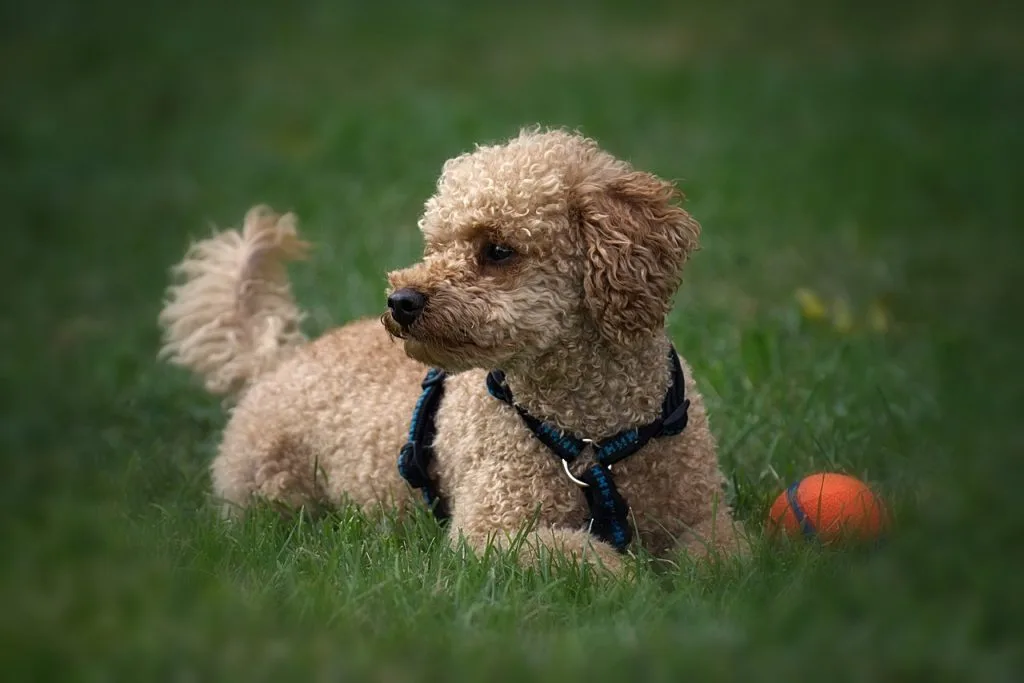
Poodle crosses—often called Doodle dogs (Oodle dogs in Australia and New Zealand)—have become some of the world’s most sought-after companion dogs. By combining the intelligence and low-shedding coat of the Poodle with the unique characteristics of another breed, breeders have created dozens of affectionate, active, and family-friendly hybrids suited to many different lifestyles.
While the Labradoodle, Bernedoodle, and Goldendoodle are the most recognised Poodle mixes, they represent only a small fraction of the Doodle family. Today, there are well over 100 named Poodle crosses, ranging from tiny lap dogs like the Yorkipoo to giant companions such as the Saint Berdoodle and Newfypoo.
Each Poodle cross is unique. Some inherit the athleticism of working breeds, while others are bred primarily for companionship. Their size, temperament, grooming needs, exercise requirements, and health concerns can vary significantly depending on which traits they inherit from each parent.
In this guide, we’ve compiled one of the most comprehensive lists of Poodle crosses available online. Whether you’re searching for the best Doodle for families, apartments, allergy sufferers, or active owners, this resource will help you compare breeds and discover the right fit.
Table of Contents
What Is a Poodle Cross?
A Poodle cross is a dog produced by breeding a purebred Poodle with another purebred dog. These intentional crosses are commonly referred to as designer dogs, Doodle dogs, or Poodle mixes.
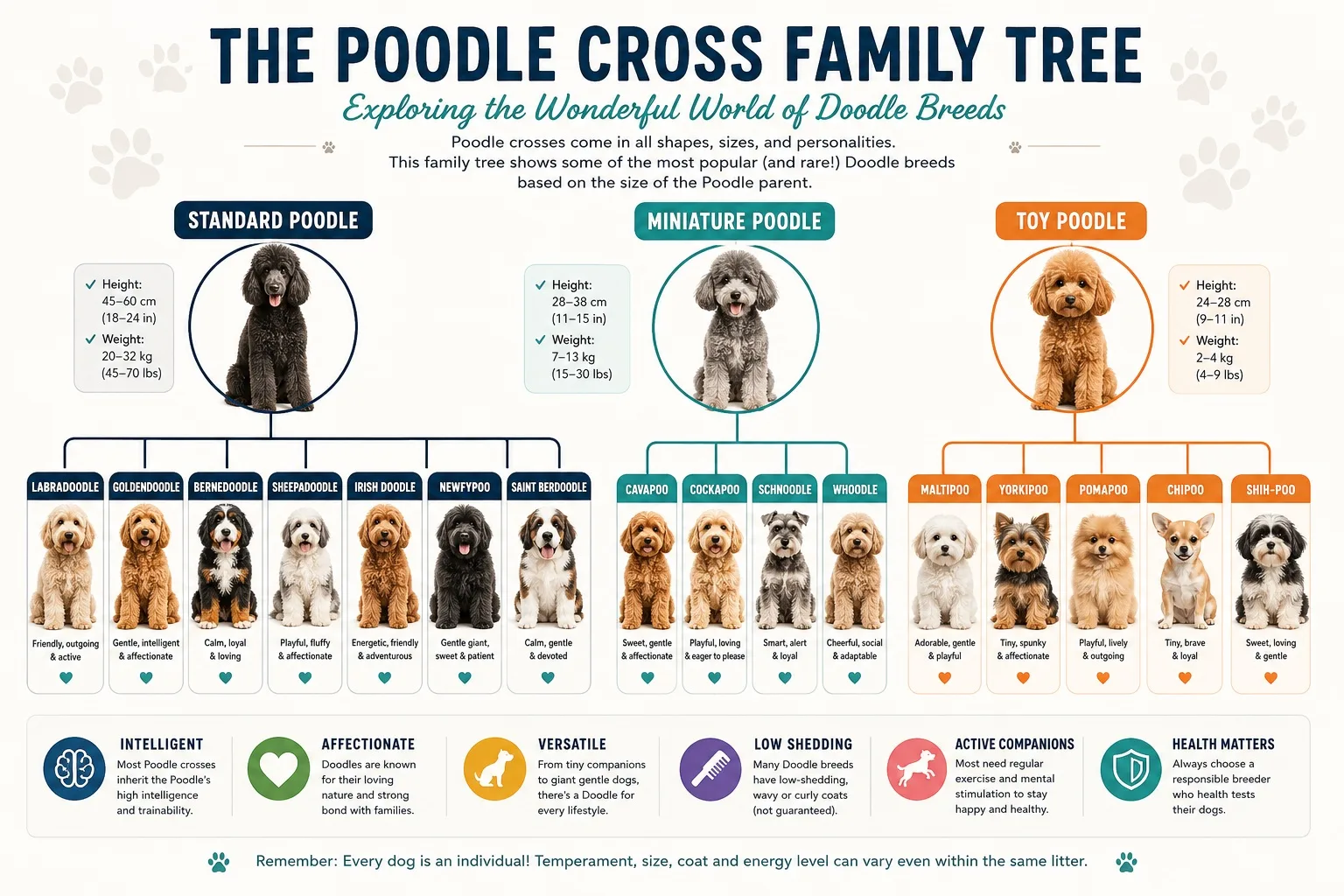
Depending on the breeder’s goals, either a Toy, Miniature, or Standard Poodle may be used. This creates a remarkable variety of sizes, from dogs weighing less than 4 kg (9 lbs) to giant companions exceeding 50 kg (110 lbs).
Although many people assume every Poodle cross is hypoallergenic, that’s not entirely accurate. Coat type is inherited genetically, meaning puppies within the same litter may have curly, wavy, or straighter coats and may shed at different levels.
Responsible breeders focus on producing healthy puppies by selecting parents that have undergone appropriate breed-specific health testing, while also considering temperament, structure, and compatibility between the two breeds.
Why Are Poodle Crosses So Popular?
Poodle mixes have grown rapidly in popularity over the past few decades for several reasons.
Intelligent and Easy to Train
Poodles consistently rank among the world’s most intelligent dog breeds. Many of their crossbreeds inherit this eagerness to learn, making them highly trainable for obedience, agility, therapy work, and family life.
Lower-Shedding Coats
Many Poodle crosses inherit the Poodle’s curly coat, which typically sheds less than many other breeds. While no dog is completely hypoallergenic, lower-shedding coats may produce fewer airborne allergens for some households.
Wide Variety of Sizes
Whether you’re looking for a compact apartment companion or a large outdoor adventure partner, there’s likely a Poodle mix that fits your lifestyle.
Friendly Personalities
Many Doodle breeds are known for being affectionate, social, and people-oriented. Their temperament often makes them suitable for families with children and homes with other pets, although early socialisation and training remain important.
Active Lifestyle Companions
Many Poodle crosses enjoy hiking, swimming, jogging, and outdoor activities, making them excellent companions for active owners.
Poodle Crosses at a Glance
| Feature | Overview |
|---|---|
| Number of recognised Poodle crosses | 100+ |
| Smallest Poodle mix | Yorkipoo, Pomapoo and other Toy Poodle mixes |
| Largest Poodle mix | Saint Berdoodle, Newfypoo |
| Lowest shedding | Curly-coated Poodle mixes (varies by individual dog) |
| Most popular worldwide | Labradoodle, Bernedoodle, Goldendoodle, Cockapoo, Cavapoo |
| Best for first-time owners | Cavapoo, Bernedoodle, Cockapoo, Goldendoodle (with proper training and breeder selection) |
| Best for active owners | Aussiedoodle, Labradoodle, Bordoodle |
| Typical lifespan | 10–18 years depending on the parent breeds |
| Coat types | Curly, wavy, straight |
| Exercise needs | Moderate to high for most breeds |
How Many Poodle Crosses Are There?
There is no official registry that recognises every Poodle cross, so it’s impossible to state an exact number. However, breeders around the world have developed well over 100 named Poodle mixes, with new combinations appearing as interest in designer dogs continues to grow.
Some crosses, such as the Labradoodle, Cockapoo, and Goldendoodle, have existed for decades and are widely recognised. Others remain relatively uncommon and may only be bred by a handful of breeders.
For simplicity, we’ve organised this guide into categories based on size and popularity, making it easier to compare similar breeds.
Categories of Poodle Crosses
Instead of browsing one long alphabetical list, you can explore Poodle mixes by category.
Small Poodle Crosses
Perfect for apartments and smaller homes, these dogs are usually bred from Toy or Miniature Poodles.
Examples include:
- Maltipoo
- Yorkipoo
- Pomapoo
- Shih-Poo
- Peekapoo
- Chipoo
- Havapoo
- Poochon
- Cavapoo
- Schnoodle (Miniature)
- Corgipoo (small lines)
Medium Poodle Crosses
These versatile companions suit many families and active households.
Examples include:
- Cockapoo
- Aussiedoodle
- Bordoodle
- Whoodle
- Springerdoodle
- Bullmatian Poodle Mix
- Soft Coated Wheaten Terrier Poodle Mix
Large Poodle Crosses
Large Doodles are ideal for owners with more space and time for exercise.
Examples include:
- Labradoodle
- Goldendoodle
- Bernedoodle
- Sheepadoodle
- Saint Berdoodle
- Newfypoo
- Irish Doodle
- Boxerdoodle
- Weimardoodle
- Pyredoodle
Rare Poodle Crosses
Some Poodle hybrids are rarely seen but have developed small, dedicated followings.
Examples include:
- Akipoo
- Poogle
- Pugapoo
- Dalmadoodle
- Great Danoodle
- Doberdoodle
- Rottle
- Mastidoodle
- Catahoula Leopard Dog Poodle Mix
- Chowdoodle
Small Poodle Crosses
Small Poodle mixes are among the most popular companion dogs because they combine a manageable size with the intelligence and affectionate nature of the Poodle. Most are bred using a Toy or Miniature Poodle, making them well suited to apartments, smaller homes, and families looking for an easy-to-handle dog.
Although many of these breeds have low-shedding coats, grooming requirements are often higher than owners expect. Regular brushing and professional grooming help keep their coats healthy and free from mats.
1. Cavapoo (Cavoodle in Australia)
Parent Breeds: Cavalier King Charles Spaniel × Poodle (usually Miniature or Toy)
Size: Small (5–12 kg / 11–26 lbs)
Coat: Wavy or curly, usually low shedding
Lifespan: 12–15 years
Best For: Families, first-time owners, apartments, seniors
The Cavapoo or Cavoodle is widely considered one of the friendliest and most adaptable Poodle crosses. It combines the gentle, affectionate nature of the Cavalier King Charles Spaniel with the intelligence and trainability of the Poodle, creating a dog that enjoys being involved in almost every aspect of family life.
Most Cavapoos are highly social and usually get along well with children, other dogs, and even cats when introduced properly. They learn quickly using positive reinforcement and generally don’t require an experienced owner to thrive.
Their coat can range from loose waves to tighter curls, with regular brushing helping to prevent mats and tangles. Professional grooming every six to eight weeks is recommended to keep the coat healthy and comfortable.
If you’re looking for an affectionate companion that’s equally happy relaxing on the sofa or joining you for a daily walk, the Cavapoo is one of the best all-round choices.
Related: Complete Cavapoo Breed Guide
Maltipoo (Moodle in Australia)
Parent Breeds: Maltese × Poodle
Size: Small (2–9 kg / 5–20 lbs)
Coat: Soft, curly or wavy, low shedding
Lifespan: 12–16 years
Best For: Apartments, seniors, families, companion homes
The Maltipoo is a cheerful little companion that blends the playful personality of the Maltese with the intelligence of the Poodle. Its compact size and affectionate temperament have made it one of the most sought-after small Doodle breeds around the world.
These dogs thrive on human companionship and often form strong bonds with their families. They enjoy learning new tricks, playing interactive games, and spending time indoors with their owners. Because they’re so people-oriented, they don’t enjoy being left alone for long periods.
Although the Maltipoo sheds very little, its coat requires regular maintenance. Frequent brushing and routine grooming appointments help prevent knots and keep the coat looking its best.
For people seeking a small, friendly dog that adapts well to apartment living, the Maltipoo is an excellent option.
Related: Complete Maltipoo Breed Guide
Cockapoo (Spoodle in Australia)
Parent Breeds: Cocker Spaniel × Poodle
Size: Small to Medium (6–14 kg / 13–30 lbs)
Coat: Wavy or curly, low to moderate shedding
Lifespan: 12–16 years
Best For: Active families, first-time owners, homes with children
The Cockapoo is one of the oldest and most successful designer dog breeds. Originally developed decades ago, it remains popular because it combines the cheerful personality of the Cocker Spaniel with the intelligence and athleticism of the Poodle.
Cockapoos are energetic without being overwhelming. They enjoy walks, games of fetch, puzzle toys, and spending time with their family. Their eagerness to please usually makes training straightforward, particularly when started from a young age.
Coat texture varies between individuals, ranging from loose waves to tighter curls. Regular brushing and scheduled grooming sessions help keep the coat free from tangles.
For families looking for a fun-loving, trainable companion with plenty of personality, the Cockapoo continues to be one of the safest choices among Poodle mixes.
Related: Complete Cockapoo Breed Guide
Yorkipoo
Parent Breeds: Yorkshire Terrier × Poodle
Size: Toy (2–7 kg / 4–15 lbs)
Coat: Silky, wavy or curly
Lifespan: 12–15 years
Best For: Singles, couples, apartments, seniors
Don’t underestimate the Yorkipoo because of its size. This tiny Poodle mix often has the confidence and curiosity of the Yorkshire Terrier combined with the intelligence of the Poodle, resulting in a lively companion that’s always ready for adventure.
Yorkipoos enjoy learning tricks, exploring new places, and interacting with their owners. Despite being well suited to apartment living, they still need daily exercise and mental stimulation to prevent boredom.
Depending on which parent they resemble most, their coat may be silky, wavy, or curly. Routine brushing and regular grooming appointments help maintain a healthy, tangle-free coat.
Early socialisation is recommended, particularly if your Yorkipoo inherits the alert and vocal personality often associated with Yorkshire Terriers.
Shih-Poo
Parent Breeds: Shih Tzu × Poodle
Size: Small (4–9 kg / 9–20 lbs)
Coat: Long, wavy or curly
Lifespan: 12–16 years
Best For: Families, apartment living, companion homes
The Shih-Poo is a charming companion that combines two breeds known for their affectionate personalities. These dogs are happiest when they’re close to their family and often enjoy following their owners from room to room.
Their moderate energy level makes them suitable for smaller homes, although they still benefit from daily walks and interactive play. Because some inherit a touch of the Shih Tzu’s independent nature, early training helps establish good habits.
The coat can be luxurious and requires consistent brushing to avoid mats, especially around the ears, chest, and legs. Professional grooming every six to eight weeks keeps the coat manageable.
For owners seeking a loving lap dog that also enjoys occasional play sessions, the Shih-Poo is an excellent choice.
Related: Complete Shih-Poo Breed Guide
Havapoo
Parent Breeds: Havanese × Poodle
Size: Small (3–11 kg / 7–25 lbs)
Coat: Soft, wavy or curly
Lifespan: 12–16 years
Best For: Families, therapy work, apartment living
The Havapoo combines the outgoing personality of the Havanese with the intelligence and trainability of the Poodle. The result is a friendly, adaptable companion that enjoys meeting new people and becoming part of everyday family life.
These dogs are generally eager to learn and respond well to positive reinforcement training. Their affectionate nature also makes them popular candidates for emotional support and therapy work.
Like many small Doodle breeds, the Havapoo’s coat requires regular brushing and routine professional grooming to keep it healthy and comfortable. Coat texture varies from loose waves to tighter curls, depending on genetics.
Whether you live in an apartment or a larger family home, the Havapoo adapts well as long as it receives regular exercise, mental stimulation, and plenty of attention.
Pomapoo
Parent Breeds: Pomeranian × Toy or Miniature Poodle
Size: Small (2–7 kg / 5–15 lbs)
Coat: Fluffy, wavy or curly
Lifespan: 12–16 years
Best For: Apartments, singles, seniors
The Pomapoo combines the lively personality of the Pomeranian with the intelligence of the Poodle. These little dogs are full of character and often have a playful, outgoing nature that makes them entertaining companions.
Pomapoos enjoy spending time with their owners and are happiest when included in everyday family activities. Although they’re small, they can be surprisingly energetic and benefit from short daily walks, play sessions, and puzzle toys.
Their coat is usually thick and fluffy, requiring regular brushing to prevent knots and professional grooming every couple of months. Early training and socialisation also help manage the alert, sometimes vocal personality inherited from the Pomeranian.
Peekapoo
Parent Breeds: Pekingese × Poodle
Size: Small (3–9 kg / 7–20 lbs)
Coat: Long, soft and often wavy
Lifespan: 12–15 years
Best For: Companion homes, apartments, seniors
The Peekapoo is one of the oldest designer dog breeds, originally developed as a companion dog. It combines the affectionate nature of the Pekingese with the intelligence and trainability of the Poodle.
Peekapoos are devoted to their families and generally enjoy a quieter lifestyle. They make excellent indoor companions and are often well suited to retirees or households looking for a relaxed lap dog.
Their long coat needs frequent brushing to prevent mats, particularly around the ears and legs. Because they may inherit the Pekingese’s shorter muzzle, prospective owners should ensure their puppy comes from health-tested parents.
Poochon (Bichpoo)
Parent Breeds: Bichon Frise × Poodle
Size: Small (3–7 kg / 7–15 lbs)
Coat: Curly, soft and low shedding
Lifespan: 12–15 years
Best For: Families, allergy-conscious households, first-time owners
Also known as the Bichpoo, the Poochon combines two highly intelligent companion breeds. These cheerful little dogs are affectionate, playful, and eager to please, making them one of the easiest Poodle mixes to train.
Poochons are known for their friendly personalities and generally enjoy meeting new people, making them poor guard dogs but excellent family pets. They usually adapt well to apartment living, provided they receive daily exercise and companionship.
Their dense, curly coat requires brushing several times a week and professional grooming every six to eight weeks.
Chipoo
Parent Breeds: Chihuahua × Toy Poodle
Size: Toy (2–5 kg / 4–11 lbs)
Coat: Short, wavy or curly
Lifespan: 12–16 years
Best For: Singles, couples, apartments
The Chipoo is a confident little dog with a surprisingly bold personality. It combines the alertness of the Chihuahua with the intelligence of the Poodle, often producing a loyal companion that forms a particularly strong bond with one or two family members.
Although Chipoos don’t require a large home, they benefit from regular training and socialisation to build confidence around strangers and other animals. Their intelligence means they usually enjoy learning tricks and solving interactive puzzles.
Coat maintenance varies depending on which parent they resemble most, but weekly brushing is usually sufficient for many individuals.
Schnoodle
Parent Breeds: Miniature Schnauzer × Poodle
Size: Small to Medium (5–15 kg / 11–33 lbs)
Coat: Wavy or curly
Lifespan: 12–16 years
Best For: Active families, experienced owners
The Schnoodle is an energetic and intelligent companion that combines the Miniature Schnauzer’s confidence with the Poodle’s exceptional trainability. These dogs often excel in obedience, agility, and other canine sports.
Schnoodles enjoy having a job to do and thrive when given plenty of mental stimulation alongside regular exercise. Their alert nature also makes them excellent watchdogs without necessarily being aggressive.
Regular grooming is essential, particularly if they inherit a curlier coat.
Jackapoo
Parent Breeds: Jack Russell Terrier × Poodle
Size: Small (4–10 kg / 9–22 lbs)
Coat: Short, wavy or curly
Lifespan: 12–15 years
Best For: Active owners, hiking companions
The Jackapoo is an energetic cross that combines the determination of the Jack Russell Terrier with the intelligence of the Poodle. These dogs love physical activity and are happiest in homes where they receive plenty of exercise and mental enrichment.
Jackapoos often enjoy hiking, agility, fetch, and other interactive games. Without sufficient stimulation, they may become bored and develop unwanted behaviours.
Although relatively small, they’re not ideal lap dogs—they prefer being busy and involved in daily activities.
Papipoo
Parent Breeds: Papillon × Toy Poodle
Size: Toy (2–5 kg / 5–12 lbs)
Coat: Silky, medium length
Lifespan: 13–16 years
Best For: Apartments, obedience training, active seniors
The Papipoo inherits intelligence from both parents, making it one of the easiest toy-sized Poodle crosses to train. These dogs are lively, curious, and enjoy learning new tricks, often excelling in obedience competitions despite their small stature.
Their elegant appearance is matched by an affectionate personality, and they generally enjoy spending time with both adults and respectful children.
Routine brushing helps maintain their beautiful coat and prevents tangles around the ears and tail.
Pugapoo
Parent Breeds: Pug × Poodle
Size: Small (4–10 kg / 9–22 lbs)
Coat: Short, wavy or curly
Lifespan: 12–15 years
Best For: Families, apartments, companion homes
The Pugapoo combines the playful personality of the Pug with the intelligence of the Poodle. These affectionate companions generally enjoy being around people and often fit well into family life.
Because the Pug is a brachycephalic (short-muzzled) breed, prospective owners should choose breeders who prioritise health and sound structure. Puppies can inherit a range of facial shapes, and those with longer muzzles generally have a lower risk of breathing difficulties.
Pugapoos have moderate exercise needs and are usually content with daily walks and indoor play.
Corgipoo
Parent Breeds: Pembroke Welsh Corgi × Poodle
Size: Small to Medium (7–16 kg / 15–35 lbs)
Coat: Wavy, medium length
Lifespan: 12–15 years
Best For: Families, active owners
The Corgipoo combines the intelligence of the Poodle with the outgoing personality of the Pembroke Welsh Corgi. These dogs are affectionate, playful, and eager to be involved in everyday family life.
Many inherit the Corgi’s short legs and sturdy build, although appearance can vary considerably between litters. They generally enjoy walks, games, and activities that keep both their body and mind engaged.
Routine brushing helps manage shedding and maintain a healthy coat, while consistent training encourages good manners and confidence.
Medium Poodle Crosses
Medium-sized Poodle crosses offer the best of both worlds. They’re generally large enough to enjoy outdoor adventures yet compact enough to live comfortably in most family homes. Many inherit the Poodle’s intelligence alongside the working ability, athleticism, or affectionate nature of the other parent breed.
These dogs usually require regular exercise, ongoing training, and consistent grooming. They’re excellent choices for active families who want an intelligent companion that’s eager to participate in daily life.
Aussiedoodle
Parent Breeds: Australian Shepherd × Poodle
Size: Medium to Large (18–32 kg / 40–70 lbs)
Coat: Wavy or curly, usually low shedding
Lifespan: 12–15 years
Best For: Active families, hiking, agility, experienced owners
The Aussiedoodle is one of the most intelligent and energetic Poodle crosses. By combining the highly trainable Poodle with the hardworking Australian Shepherd, this hybrid excels in obedience, agility, scent work, and many other canine sports.
Aussiedoodles thrive when they have both physical exercise and mental stimulation. Long walks, hikes, puzzle toys, advanced training, and interactive games all help satisfy their active minds. Without enough stimulation, they may become bored and develop unwanted behaviours.
Their coats range from loose waves to tight curls and may display the striking merle colouring inherited from the Australian Shepherd. Regular brushing and professional grooming are essential to keep the coat healthy.
For owners with an active lifestyle, the Aussiedoodle is an incredibly rewarding companion.
Bordoodle
Parent Breeds: Border Collie × Poodle
Size: Medium (14–27 kg / 30–60 lbs)
Coat: Wavy or curly
Lifespan: 12–15 years
Best For: Active owners, dog sports, experienced handlers
The Bordoodle combines two of the world’s most intelligent dog breeds, producing a companion that learns quickly and thrives on having a job to do. These dogs are highly responsive to training and often excel in agility, flyball, obedience, and herding-related activities.
Bordoodles are affectionate with their families but generally require more exercise than the average household can provide. Daily walks alone are rarely enough. Structured training sessions, enrichment games, and off-leash play in secure areas help keep them mentally and physically satisfied.
Their coat typically requires brushing several times a week and professional grooming every six to eight weeks.
For owners seeking an exceptionally intelligent and trainable companion, few Poodle crosses rival the Bordoodle.
Related: Complete Bordoodle Breed Guide
Whoodle
Parent Breeds: Soft Coated Wheaten Terrier × Poodle
Size: Medium (14–23 kg / 30–50 lbs)
Coat: Soft, wavy or curly
Lifespan: 12–15 years
Best For: Families, active households, first-time owners
The Whoodle is a cheerful and affectionate cross that blends the friendly nature of the Soft Coated Wheaten Terrier with the intelligence of the Poodle. These dogs are playful, people-oriented, and generally enjoy participating in family activities.
Whoodles usually adapt well to homes with children and other pets when properly socialised. They enjoy daily walks, interactive games, and opportunities to learn new skills.
Their soft coat requires consistent brushing to prevent tangles, along with regular professional grooming throughout the year.
Owners looking for an outgoing, energetic companion often find the Whoodle to be an excellent choice.
Springerdoodle
Parent Breeds: English Springer Spaniel × Poodle
Size: Medium (16–27 kg / 35–60 lbs)
Coat: Wavy or curly
Lifespan: 12–15 years
Best For: Active families, outdoor enthusiasts, hunting companions
The Springerdoodle combines the enthusiasm of the English Springer Spaniel with the intelligence of the Poodle. The result is an energetic, affectionate dog that enjoys spending as much time outdoors as possible.
Many Springerdoodles inherit strong retrieving instincts and excel in activities such as hiking, swimming, scent games, and advanced obedience. They’re happiest with owners who can provide regular exercise and plenty of mental stimulation.
Their coats are usually low shedding but require routine brushing and scheduled grooming to remain healthy.
With proper training and socialisation, Springerdoodles become loyal family companions that thrive in active households.
Related: Complete Springerdoodle Breed Guide
Irish Doodle
Parent Breeds: Irish Setter × Poodle
Size: Medium to Large (20–32 kg / 45–70 lbs)
Coat: Wavy, silky or curly
Lifespan: 12–15 years
Best For: Active families, runners, outdoor lifestyles
The Irish Doodle is admired for its elegant appearance, affectionate temperament, and playful personality. Combining the graceful Irish Setter with the highly intelligent Poodle often results in a friendly companion that enjoys both adventure and family life.
Irish Doodles are energetic dogs that benefit from long walks, running, hiking, and interactive games. They generally respond well to positive reinforcement training and enjoy learning new tasks.
Their beautiful coat requires regular brushing to prevent mats, particularly around the ears, legs, and tail, with professional grooming recommended every six to eight weeks.
For active families looking for a sociable and athletic companion, the Irish Doodle is an outstanding choice.
Related: Complete Irish Doodle Breed Guide
Boxerdoodle
Parent Breeds: Boxer × Poodle
Size: Medium to Large (20–32 kg / 45–70 lbs)
Coat: Short, wavy or curly
Lifespan: 10–14 years
Best For: Active families, experienced owners
The Boxerdoodle combines the playful confidence of the Boxer with the intelligence and trainability of the Poodle. These dogs are energetic, affectionate, and typically form close bonds with their families.
They require consistent training from an early age, along with plenty of physical activity to channel their energy positively. Walks, games, obedience work, and interactive toys all help keep them mentally stimulated.
Coat maintenance varies depending on which parent they resemble, although most benefit from routine brushing and occasional professional grooming.
With proper socialisation, Boxerdoodles can become loyal family companions that enjoy being involved in everyday activities.
Shepadoodle
Parent Breeds: German Shepherd × Standard Poodle
Size: Medium to Large (22–41 kg / 50–90 lbs)
Coat: Wavy or curly, low to moderate shedding
Lifespan: 10–14 years
Best For: Active families, experienced owners, working homes
The Shepadoodle combines the loyalty and protective instincts of the German Shepherd with the intelligence and athleticism of the Standard Poodle. The result is a confident, highly trainable dog that thrives when given both a purpose and plenty of interaction with its family.
These dogs excel in obedience, scent work, hiking, and other physically demanding activities. They are quick learners but also require consistent training and early socialisation to become well-rounded adults. Because they inherit working-dog traits from both parents, Shepadoodles are best suited to owners who can dedicate time to exercise and mental enrichment.
Their coat is usually wavy or curly and requires brushing several times a week, along with professional grooming every six to eight weeks.
Goldendoodle (Groodle in Australia)
Parent Breeds: Golden Retriever × Poodle
Size: Medium to Large (20–36 kg / 45–80 lbs)
Coat: Wavy or curly, usually low shedding
Lifespan: 10–15 years
Best For: Families, first-time owners, therapy work
The Goldendoodle or Groodle is one of the most recognised and beloved Poodle crosses worldwide. By combining the friendly temperament of the Golden Retriever with the intelligence of the Poodle, this hybrid has earned a reputation as an affectionate, outgoing, and highly trainable companion.
Goldendoodles are generally sociable dogs that enjoy meeting new people and spending time with children. They respond well to positive reinforcement training and often excel as therapy dogs, assistance dogs, and family pets.
Although many inherit a low-shedding coat, grooming remains an important commitment. Regular brushing and routine professional grooming help keep the coat healthy and comfortable.
Their adaptable nature makes them equally at home on family adventures or relaxing indoors after a day of activity.
Related: Complete Goldendoodle Breed Guide
Labradoodle
Parent Breeds: Labrador Retriever × Poodle
Size: Medium to Large (20–36 kg / 45–80 lbs)
Coat: Straight, wavy or curly
Lifespan: 12–15 years
Best For: Active families, service work, first-time owners
The Labradoodle was originally developed in an effort to combine the Labrador Retriever’s dependable temperament with the Poodle’s low-shedding coat. Today, it has become one of the world’s most popular designer dogs.
Labradoodles are intelligent, friendly, and eager to please. They generally enjoy training, outdoor adventures, swimming, and interactive games, making them excellent companions for active households.
One important consideration is coat variation. Labradoodles can inherit straight, wavy, or curly coats, with grooming requirements differing significantly between individuals. Regular brushing and scheduled grooming appointments are essential regardless of coat type.
Thanks to their versatility and affectionate personality, Labradoodles remain a favourite choice for families across the globe.
Related: Complete Labradoodle Breed Guide
Bernedoodle
Parent Breeds: Bernese Mountain Dog × Poodle
Size: Medium to Giant (18–41 kg / 40–90 lbs)
Coat: Thick, wavy or curly
Lifespan: 12–18 years
Best For: Families, companionship, cooler climates
The Bernedoodle combines the calm, affectionate nature of the Bernese Mountain Dog with the intelligence of the Poodle. This cross is admired for its gentle personality, striking appearance, and strong bond with its family.
Bernedoodles are generally patient with children and often fit well into family life. While they enjoy outdoor activities, they are typically less intense than breeds such as the Aussiedoodle or Bordoodle, making them a good choice for owners seeking a more relaxed companion.
Their dense coat requires frequent brushing and regular professional grooming, particularly during seasonal coat changes.
Available in Toy, Mini, Medium, and Standard sizes, the Bernedoodle offers options for a wide variety of households.
Related: Complete Bernedoodle Breed Guide
Sheepadoodle
Parent Breeds: Old English Sheepdog × Poodle
Size: Large (27–41 kg / 60–90 lbs)
Coat: Thick, fluffy and low shedding
Lifespan: 12–15 years
Best For: Families, active owners, homes with space
The Sheepadoodle is a striking cross that combines the playful personality of the Old English Sheepdog with the intelligence of the Poodle. Known for their fluffy coats and friendly temperament, these dogs are popular with families looking for an affectionate, people-oriented companion.
Sheepadoodles enjoy daily walks, play sessions, and interactive activities. While energetic, they also appreciate spending time relaxing with their families after exercise.
Their luxurious coat requires significant maintenance. Frequent brushing and routine grooming are essential to prevent matting and maintain skin health.
With consistent training and early socialisation, Sheepadoodles typically develop into confident and well-mannered family dogs.
Related: Complete Sheepadoodle Breed Guide
Weimardoodle
Parent Breeds: Weimaraner × Poodle
Size: Large (23–36 kg / 50–80 lbs)
Coat: Wavy or curly
Lifespan: 10–13 years
Best For: Active owners, runners, experienced handlers
The Weimardoodle blends the athletic ability of the Weimaraner with the intelligence of the Poodle. This energetic cross thrives in homes where exercise is a daily priority.
These dogs enjoy running, hiking, swimming, scent games, and advanced obedience training. They often develop close relationships with their owners and prefer being involved in family activities rather than spending long periods alone.
Their coat usually sheds less than that of a purebred Weimaraner but still requires regular brushing and grooming.
Owners considering a Weimardoodle should be prepared to provide plenty of exercise and ongoing training throughout the dog’s life.
Pyredoodle
Parent Breeds: Great Pyrenees × Standard Poodle
Size: Large to Giant (32–45 kg / 70–100 lbs)
Coat: Thick, wavy or curly
Lifespan: 10–12 years
Best For: Large properties, experienced owners, families
The Pyredoodle combines the calm, protective instincts of the Great Pyrenees with the intelligence and trainability of the Standard Poodle. These gentle giants are known for their affectionate nature and strong devotion to their families.
Despite their size, Pyredoodles are often patient and even-tempered. However, they require early socialisation and consistent training to ensure they grow into confident, well-behaved adults.
Their dense coat demands regular brushing and professional grooming throughout the year. Because of their size and exercise needs, they are generally better suited to homes with spacious yards rather than small apartments.
For families seeking a loyal guardian and affectionate companion, the Pyredoodle is a remarkable choice.
Doberdoodle
Parent Breeds: Doberman Pinscher × Standard Poodle
Size: Large (27–41 kg / 60–90 lbs)
Coat: Short, wavy or curly
Lifespan: 10–13 years
Best For: Experienced owners, active households, obedience training
The Doberdoodle is an intelligent and athletic cross that combines the alertness of the Doberman Pinscher with the problem-solving ability of the Poodle. These dogs are loyal to their families and typically form strong bonds with their owners.
Doberdoodles require early training, socialisation, and regular mental stimulation. They excel in obedience, advanced training, and active lifestyles where they have opportunities to use both their body and mind.
Depending on genetics, their coat may require minimal to moderate grooming, although routine brushing helps maintain healthy skin and coat condition.
For owners looking for a highly trainable companion with confidence and athleticism, the Doberdoodle is an impressive option.
How to Choose the Right Poodle Cross
With so many Poodle mixes available, choosing the right one can feel overwhelming. The best Doodle isn’t necessarily the most popular—it’s the one whose temperament, size, exercise needs, and grooming requirements match your lifestyle.
Before bringing home any Poodle cross, consider how much time you can realistically dedicate to exercise, training, grooming, and companionship.
Best Poodle Crosses for Families
Many Poodle mixes make outstanding family pets, but some are especially well suited to households with children thanks to their gentle temperament and eagerness to please.
Some of the best choices include:
- Goldendoodle (Groodle)
- Labradoodle
- Cavapoo (Cavoodle)
- Cockapoo (Spoodle)
- Bernedoodle
- Sheepadoodle
These breeds generally enjoy being around people and often integrate well into busy family life when properly trained and socialised.
Best Poodle Crosses for Apartment Living
Living in an apartment doesn’t necessarily mean you can’t own a Doodle. Smaller breeds with moderate exercise needs often adapt very well to compact living spaces.
Popular apartment-friendly Poodle mixes include:
- Cavapoo
- Maltipoo (Moodle)
- Yorkipoo
- Pomapoo
- Havapoo
- Shih-Poo
Even smaller breeds still need daily walks, mental stimulation, and companionship to stay healthy and happy.
Best Poodle Crosses for First-Time Owners
If you’ve never owned a dog before, choosing a breed that’s easy to train and eager to please can make the experience much more enjoyable.
Excellent beginner-friendly options include:
- Cavapoo
- Cockapoo
- Goldendoodle
- Maltipoo
- Labradoodle
These breeds are generally known for their friendly personalities and responsiveness to positive reinforcement training.
Best Poodle Crosses for Active Owners
Some Doodles inherit strong working instincts and require significantly more exercise than others.
If you enjoy hiking, running, or spending weekends outdoors, consider breeds such as:
- Aussiedoodle
- Bordoodle
- Irish Doodle
- Springerdoodle
- Weimardoodle
- Shepadoodle
Without enough physical and mental stimulation, these intelligent dogs can quickly become bored.
Best Low-Shedding Poodle Crosses
One of the biggest reasons people choose a Poodle mix is the possibility of a lower-shedding coat. However, it’s important to understand that no Poodle cross is guaranteed to be completely non-shedding or hypoallergenic.
Breeds that often inherit lower-shedding coats include:
- Poochon
- Maltipoo
- Cavapoo
- Cockapoo
- Goldendoodle
- Labradoodle (especially F1B and Multigenerational lines)
- Bernedoodle
Remember that coat type can vary even within the same litter, so prospective owners should discuss expectations with a responsible breeder.
Are All Poodle Crosses Hypoallergenic?
This is one of the biggest misconceptions surrounding Doodle breeds.
While Poodles themselves have coats that shed relatively little, every Poodle cross inherits a unique combination of genes from both parents. Some puppies inherit curlier, lower-shedding coats, while others develop straighter coats that shed more heavily.
In addition, people are allergic to proteins found in a dog’s dander, saliva, and urine—not simply the hair itself. A dog that sheds less may release fewer allergens into the environment, but no breed can honestly be described as completely hypoallergenic.
If allergies are a concern, spend time with the specific breed—or even the individual puppy—before making a lifelong commitment.
Understanding Doodle (Oodle) Generations
If you’ve researched Poodle mixes, you’ve probably come across terms such as F1, F1B, or Multigenerational. These labels describe how a dog has been bred and can influence characteristics such as coat type and genetic diversity.
F1
An F1 Doodle is the direct offspring of a purebred Poodle and another purebred breed.
Example:
Golden Retriever × Standard Poodle = F1 Goldendoodle
F1B
An F1B Doodle is produced by breeding an F1 Doodle back to a purebred Poodle.
Because of the higher percentage of Poodle genetics, F1B dogs are more likely to inherit curlier, lower-shedding coats, although individual results still vary.
F2
An F2 Doodle is produced by breeding two F1 Doodles together.
Appearance, coat type, and temperament can vary more widely in F2 litters because of the broader combination of inherited traits.
Multigenerational
Multigenerational Doodles come from several generations of carefully planned breeding rather than repeated first-generation crosses.
Many established breeding programs use multigenerational lines to achieve greater consistency in temperament, coat type, and overall predictability. However, responsible health testing remains far more important than the generation label alone.
What Are Triple Poodle Crosses?
Not every Poodle mix is created by crossing a Poodle with a single purebred dog. Some breeders also produce triple-cross Doodles, which combine the genetics of three different dog breeds, with one of them being a Poodle.
For example:
- Double Doodle = Goldendoodle × Labradoodle
- (Golden Retriever + Labrador Retriever + Poodle)
- Golden Mountain Doodle = Goldendoodle × Bernedoodle
- (Golden Retriever + Bernese Mountain Dog + Poodle)
- Aussie Mountain Doodle = Aussiedoodle × Bernedoodle
- (Australian Shepherd + Bernese Mountain Dog + Poodle)
- Golden Cavadoodle = Goldendoodle × Cavapoo
- (Golden Retriever + Cavalier King Charles Spaniel + Poodle)
- Double Bernedoodle = Bernedoodle × Goldendoodle (sometimes marketed under different names depending on the breeder)
These hybrids are sometimes referred to as designer Doodles, double Doodles, or three-breed Doodles.
Why Do Breeders Create Triple-Cross Doodles?
Breeders may develop three-breed Doodles to combine desirable traits from multiple breeds. Depending on the breeding program, the goal may be to produce dogs that are:
- More predictable in temperament
- Highly trainable
- Lower shedding
- Suitable for active families
- Better matched to therapy or assistance work
However, results can vary significantly, and no combination guarantees a specific coat type, personality, or health outcome.
Are Triple Poodle Crosses Healthier?
Not necessarily.
A puppy’s long-term health depends far more on:
- Responsible breeding practices
- Health testing of both parents
- Genetic diversity
- Proper nutrition and lifelong care
Simply adding another breed to the mix does not automatically make a dog healthier or easier to care for.
Are Triple-Cross Doodles Recognised as Breeds?
No. Triple-cross Doodles are still mixed-breed dogs and are not recognised as purebred breeds by major kennel clubs. They remain popular among some breeders and families because of their unique appearance and combination of traits rather than official breed status.
Rare and Uncommon Poodle Crosses
While Labradoodles, Goldendoodles, and Cockapoos dominate the spotlight, many lesser-known Poodle crosses have been developed over the years. Some are intentionally bred by specialist breeders, while others are extremely rare and may only be found occasionally.
If you’re looking for something a little different, these uncommon Doodle breeds are worth exploring. Availability varies significantly, and some may be difficult to find outside certain countries or regions.
Newfypoo (Newfiedoodle)
Parent Breeds: Newfoundland × Standard Poodle
Size: Giant (32–68 kg / 70–150 lbs)
Coat: Thick, wavy or curly
Lifespan: 9–12 years
Best For: Large families, spacious homes, experienced owners
The Newfypoo combines the calm, gentle temperament of the Newfoundland with the intelligence of the Standard Poodle. These giant companions are known for their affectionate nature and often form exceptionally strong bonds with their families.
Despite their impressive size, Newfypoos are typically patient and friendly, making them wonderful companions for households with older children. They enjoy moderate daily exercise, swimming, and spending time with their owners.
Because of their thick coat, regular brushing and professional grooming are essential throughout the year.
Related: Complete Newfypoo Breed Guide
Saint Berdoodle
Parent Breeds: Saint Bernard × Standard Poodle
Size: Giant (32–68 kg / 70–150 lbs)
Coat: Thick and wavy
Lifespan: 8–12 years
Best For: Large homes, families, cooler climates
The Saint Berdoodle combines the calm personality of the Saint Bernard with the intelligence of the Standard Poodle. These gentle giants are known for their affectionate nature and relaxed temperament.
Although generally less energetic than many other Doodle breeds, they still require daily walks and regular interaction with their families. Early training is particularly important because of their eventual size.
Their thick coats require consistent grooming, especially during seasonal coat changes.
Related: Complete Saint Berdoodle Breed Guide
Great Danoodle
Parent Breeds: Great Dane × Standard Poodle
Size: Giant (32–59 kg / 70–130 lbs)
Coat: Short, wavy or curly
Lifespan: 8–12 years
Best For: Experienced owners, spacious homes
The Great Danoodle is an elegant giant that combines the height of the Great Dane with the intelligence of the Poodle. While their appearance varies considerably, they generally develop into affectionate, people-oriented companions.
Great Danoodles benefit from early obedience training and controlled exercise during puppyhood to support healthy joint development. Their grooming needs depend largely on the coat inherited from each parent.
Owners should ensure they have adequate living space before choosing this impressive cross.
Rottle
Parent Breeds: Rottweiler × Standard Poodle
Size: Large (27–45 kg / 60–100 lbs)
Coat: Wavy or curly
Lifespan: 10–13 years
Best For: Experienced owners, active families
The Rottle combines the confidence of the Rottweiler with the intelligence of the Standard Poodle. When responsibly bred and properly socialised, these dogs are loyal, confident, and eager to work alongside their owners.
Because both parent breeds are highly intelligent, Rottles require consistent training, structured routines, and plenty of mental stimulation. They often excel in advanced obedience and canine sports.
Their grooming needs are moderate, with regular brushing helping maintain a healthy coat.
Chowdoodle
Parent Breeds: Chow Chow × Standard Poodle
Size: Medium to Large (20–36 kg / 45–80 lbs)
Coat: Thick, dense and fluffy
Lifespan: 10–13 years
Best For: Experienced owners
The Chowdoodle blends the dignified personality of the Chow Chow with the intelligence of the Poodle. These dogs can be loyal and devoted to their families but may be more reserved around strangers than many other Doodle breeds.
Early socialisation is particularly important to help develop confidence and good manners. Regular grooming is also essential because of the breed’s dense coat.
Owners looking for an independent yet affectionate companion may appreciate this uncommon hybrid.
Akipoo
Parent Breeds: Akita × Standard Poodle
Size: Large (27–45 kg / 60–100 lbs)
Coat: Thick, wavy or curly
Lifespan: 10–13 years
Best For: Experienced owners, active homes
The Akipoo is a confident and intelligent cross that combines the Akita’s loyalty with the trainability of the Standard Poodle. These dogs often develop strong bonds with their families and appreciate having a consistent routine.
Because Akitas are naturally protective, early socialisation and positive reinforcement training are essential from puppyhood.
With the right owner, the Akipoo can become a devoted lifelong companion.
Dalmadoodle
Parent Breeds: Dalmatian × Standard Poodle
Size: Medium to Large (20–32 kg / 45–70 lbs)
Coat: Short, wavy or curly
Lifespan: 11–14 years
Best For: Active owners, runners
The Dalmadoodle combines the athletic ability of the Dalmatian with the intelligence of the Poodle. Energetic and outgoing, these dogs thrive in homes where they receive plenty of exercise and opportunities to learn.
Many enjoy hiking, jogging, scent work, and interactive games. Their coat may inherit the Dalmatian’s distinctive spotting, although appearance varies considerably between individuals.
Regular activity is the key to a happy and well-behaved Dalmadoodle.
Related: Complete Dalmadoodle Breed Guide
Mastidoodle
Parent Breeds: Mastiff × Standard Poodle
Size: Giant (36–68 kg / 80–150 lbs)
Coat: Wavy or curly
Lifespan: 8–12 years
Best For: Large properties, experienced owners
The Mastidoodle combines the calm strength of the Mastiff with the intelligence of the Standard Poodle. These impressive dogs are usually affectionate with their families while maintaining a naturally protective presence.
Despite their size, many Mastidoodles are gentle companions that enjoy quiet time with their owners. They require early training, regular exercise, and careful attention to joint health throughout their lives.
Because of their size, they’re best suited to spacious homes with secure outdoor areas.
Other Poodle Crosses Worth Exploring
There are dozens of additional Poodle mixes that are far less common but still occasionally appear through specialist breeders. These include:
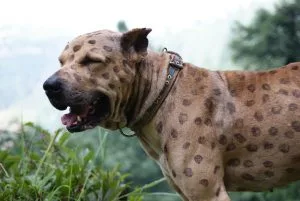
- Catahoula Leopard Dog × Poodle (Catahoula Doodle)
- Australian Cattle Dog × Poodle
- Belgian Malinois × Poodle
- American Bulldog × Poodle
- Bull Terrier × Poodle
- Greyhound × Poodle
- Whippet × Poodle
- Vizsla × Poodle
- Samoyed × Poodle (Samoyedoodle)
- Portuguese Water Dog × Poodle
- Alaskan Malamute × Poodle (Malamoodle)
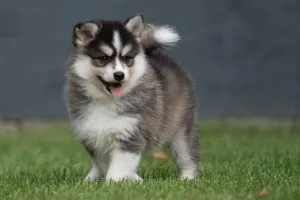
- Siberian Husky × Poodle (Huskydoodle)
- Beagle × Poodle (Poogle)
- Basset Hound × Poodle (Bassetdoodle)
- English Bulldog × Poodle (Bulldoodle)
- Australian Kelpie × Poodle
- Flat-Coated Retriever × Poodle
- Chesapeake Bay Retriever × Poodle
- English Pointer × Poodle
- Rhodesian Ridgeback × Poodle
Some of these hybrids are intentionally bred, while others are extremely uncommon and may only be available through a small number of breeders. As with any Poodle cross, it’s important to research the parent breeds carefully to ensure their temperament, exercise needs, and grooming requirements suit your lifestyle.
Frequently Asked Questions About Poodle Crosses
Are Poodle crosses purebred dogs?
No. Poodle crosses are mixed-breed dogs because they have parents from two different breeds. While many are intentionally bred, they are not recognised as purebred dogs by major kennel clubs such as the American Kennel Club (AKC) or The Kennel Club (UK).
Which Poodle cross sheds the least?
Breeds that often have lower-shedding coats include:
- Poochon
- Maltipoo
- Cavapoo
- Cockapoo
- Goldendoodle
- Labradoodle (particularly many F1B and multigenerational lines)
Individual genetics still play a major role, so there are no guarantees.
Which Poodle cross is best for families?
Several Poodle mixes make excellent family companions, including:
- Goldendoodle
- Labradoodle
- Cavapoo
- Cockapoo
- Bernedoodle
- Sheepadoodle
The best choice depends on your family’s lifestyle, available space, and activity level.
Which Poodle cross is the smartest?
Because every Poodle mix inherits intelligence from the Poodle, most are highly trainable. However, crosses involving highly intelligent working breeds often stand out, including:
- Bordoodle
- Aussiedoodle
- Shepadoodle
- Labradoodle
- Goldendoodle
Regular mental stimulation is essential for these breeds.
Which Poodle cross is the calmest?
If you’re looking for a more relaxed companion, consider breeds such as:
- Bernedoodle
- Newfypoo
- Saint Berdoodle
- Cavapoo
- Maltipoo
Individual temperament varies depending on genetics, training, and socialisation.
Which Poodle mix lives the longest?
Smaller Poodle crosses generally have longer life expectancies than giant breeds.
Some of the longest-living include:
- Maltipoo
- Yorkipoo
- Cavapoo
- Shih-Poo
- Havapoo
Many can live between 12 and 16 years, with some individuals living even longer.
Which Poodle crosses are best for apartments?
Smaller breeds often adapt well to apartment living, provided they receive enough exercise and mental stimulation.
Popular choices include:
- Cavapoo
- Maltipoo
- Yorkipoo
- Pomapoo
- Havapoo
- Shih-Poo
Do all Poodle crosses need professional grooming?
Most do. Whether the coat is curly, wavy, or long, regular brushing and professional grooming every six to eight weeks help prevent matting and keep the coat healthy.
How much exercise do Poodle crosses need?
Exercise needs depend on the parent breeds. Some companion breeds are happy with daily walks, while working crosses like the Aussiedoodle or Bordoodle require much more physical activity and mental enrichment.
Are Poodle crosses good with children?
Many are excellent family dogs and usually get along well with children when properly trained and socialised. Supervision is always recommended when young children interact with dogs.
Are Poodle crosses easy to train?
Yes. Most inherit the Poodle’s intelligence and eagerness to learn, making them highly responsive to reward-based training.
Are Poodle crosses recognised by kennel clubs?
Most Poodle crosses are not recognised as purebred breeds by major kennel clubs. However, some designer dog registries maintain records of various Poodle mixes.
Final Thoughts
Poodle crosses have earned their popularity for good reason. Their intelligence, versatility, and wide range of sizes mean there’s a Doodle to suit almost every type of owner—from apartment dwellers looking for a compact companion to active families wanting a larger adventure partner.
However, no two Poodle mixes are exactly alike. Even puppies from the same litter can differ in appearance, coat type, energy level, and temperament. Before choosing any Doodle breed, take the time to research both parent breeds, understand the grooming commitment, and select a breeder who prioritises health testing, temperament, and responsible breeding practices.
Whether you’re considering a playful Cavapoo, an energetic Aussiedoodle, a loyal Labradoodle, or a gentle giant like the Newfypoo, the right Poodle cross can become a devoted companion for many years.